-
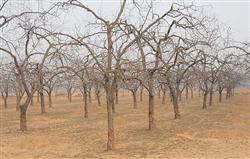
What are the methods for preventing and controlling pests and diseases of jujube trees in autumn and winter?
Please introduce the methods for preventing and controlling pests and diseases of jujube trees in autumn and winter? Detailed operation methods would be best. For the methods for preventing and controlling pests and diseases of jujube trees in autumn and winter, you can refer to the following methods: 1. Clean the orchard: Pests and diseases such as jujube rust, green plant bug, and jujube slug moth overwinter in fallen branches, leaves, or weeds under the trees. Therefore, after the jujube trees shed their leaves...
-
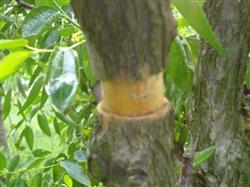
Why Doesn't the Jujube Tree Bear Fruit? An Analysis of Causes and Management Methods
Why doesn't the jujube tree bear fruit? Please explain the causes. The main reasons a jujube tree fails to bear fruit are the following three: Reason one why a jujube tree fails to bear fruit: excessive tree vigor. Solution: During the full flowering period of the jujube tree, perform ring barking (girdling) at the base of the main branches, cutting deep to the xylem, with a width of about 0.5 cm - roughly, however thick the bark is, that is how wide to cut....
-
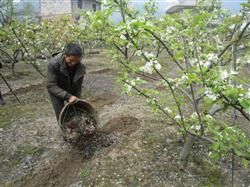
How to fertilize pear trees for good growth? A detailed guide to fertilization methods
How to fertilize pear trees for good growth? Please give an introduction. The life of a pear tree goes through several main growth stages: the young tree first-fruiting stage, the full-fruiting stage and the aging stage. At different growth stages, the fertilizer required differs. 1. Young tree first-fruiting stage: In early spring, a nitrogen-based fertilizer should be applied as a top dressing. After early summer, when new shoots stop growing, flower buds begin to differentiate and the fruit begins to swell, a phosphorus- and potassium-based fertilizer should be applied as a top dressing. After harvesting the fruit in autumn, a base fertilizer should be applied once more. 2. Full-fruiting stage: After bud break and before flowering, apply a nitrogen-based fertilizer once as a top dressing. From late June, when the fruit begins to swell, until just before harvest, root-zone top dressing (foliar spraying) should be carried out, and nitrogen, phosphorus and potassium fertilizers should be applied together during top dressing. After the pear fruit is harvested, the tree enters a recovery stage, and during this period the base fertilizer should be applied early. 3. Aging stage: After decades of growth and fruiting, the pear tree enters the aging stage, and four top dressings and one base fertilizer are applied throughout the year (an average of 250-500 kg of barnyard manure per tree each year).
-
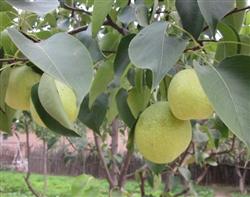
Pear tree cultivation: What methods can make pears larger and increase yield?
What methods can make pears larger and increase yield? Please provide guidance. To make pears larger and increase yield, you can refer to the following methods for planting: 1. Improve the traditional tree shape. Most high-density pear orchards use the inverted herringbone shape or the double-layer open-center shape with a central leader, which is suitable for Dangshan pears. However, because early-maturing series varieties have a low branching rate...
-
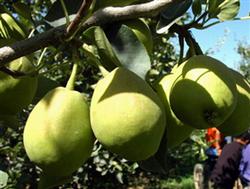
Which methods cannot be used for summer pruning of pear trees?
Which methods cannot be used for summer pruning of pear trees? Please introduce and guide the cautious use of the following three methods in summer pruning of pear trees: tip pinching, which is pinching off the tender tip at the top of the current year's new shoot that has not yet stopped growing, at the point where 2~3 leaves have unfolded; shoot clipping, which is cutting off the upper part of a new shoot that has not yet stopped growing and has exceeded the length that should be retained and has already become woody, and this method is still in use; shoot twisting, which is done from late May to early July, taking a semi-woody new shoot more than 40 cm long, gently kneading it soft at 8~12 cm from the base, then twisting it 120°~150°, so that the inner wood tears but does not break, and the outer bark bends but does not split, then bending the upper part to change the growth direction of the branch.
-
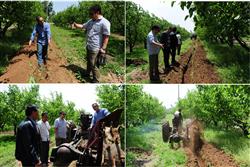
How to fertilize pear trees for good growth? A detailed guide to scientific fertilization methods
How should pear trees be fertilized for good growth? Please explain the fertilization methods. For planting pear trees, you can refer to the following methods for fertilization: 1. Apply more organic fertilizer to build up soil fertility and improve the soil. Organic fertilizer not only contains the various nutrients needed for pear tree growth, but can also improve soil structure, increase the soil's nutrient buffering capacity,...
-
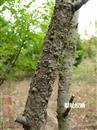
What are the common pests and diseases of pear trees? Targeted medication and control methods
What are the common pests and diseases of pear trees? What pesticides should be used to control them effectively? Please introduce the following common pests and diseases of pear trees and their control methods (for reference): Pear ring rot and pear branch and trunk rot: apply medication 10 days after the pear tree finishes flowering. For pear ring rot, you can choose 21% Guofukang 800-1000 times solution or 68.5% DuPont Yibao 80...
-
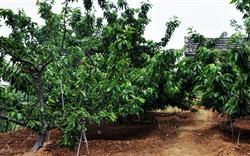
How to manage a cherry orchard? Detailed explanation of planting techniques and fertilization methods
How to manage a cherry orchard and how to fertilize? Please provide guidance. The following introduces soil treatment and fertilization methods for cherry orchards for reference: 1. Soil management. Soil management must first have a good foundation before planting, especially in mountain orchards, where level terraces are required and large holes should be dug for planting. After planting, continuous improvement of the soil is also needed...
-
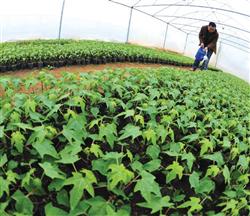
Detailed Explanation of Papaya Seedling Raising Methods and Planting Techniques
How to raise papaya seedlings? Please provide an introduction to the methods. The reference for papaya seedling propagation techniques is as follows: 1. Seed collection and seed treatment. Select trees in full fruit-bearing stage that are free from pests and diseases. Around mid-September each year, when most of the papaya fruit skin has turned yellow, harvesting can begin. Remove the seeds, discard empty and shriveled seeds, then soak them in a 0.1-0...
-
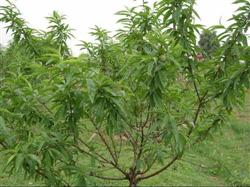
Summer Management Methods and Technical Key Points for Young Peach Trees
How to manage young peach trees well in summer? Please provide guidance. Strengthening summer management of young peach trees can accelerate the development of a good tree shape, increase nutrient accumulation, promote flower bud differentiation, and achieve the goal of early high-quality and high-yield production in the peach orchard. 1. Summer care: mainly through techniques such as removing sprouts, pinching, twisting shoots, cutting shoots, bending branches...
条件筛选