Apple Tree Summer Pruning Methods and Technical Key Points
How to prune apple trees in summer? Methods explained. Summer pruning, also called growing-season pruning, is one of the important parts of the year-round pruning of apple trees and holds a rather important position in the annual pruning of fruit trees. Its main pruning methods include ringing, girdling, shoot twisting, pinching, branch bending, branch thinning, and autumn heading cuts, etc. But if...
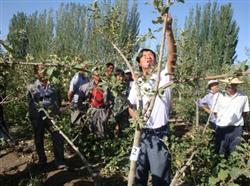
How to prune apple trees in summer? Methods explained
Summer pruning, also called growing-season pruning, is one of the important parts of the year-round pruning of apple trees and holds a rather important position in the annual pruning of fruit trees. Its main pruning methods include ringing, girdling, shoot twisting, pinching, branch bending, branch thinning, and autumn heading cuts, etc. However, improper pruning can have adverse effects on fruit trees, so summer pruning must follow these five principles:
Clear target: The main targets of summer pruning are neglected trees, young vigorous trees, and trees of the right age that do not bear fruit. Trees that have difficulty forming flower buds and bearing fruit, as well as overly weak trees, generally are not summer-pruned.
Suitable timing: Summer pruning must be done at the right time. Missing the timing will not only fail to achieve good results, but sometimes may even produce the opposite result. Generally, ringing and girdling are most effective from late May to early June. Pinching and shoot twisting are best done from late May to early July. Branch bending and branch thinning are better done from the beginning of autumn to White Dew. Heading cuts are best done in early to mid-August.
Proper pruning amount: Because summer pruning injures or removes some branches and leaves, it reduces the photosynthetic area and has a weakening effect on the tree's vigor. Therefore, the pruning amount should be lighter. Under the premise of improving ventilation and light penetration, prune as lightly as possible, so as not to stimulate excessive growth or overly weaken the tree vigor, avoiding adverse effects on tree growth and fruiting.
With the ultimate goal of promoting flower bud differentiation and improving fruit quality: Pay attention to improving the microclimate of the canopy, ensure good ventilation and light penetration conditions, and after pruning keep branches at a moderate density and evenly and reasonably arranged, so that light can reach the inner canopy and lower layers, achieving the degree that the top does not shade the bottom and the outer does not shade the inner, so as to promote flower bud differentiation, avoid "alternate bearing," and improve fruit quality.
Adapt to the tree and the site: According to tree age, tree vigor, variety characteristics, natural conditions, pruning purpose, etc., determine the appropriate pruning method and pruning degree, whether to promote flowers and fruit, or to promote growth and vigor, or to improve fruit quality, ultimately achieving the goals of high quality, high yield, stable yield, and strong trees.
Click to get more apple tree planting techniques
Click to get more fruit planting techniques