-
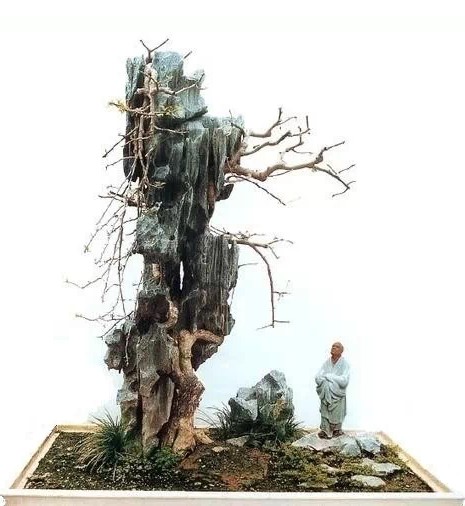
Root-over-rock bonsai demands a high level of artistry and has a strong wild, mountain-and-field flavor.
Root-over-rock bonsai, also called tree-and-rock bonsai, is a bonsai form that ingeniously combines trees and rocks into one; its characteristic is that the tree is planted on the rock, with the roots either anchored in rock holes or crevices or clasping the rock as they grow, and its style is either delicate and elegant, or majestic and grand, or rustic and vigorous, or steep and precipitous, or open and spectacular.
-
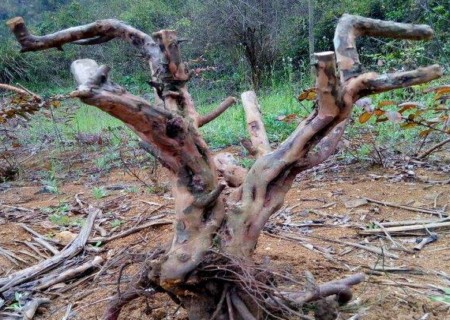
A Detailed Guide to the Cultivation and Care of Wild-Dug Sageretia Stumps
Sageretia (Sageretia thea) belongs to the buckthorn family (Rhamnaceae). Its roots and trunk are naturally striking, and its tree form is rugged and elegantly ancient. It is one of the main species for Chinese stump bonsai, one of the five famous trees of Lingnan bonsai, and one of the bonsai plants exported to the United States after China's entry into the WTO. The fruit of sageretia is edible, with a sweet-and-sour taste, hence the name "sour plum fruit"; the young leaves can be used as a substitute for tea.
-
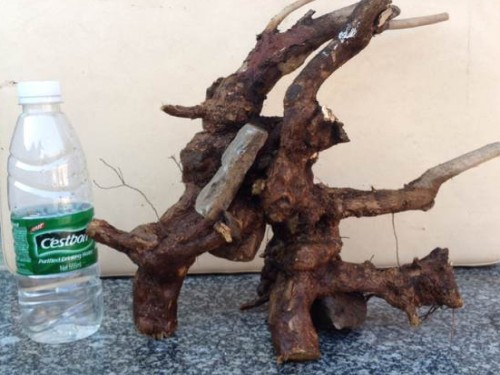
Methods and techniques for digging bonsai stock from the wild
The older a bonsai, the higher its value. Although collecting wild stumps cannot serve as the main material source for mass production because such material is hard to obtain, it can be used as an auxiliary means of creating distinctive bonsai. Its characteristics are rapid formation and an easy ability to embody the quaint, elegant charm of bonsai, but it destroys wild plant resources. Therefore
-
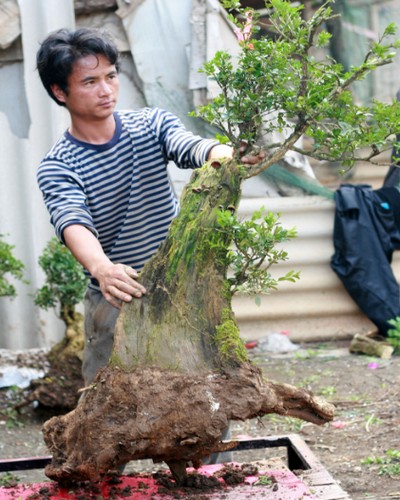
What are the methods and precautions for collecting bonsai trees in the wild?
The classification of tree-stump bonsai should include wild-collected stumps and nursery-grown seedlings. The former refers to bonsai made from wild-collected stumps, whose main characteristic is aged and antique simplicity; the latter refers to bonsai made from artificially cultivated seedlings, whose main characteristic is a rigorous layout. The two should not be confused. When collecting tree stumps in the wild, first do the preparatory work before digging.
-
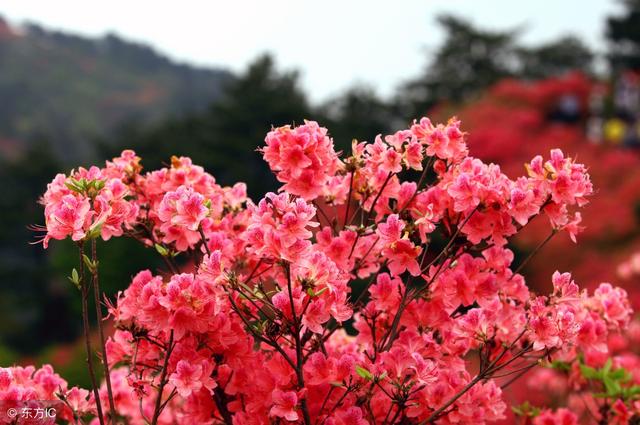
How to grow wild Yingshanhong azaleas? Detailed care methods
How to cultivate azaleas? 5 cultivation techniques for red azaleas. Azaleas are the provincial flower of many regions. They have high ornamental value. They can be planted in a garden or yard. Below are 5 breeding techniques for azaleas; people who love flowers and plants can take a look. First, azaleas can be placed at home / can be used as a screen
-
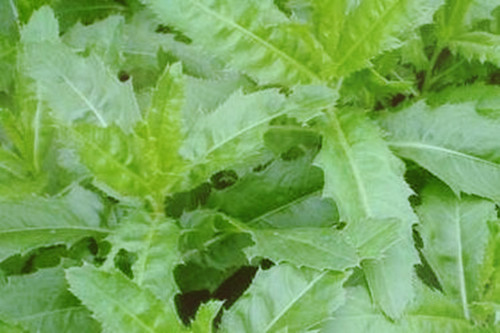
The Benefits, Effects and Medicinal Uses of Thistle (Cirsium setosum, Xiao Ji), a Wild Vegetable from the Countryside
In the countryside there are many kinds of wild vegetables, such as purslane, plantain, and bitter lettuce, and they all have different benefits. Today I will introduce another high-quality wild vegetable, thistle, also called Xiao Ji. So what are the benefits and effects of thistle? What diseases can it treat? How is it eaten? A brief introduction to thistle
-
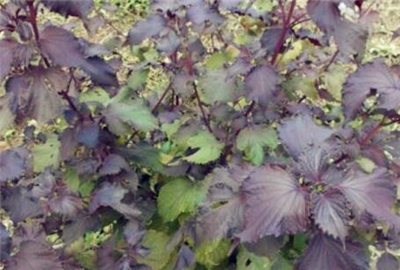
How much is wild perilla per jin, how is it grown, and where is it mainly distributed?
Wild perilla is produced in China's Shanxi, Hebei, Hunan, Hubei, Jiangxi, Zhejiang, Jiangsu, Fujian, Taiwan, Guangdong, Guangxi, Yunnan, Guizhou and Sichuan, among other places, and can be used for both medicine and food. So how much is wild perilla per jin? How is it grown? Where is it mainly distributed? Perilla price: it is understood that
-
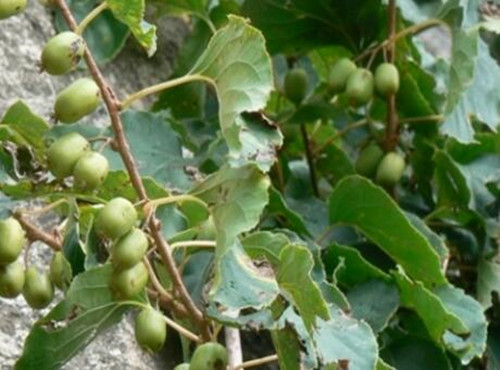
Appearance, Planting Methods, and Benefits and Effects of the National First-Class Key Protected Wild Plant Vitis balansana
Vitis balansana, an endangered species. Also known as bitter jujube, a woody vine. It is only scattered within a small area of Jinghong in greater Xishuangbanna, growing at the edge of seasonal rainforest in low mountain valleys at an altitude of 620 m. China has only this one genus and one species. So, what does Vitis balansana look like? How is it planted? What benefits and effects does it have? What does Vitis balansana look like
-
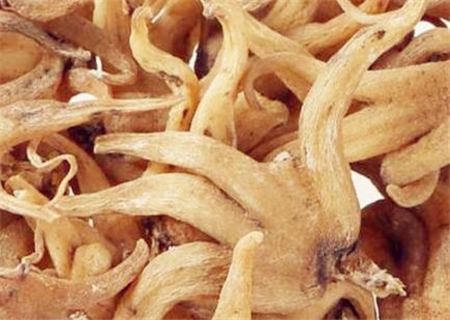
Wild Gymnadenia conopsea (palm orchid) price per gram, main producing areas, best harvest time, plus cultivation
Gymnadenia conopsea, also called palm orchid, is a plant named for its palm-shaped appearance, mainly used as medicine. So how much does palm orchid cost per gram? Where are its main producing areas? When is the best time to harvest it? How much does wild Gymnadenia conopsea (palm orchid) cost per gram? Palm orchid is a wild resource
-
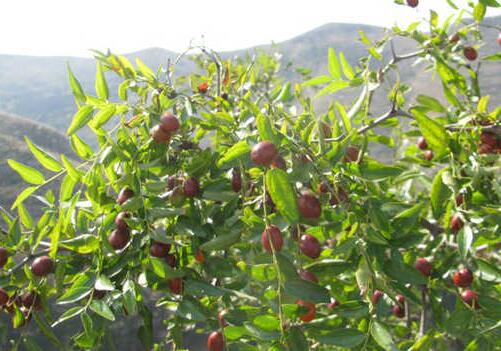
How much does a wild jujube sapling cost? Planting time, methods and years until flowering and fruiting
Wild jujube is a variety of jujube. Also known as ji, jizi, wild jujube, mountain jujube, gezhen, etc., it is native to North China and is also distributed in the provinces of Central and South China. It is mostly wild, often a shrub, and some are small trees. So how much does a wild jujube sapling cost? When to plant it? How many years until it flowers and fruits? What are the planting methods
条件筛选