How much does a wild jujube sapling cost? Planting time, methods and years until flowering and fruiting
Wild jujube is a variety of jujube. Also known as ji, jizi, wild jujube, mountain jujube, gezhen, etc., it is native to North China and is also distributed in the provinces of Central and South China. It is mostly wild, often a shrub, and some are small trees. So how much does a wild jujube sapling cost? When to plant it? How many years until it flowers and fruits? What are the planting methods? According to the wild jujube planting base in Hebei, wild jujube saplings cost 1-2 yuan each.
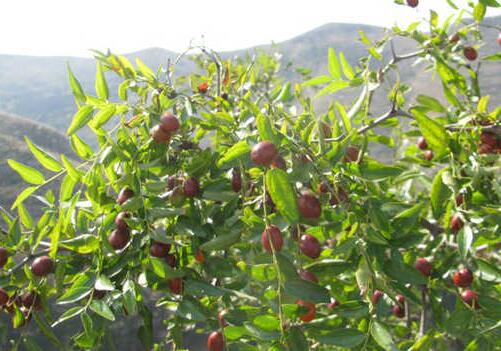
When are wild jujube saplings planted?
Autumn planting gives the best survival rate for wild jujube trees. Autumn planting of wild jujube saplings mainly has the following advantages:
1. The autumn planting period for wild jujube trees is long. Planting can be done from late October to late November, and it allows the planted wild jujube trees to heal root wounds over a long period before the ground freezes, giving them good growth in spring.
2. The temperature is more suitable. In autumn, as temperatures gradually decline, the transpiration of wild jujube trees after planting gradually weakens, which is more favorable for sapling survival. Also, because soil temperature drops more slowly than air temperature, even with late-autumn planting, the root system's physiological activity can still continue, growing new roots that same year and restoring vitality.
How many years until wild jujube trees flower and fruit?
1. When ripe, the wild jujube is red, later turning red-purple; the mesocarp is fleshy and thick, sweet in taste; the stone is sharply pointed at the apex, and sharply pointed or blunt at the base, 2-locular, with 1 or 2 seeds; the fruit stalk is 2-5 mm long; the seeds are flat-oval, about 1 cm long and 8 mm wide. The flowering period is May to July, and the fruiting period is August to September.
2. After planting, wild jujube saplings generally bear fruit in the second year. As the saying goes, “Peaches take three years, plums four, pears five; walnuts and persimmons six or seven; mulberries take seven years before they can feed silkworms; plant a jujube tree and it can bring in money.” This refers to the short fruiting period and quick returns of wild jujube trees.
What are the planting methods for wild jujube trees?
1. Selection of rootstock for wild jujube saplings:
Choose wild jujube saplings that are more than 2 years old, grow vigorously, and are free of pests and diseases as the rootstock. Cut back at 1 cm above the root crown.
2. Selection and storage of scions for wild jujube saplings:
In orchards of superior varieties such as winter jujube and pear jujube, select 1-year-old to 3-year-old developmental branches with a diameter of more than 4 mm and a length of more than 30 cm as scions. For summer grafting, collect and use immediately; for scions collected in autumn and winter, they can be sealed with wax or stored in a freezer or cold storage, and can be kept for 50 days to 60 days.
3. Grafting time and methods for wild jujube saplings:
It can begin 2 weeks to 3 weeks before bud break in spring. At this time the rootstock seedlings are in dormancy, the cambium does not slip from the bark, and cut grafting and tongue grafting are suitable; from bud break to 3 weeks to 4 weeks afterward, when the temperature reaches about 15°C, the phloem peels easily, making bark grafting suitable; from late June to mid-July, when the rootstock bark slips, 1-year-old scions with a diameter of 3 mm to 4 mm can be used for bud grafting; during the high-temperature period from mid-August to early September, it is the best time for bark grafting and tongue grafting, with the highest survival rate, and buds can sprout 10 days after grafting, but at this time attention must be paid to “wrapping” for shade and moisture retention. From late May to late June, branches, leaves and roots store more nutrients, and the grafting interface is prone to bleeding, so grafting is not suitable.
4. Post-grafting management of wild jujube saplings:
After the graft survives, remove sprouts promptly, wiping off the young shoots sprouting from the rootstock every 7 days to 10 days to reduce nutrient loss. At the same time, increase fertilizer and water management to ensure the nutrients needed for normal growth.