-
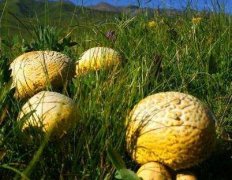
Qinghai Qilian Wild Yellow Mushroom: Benefits, Uses, and Stew Recipe with Pictures
In Xining, Qinghai, apart from the local mutton, there are three things that are local specialties you have to take home: black goji berries, highland barley wine, and yellow mushrooms. Black goji berries are rich in anthocyanins, highland barley wine is a grain liquor brewed from locally produced highland barley, and yellow mushrooms grow on the grasslands
-
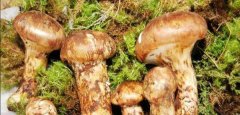
Can matsutake be cultivated artificially? Differences from wild ones and how much per jin
Can matsutake be cultivated artificially? Yes, it can, but artificially cultivated matsutake is very different from wild matsutake, so let's take a look at their differences below. Also, the prices of fresh and dried matsutake. Differences between artificial matsutake and wild matsutake: the color is different; wild matsutake
-

Wild mushrooms may be developed into anti-cancer drugs
Seemingly ordinary macrofungi, that is, wild mushrooms commonly parasitic on tree trunks, may actually be developed into antibacterial and even anti-cancer drugs. A research team composed of four lecturers and their students from the School of Chemical and Life Sciences at Nanyang Polytechnic in Singapore has, over the past two years, classified and studied more than 400 species of local wild mushrooms, and found that two of them contain anti-cancer compounds and 30 contain antibacterial compounds. At present, they have successfully identified the chemical structure of one wild mushroom with anti-cancer properties, and confirmed
-
Poisonous mushrooms are highly dangerous; be on guard against picking and eating them in the wild
In forests, in grassy areas, and beside piles of manure and straw, people often see wild mushrooms pushing up through the ground. Because many people do not know the difference between poisonous and non-poisonous mushrooms, they sometimes pick poisonous mushrooms and take them home to eat. Cases of accidentally eating poisonous mushrooms occur from time to time, and there have even been deaths. For this reason, the relevant authorities remind the public not to blindly pick and eat wild mushrooms, so as to ensure food safety. Recently it has also been found that some farmers' markets are selling poisonous mushrooms. Wild mushrooms that you do not recognize and have never eaten must absolutely not be easily bought and eaten.
-
Detailed Explanation of Key Techniques for Simulated Wild Cultivation of Oyster Mushrooms
In recent years, diseases have occurred frequently during the cultivation of oyster mushrooms. This is mainly because the entire production process is under protected conditions from beginning to end, causing the vitality and disease resistance of the mycelium to continuously decline. Adopting simulated wild cultivation techniques can effectively solve this problem. 1. Substrate preparation and mycelium bag incubation are carried out according to conventional methods. 2. Standardized stacking to build mushroom walls. When primordia appear on individual mushroom bags, the mushroom walls can be built. The mushroom wall is generally 0.8 m wide and 15 m long; the gaps at the fruiting end of the mushroom columns are sealed tightly and evenly with mud, and all other gaps are filled solid with fertile soil, then watered to
-
Detailed Explanation of the High-Efficiency Field-Based Wild-Simulated Cultivation Technology Model for Oyster Mushrooms
Under the premise of producing the same mushroom yield, field-based wild-simulated cultivation of oyster mushrooms can reduce investment in production facilities and labor intensity, facilitate operation and management, and the fresh mushrooms produced have a strong wild mushroom flavor, enhancing the commercial value of oyster mushrooms. This model is highly practical, easy to operate, suitable for large-scale and industrialized production, and has high promotional value. Oyster mushrooms, with their advantages of high yield, strong adaptability and large consumption volume, occupy a major position in the edible mushroom production of our province. However, using houses, greenhouses, caves and other facilities to cultivate oyster mushrooms has long been
-
High-yield Wild-simulated Cultivation Technique for Oyster Mushrooms in Winter and Spring
Oyster mushrooms produced using wild-simulated cultivation techniques not only taste as delicious as wild ones, but also truly achieve ecological, high-quality, high yields. Even in the cold winter and low-temperature early spring seasons, they can be grown in a relatively enclosed shade shed, making full use of ground heat to produce thick, tender, high-quality oyster mushrooms. This method increases yield by more than 60% compared with conventional cultivation methods, and by more than 40% compared with cultivation methods such as mushroom walls, with a biological conversion rate reaching more than 220%. The specific techniques for high-yield, high-quality wild-simulated cultivation of oyster mushrooms in winter and spring are as follows: 1. Mycelium culture: Use high-pressure or atmospheric-pressure sterilization
-
Key Technical Points for Imitation-Wild High-Quality Cultivation of Oyster Mushrooms in Winter and Early Spring
Oyster mushrooms produced using imitation-wild cultivation techniques not only taste as fresh and delicious as wild ones, but also truly achieve ecological, high-quality, and high-yield production. Even in the cold winter and low-temperature early spring seasons, high-quality oyster mushrooms that are thick, fleshy, fresh, and tender can be produced in a relatively enclosed shade shed by making full use of ground temperature. This method increases yield by more than 60% compared with conventional cultivation methods, and by more than 40% compared with cultivation methods such as mushroom walls, with a biological conversion rate of more than 220%. 1. Mycelium culture. Use high-pressure or atmospheric-pressure sterilization, inoculate conventionally, and culture until physiologically mature mycelium is obtained.
-
Introduction to the High-Temperature-Tolerant Wild Oyster Mushroom NP Variety
A pure strain obtained by tissue isolation after multiple collections of wild oyster mushrooms by the **Institute of Biological Soil and Desert Research, Chinese Academy of Sciences. The fruiting body primordia are solitary or clustered, and young primordia are white or light brown. The cap diameter is 10-12 cm, the thickness is 1-1.5 cm, and the cap is pure white or light brown. The flesh is white, the stipe diameter is 1.5-2.5 cm, the length is 2-6 cm, and the color is white. The spore print is white or light purple. It has wide adaptability and high-temperature tolerance, capable of fruiting at 30°C, but it can also fruit normally at a low temperature of 8°C.
-
Key Technical Points for Mimicking Wild, Pollution-Free Cultivation of Maitake (Grifola frondosa)
Crop straw and forestry by-products accumulate in enormous annual quantities, providing abundant raw materials for the production of edible fungi. How to produce pollution-free, safe, high-quality, pollution-free edible fungus products is an important issue facing the edible fungus industry. The following introduces pollution-free cultivation techniques for mimicking wild maitake (Grifola frondosa), based on the national pollution-free edible fungus production technical standards. Optimal selection of cultivation sites and raw materials: edible fungi have a strong ability to accumulate harmful heavy metals, so cultivation sites and raw materials for maitake must be carefully selected to minimize the accumulation of harmful substances brought about by the cultivation site and raw materials. ①
条件筛选