-
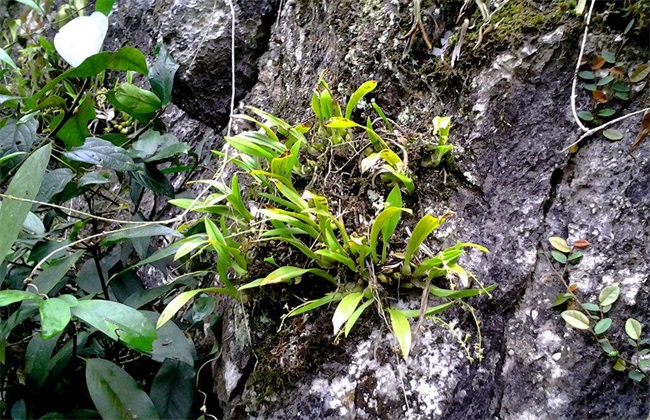
In what kind of environment does wild Dendrobium officinale grow?
The growing environment of wild Dendrobium officinale
-

Why do wild medicinal herbs have better medicinal efficacy than cultivated ones?
Traditional Chinese medicine was born in primitive society. Li Shizhen bravely tasted hundreds of herbs and organized the medicinal materials of nature into a book. Traditional Chinese medicine has never been interrupted, and traditional Chinese medicine and Chinese medicinal materials are also our China's...
-

How to Grow Wild Strawberries? Detailed Planting Methods and Tips
How Should Wild Strawberries Be Grown
-

What are the key points of wild strawberry cultivation and management techniques?
How should wild strawberries be managed during cultivation?
-

How do you grow wild strawberries? First, understand its scientific name
How should wild strawberries be grown
-

Detailed Explanation of the Key Points of Wild Chrysanthemum Planting Techniques
Wild Chrysanthemum Planting Techniques
-
What are the main cultivation regions of Asarum heterotropoides var. mandshuricum (northeast wild ginger)?
It is mainly cultivated in the three northeastern provinces. It is mainly produced in the Yanbian, Baishan, Tonghua and Jilin areas around Changbai Mountain in Jilin Province; in Xinbin, Huanren, Kuandian, Benxi, Qingyuan and other places in Liaoning Province; and in Wuchang, Acheng, Shangzhi, Yanshou, Ning'an and other places in Heilongjiang Province.
-
Control Methods and Technical Key Points for Pests and Diseases of Asarum (Wild Ginger)
The main disease is sclerotinia rot, which mainly damages the roots. In the early stage, the base of the root becomes soft and rotting, with white filamentous substances visible, and gradually the aboveground leaves turn yellow, then lodge and die. Spray the leaves or drench the roots with a 500 to 1000 times dilution of 50% carbendazim. The main pest is the black hairy caterpillar, which generally appears in mid to late June. It damages the leaves, and in severe cases the leaves are completely eaten bare. Spray with a 1000 times dilution of dichlorvos or trichlorfon to kill them.
-
What are the harvesting and processing methods for Asarum (wild ginger)?
For directly sown Asarum, it can be harvested after 3 to 4 years of growth. For transplanted Asarum, if two-year-old seedlings are planted, harvest 3 to 4 years after planting; if three-year-old seedlings are planted, harvest 2 to 3 years after planting. At present, in order to collect seeds, harvesting can be delayed by 5 to 6 years, collecting more seeds to expand direct sowing of seeds. Wild seedlings can be harvested in the 3rd year after transplanting. The customary harvesting period for wild Asarum is from May to June. For cultivated Asarum, harvesting from August to September gives good quality and high yield. After harvesting, remove all soil, tie every 10 or so plants into a small bundle, twist them into a braid with rope, and dry them in a cool, well-ventilated place under the eaves.
-
An overview of the distribution of wild resources and cultivation of Angelica sinensis
Angelica sinensis prefers a cool, humid climate. Its wild resources are found only in the remote high-mountain forests within Zhang County and Zhouqu in Gansu. Angelica sinensis is always a cultivated species, and it is suited to growing in cold, damp mountainous areas at altitudes above 2000 m. All commercial Angelica sinensis comes from cultivated plants, distributed across Gansu, Ningxia, Qinghai, Yunnan, Guizhou, Shaanxi, Hubei and other provinces. It is mainly produced in Min County, Tanchang, Weiyuan, Zhang County, and Wudu, Wen County, Zhuoni, Lin County and other places in Gansu, with a long history of cultivation. Normal annual output is around 10,000 tons, accounting for about
条件筛选