How much is wild perilla per jin, how is it grown, and where is it mainly distributed?
Wild perilla is produced in China's Shanxi, Hebei, Hunan, Hubei, Jiangxi, Zhejiang, Jiangsu, Fujian, Taiwan, Guangdong, Guangxi, Yunnan, Guizhou and Sichuan, among other places, and can be used for both medicine and food. So how much is wild perilla per jin? How is it grown? Where is it mainly distributed?
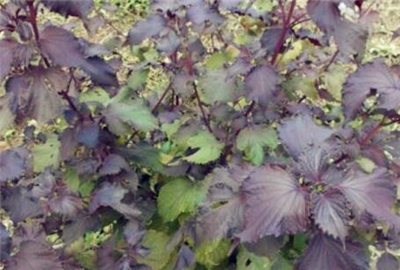
Perilla price: it is understood that dried wild perilla costs 45 yuan per jin, and fresh perilla costs 10 yuan per jin.
How to grow it: perilla is highly adaptable and not demanding about soil; it grows well in well-drained sandy loam, loam and clay loam, around houses and behind them, beside ditches and field edges, and in fertile soil. The previous crop is best a vegetable. It can be planted under young fruit trees. Sow in spring; the sowing time differs by one month between south and north, March in the south and mid-to-late April in the north. For direct sowing, drill in rows in the bed, opening furrows 2-3 cm deep at a row spacing of 60 cm, scatter the seeds evenly into the furrows, and cover with a thin layer of soil after sowing. Hill sowing: row spacing 45 cm, plant spacing 25-30 cm, sow in hills and cover with shallow soil. Water immediately after sowing to keep it moist; the sowing rate is 15-18.75 kg per hectare. Direct sowing saves labor, grows fast, allows early harvest and gives high yield.
Perilla has a relatively short growing period; two and a half months after transplanting, the whole plant can be harvested, and since the whole plant is used as medicine, nitrogen fertilizer is the main type used. Apply fertilizer in a concentrated way before the rows close. For direct-sown and seedling-raised plots, topdress when the seedlings are 30 cm tall, loosen the soil and earth up to bury the fertilizer well. Apply fertilizer once more before the rows close, in the same way as above. When harvesting perilla, choose a sunny day to cut it, as the aroma is strong and it dries easily; for perilla leaves used as medicine, harvest in late July to early August, before perilla flowers. While collecting seeds, pay attention to selecting and keeping good seeds. Choose robust plants with high yield, wait until the seeds are fully mature before harvesting, dry them in the sun and thresh them for use as seed.
It is mainly distributed in countries such as India, Myanmar, Japan, Korea, South Korea, Indonesia and Russia. In China, wild and cultivated types are found in North China, Central China, South China, Southwest China and Taiwan province.
Uses and functions
It is often used as a food spice, added in fish and shellfish cooking to remove fishiness; when dry-frying eel, shellfish, chicken, duck and other meat dishes, add a little as a spice. This plant is very widely cultivated in China and is used for medicine and as a spice.
The parts used as medicine are mainly the stems, leaves and seeds. The leaves are a diaphoretic, antitussive, aromatic stomachic and diuretic agent, with analgesic, sedative and detoxifying effects; they treat colds, and have outstanding effects on abdominal pain and vomiting caused by fish and crab poisoning. The stems have the effect of calming qi and preventing miscarriage; the seeds can relieve cough, resolve phlegm, calm asthma and dispel mental depression.
The leaves are also used as food; cooked with meat, they can increase the aroma of the latter.
The oil pressed from the seeds, called perilla seed oil, is used for food and also has a preservative effect, and is used in industry.