Methods and techniques for digging bonsai stock from the wild
The older a bonsai, the higher its value. Although collecting wild stumps cannot serve as the main material source for mass production because such material is hard to obtain, it can be used as an auxiliary means of creating distinctive bonsai. Its characteristics are rapid formation and an easy ability to embody the quaint, elegant charm of bonsai, but it destroys wild plant resources. Therefore, before digging, you must first investigate to avoid blind digging and waste.
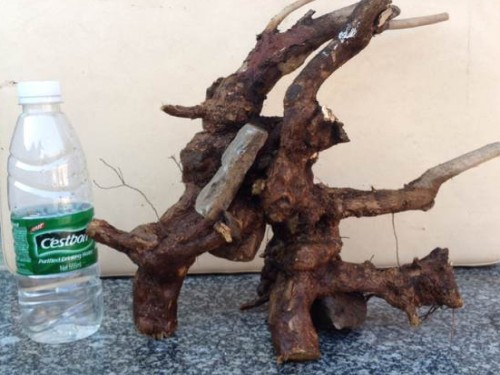
1. Methods for digging wild tree stumps. Old tree stumps suitable for making bonsai generally grow in the crevices of barren mountain cliffs under poor conditions. In late autumn and early winter or early spring, first saw off the thick branches of the aboveground part of the selected stump, leaving only a section at the base, and cut off useless branches, then clear around the stump to facilitate digging. When digging, first dig deep on one side. If there is a main root, cut off the main root first, then cut the lateral roots. Otherwise, the main root is not easy to cut off and will damage the lateral roots and fibrous roots. At the same time, be careful to make the wounds as small and smooth as possible. When digging, keep as much of the soil ball as possible; the survival rate after planting is high. For tree species with a taproot system or rare species, in order to ensure the survival rate, it is often impossible to dig them out in one go.
In the first year, you can first cut the lateral roots on two opposite sides, dig a hole below, fill it with fertile loam, and water thoroughly to nourish the roots. In the second year, dig in the same way on another pair of opposite sides. In the third year, after new roots have grown from all the lateral roots of the stump, dig it out with the soil ball. For a stump that has been dug out, first wrap it well with straw rope, then transport it.
If the stump has no soil ball, first dip the roots in mud slurry, then wrap them with water-soaked straw and plastic film, tie them up, and then transport them. After the wild stump arrives at its destination, first open the packaging in a cool, wind-sheltered place, further prune and trim it, and then pot it.
2. Strive to increase the survival rate of wild tree stumps. Because wild tree stumps grow in harsh environments in nature, especially stumps growing on cliffs and in rock crevices, their root systems are generally long and have few fibrous roots, and they are not easy to survive after being dug out. To increase the survival rate of wild stumps, you can start from the following aspects:
(1) Dig at the right time
In late winter and early spring, dig the stump when the sap begins to flow but before buds sprout. Stumps dug at this time have a high survival rate after transplanting. Some stumps can also be dug and potted during the plum rain season, in light rain, or on cloudy days.
(2) Protect the root system
When digging, cut the main root first, then the lateral roots. The cut openings should be as small and smooth as possible. If there is a soil ball, after digging and properly pruning the root system, immediately apply thin mud to the roots, especially coating the fibrous roots well. To keep the thin mud from falling off, you can wrap the root system with green grass. Before potting, remove the green grass, wrap another layer of moss around the roots to retain water, plant it in the pot, water thoroughly once, and place it in a semi-shaded place for care.
(3) Reduce transpiration
Before digging, according to the species and size of different plants, carefully observe the tree shape, cut off excess branches and leaves, and apply or wrap plastic film over the cut openings. After collecting it back, before potting, prune the root system and branches and leaves once more, and use a sharp knife to smooth the cuts so that there are no cracks between the bark and the xylem. Then apply melted paraffin to the cuts, or rub the wounds back and forth with paraffin so that the cuts are evenly coated with wax. Be careful not to crack the bark away from the xylem while rubbing. Then pot it and proceed with normal care. Applying wax to the cuts can both reduce the plant's water transpiration and protect the wounds, preventing rot and infection caused by sap flowing from the wounds.
(4) Film-covering method
After the new stump is potted, cover the stump with plastic film to reduce water evaporation. But note: do not water too much, otherwise it easily causes root rot; do not fertilize too early; you must wait until the stump has survived before applying fertilizer. When the branches of the new stump have grown to more than 5 cm long, you can choose a cloudy day to remove the plastic bag, letting the stump adapt to the external environment under weak light and strengthen its resistance. Digging natural wild stumps allows you to conceive designs based on their natural forms and create stump bonsai with more wild flavor and natural charm.
The classification of tree stump bonsai should include the wild stump category and the seedling category. The former is bonsai made by using collected wild stumps, mainly characterized by aged and quaint appearance; the latter refers to bonsai made from artificially cultivated seedlings, mainly characterized by rigorous layout. The two cannot be confused.
To collect tree stumps in the wild, first do the preparatory work before digging: prepare branch shears, a hand saw, a knife, a small iron shovel, large and small plastic bags or other packaging bags. Or also bring dry provisions, a water bottle, and check and service the transportation vehicle, etc. Next, pay attention to the choice of tree species. For materials used to make stump bonsai, choose species with graceful tree posture, small branches and leaves, strong sprouting ability and tolerance of pruning, easy potting, and a relatively long lifespan. Commonly chosen are pine and cypress species, boxwood, Japanese bush cherry, winter jasmine, trident maple, Chinese holly, elm, zelkova, Chinese elm, and so on. As for the digging time, generally for deciduous trees and pine and cypress species, collection and digging can be carried out from when the trees enter dormancy to before germination the following year.
Old tree stumps suitable for making bonsai generally grow in the crevices of barren mountain cliffs under poor conditions. In late autumn and early winter or early spring, first saw off the thick branches of the aboveground part of the selected stump, leaving only a section at the base, and cut off useless branches, then clear around the stump to facilitate digging. When digging, first dig deep on one side. If there is a main root, cut off the main root first, then cut the lateral roots. Otherwise, the main root is not easy to cut off and will damage the lateral roots and fibrous roots. At the same time, be careful to make the wounds as small and smooth as possible. When digging, keep as much of the soil ball as possible; the survival rate after planting is high. For tree species with a taproot system or rare species, in order to ensure the survival rate, it is often impossible to dig them out in one go. In the first year, you can first cut the lateral roots on two opposite sides, dig a hole below, fill it with fertile loam, and water thoroughly to nourish the roots. In the second year, dig in the same way on another pair of opposite sides. In the third year, after new roots have grown from all the lateral roots of the stump, dig it out with the soil ball.
For a stump that has been dug out, first wrap it well with straw rope, then transport it. If the stump has no soil ball, first dip the roots in mud slurry, then wrap them with water-soaked straw and plastic film, tie them up, and then transport them. After the wild stump arrives at its destination, first open the packaging in a cool, wind-sheltered place, further prune and trim it, and then pot it.