-
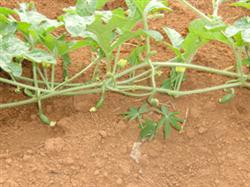
Three key points for protecting flowers and fruit of watermelon in hot and rainy seasons
Hot and rainy seasons are a test for most crops, and watermelons and melons are no exception. In this kind of weather, what we mainly do is protect their flowers and fruit to increase the fruit-setting rate and watermelon yield. Protection is mainly carried out from three aspects: Element one, cultivation management inside greenhouses. 1. In the hot summer...
-
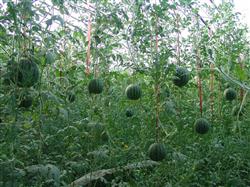
Detailed Explanation of Current Field Management Techniques for Watermelon
The following measures should be taken for current watermelon field management: 1. Dig drainage and irrigation ditches properly: For those where the ditches dug before planting do not meet the requirements, the main ditch, surrounding ditch, middle ditch and bed ditch should be opened in a timely manner. The depths of the ditches are respectively: main ditch 1.5m, middle ditch 1.0m, middle ditch 0.8m, bed ditch 0.4m. The ditches must be unobstructed between each other...
-
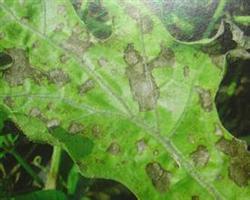
What are the simple techniques for watermelon disease control?
Before sowing, choose a greenhouse that has not grown cucurbit crops, or one that has been subjected to high-temperature sealed treatment during the summer fallow period, to prevent soil-borne diseases such as Fusarium wilt, damping-off, Rhizoctonia rot, and anthracnose from invading during the seedling stage. For seed treatment, soak the seeds in warm water at 55°C for 10 minutes, stirring constantly, then after cooling soak for another 6 hours, then...
-
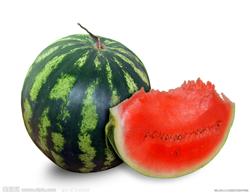
What are the methods for judging whether a watermelon is ripe?
1. Accumulated temperature method. Watermelons need a certain amount of accumulated temperature from flowering to ripening. Generally, early and mid-season varieties need 700--800°C from flowering to ripening, while late varieties need about 1000°C. Therefore, under conditions of timely sowing in spring and normal climate, the fruit development days of each variety are basically fixed. Early varieties need 28--3...
-
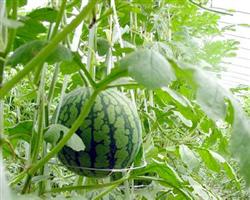
Detailed Explanation of Hanging Vine Cultivation Techniques for Watermelon in Solar Greenhouses
Cultivation seasons: Early spring cultivation. Sow and raise seedlings in mid-to-late February, seedling age 35-40 days, use heated seedling raising, transplant into the greenhouse in early-to-mid April, go to market in early June. Autumn delayed cultivation. Sow in late July, seedling age about 20 days. Cover the greenhouse film in early September, add heat-preserving straw curtains in late September, go to market around October. Winter-spring cultivation...
-
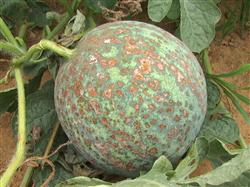
How to keep watermelon fresh for two months? Practical methods you can learn
Chemical control: start spraying at the early stage of disease onset, every 7-10 days, for 2-3 consecutive treatments. Fungicides can be chosen from 68.75% DuPont Equation 1000x solution, 25% Shibogong emulsifiable concentrate 1000-1500x solution, 80% Sande Sheng wettable powder 600-800x solution, 50% Thiophanate wettable powder 1000x solution, 40% Dako...
-
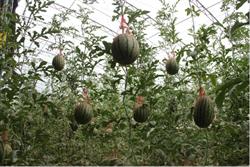
What kind of environmental conditions does watermelon cultivation require?
I. Variety selection As a gift watermelon, one should choose varieties that are small and exquisite, beautiful in appearance, and excellent in quality. As the main planted variety, the single fruit weight should be 1-2 kg. If the single fruit is too large or too small, it loses its function as a gift. At present, the main ones are Huangshuiyu, Xiangyu Crystal, Huameiren, Xiangyu Black Rose, Furongmi, ...
-
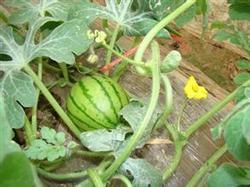
How to manage watermelon after flowering? Remember these three key measures
Hand-pollination. If the flowering and fruiting period of watermelon falls in a cold and rainy season, fruit setting becomes rather difficult. On one hand, cold and rainy weather is unfavorable for the activity of pollinating insects such as bees; on the other hand, heavy rain easily washes away the pollen on the stigma of female flowers or causes the pollen to burst and lose its germination capacity, making it difficult to complete fertilization...
-
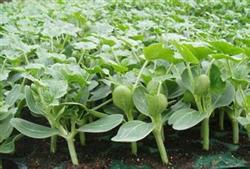
Four key steps to master for raising watermelon seedlings in a heated hotbed
Raising watermelon seedlings in a heated hotbed has the characteristics of fast warming, even temperature, low cost and simple operation. It can cultivate robust watermelon seedlings in January and February when the air temperature is very low, and its seedling-raising effect is similar to that of an electric heating hotbed. 1. Build the seedbed. First dig a bed pool 4.5 m long from east to west, 1.6 m wide from north to south and 0.2 m deep...
-
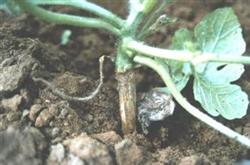
How to prevent and control watermelon seedling diseases? A detailed guide to integrated control techniques
I. Symptoms of the main diseases 1. Damping-off. In the early stage, the root collar of the seedling (the junction of root and stem) develops lesions that look as if scalded by boiling water and become rotten, after which the diseased part turns yellowish-brown, dries out and shrinks; the cotyledons have not yet wilted, but the seedling topples over. Damping-off mostly occurs from the emergence of the cotyledons to the stage when 2 true leaves have flattened out. The disease spreads very quickly; a few days after the appearance of the first diseased plants, seedlings topple over in patches. Under conditions of high temperature and high humidity, the diseased parts of the seedlings and the ground nearby,
条件筛选