-

What to Do About Mushroom Spawn Degeneration? Causes and Countermeasures Explained
Causes of and Countermeasures for Mushroom Spawn Degeneration
-
Is the turning time for edible fungi determined by temperature or by the time of piling?
Does the turning time for edible fungi depend on temperature or on the time of piling?
-
Analysis of countermeasures and measures for the development of edible mushroom production
Countermeasures and measures for the development of edible mushroom production
-
What are the control methods for acute physiological wilting in watermelon?
How do you prevent and control acute physiological wilting in watermelon?
-
Method for controlling watermelon anthracnose with difenoconazole-propiconazole
Method for controlling watermelon anthracnose with difenoconazole-propiconazole
-
What are the main reasons for watermelons having little flesh
What are the main reasons for watermelons having little flesh
-
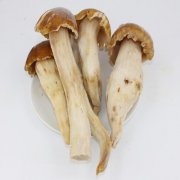
Can chicken-of-the-woods mushroom (Termitomyces) be cultivated artificially? With cultivation techniques and price per jin
Can Termitomyces be cultivated artificially? Yes, it can be cultivated artificially. Termitomyces is an edible mushroom with relatively high nutritional value. So how much does it cost per jin? Let's take a look below at how to cultivate Termitomyces artificially. Step one, culture substrate formula
-
Analysis of the Causes of Meteorological Diseases in Oyster Mushroom Cultivation and Prevention Countermeasures
Years of oyster mushroom cultivation practice has proven that abnormal weather changes in spring, with temperatures suddenly rising or dropping sharply, can cause the same meteorological diseases in oyster mushrooms within the same climatic zone. If poorly managed, oyster mushroom fruiting bodies will wilt and die in large numbers within 1-7d, resulting in heavy losses. Therefore, studying meteorological diseases of edible fungi, utilizing weather forecast results, and formulating effective preventive measures have very important practical significance for reducing losses of edible fungi and improving the economic benefits of mushroom cultivation. 1 Typical Cases and Analysis 1.1 Typical Cases Case 1: 1
-
What to Do About Contaminated Shiitake Mushroom Bags? A Detailed Guide to Practical Countermeasures
During indoor incubation, the mushroom bags should be turned 4 to 5 times: the first time 6 to 7 days after inoculation, and thereafter once every 7 to 10 days. When turning the bags, carefully check for contaminating microorganisms and deal with them promptly. In cases of mild contamination, where only scattered dot-like or filamentous small colonies of contaminants appear at the tied opening or in the folds of the bag and have not spread, use a syringe to draw up a mixture of 50 ml of 75% alcohol plus 30 ml of 36% formaldehyde, inject it into the affected area, and gently massage the surface with your fingers so the solution penetrates into the contaminant cells, then seal the injection hole with adhesive tape. Contamination at the inoculation holes
-
Ideas and Countermeasures for Promoting the Industrialized Operation of Edible Fungi
Fan Shenhua, Director of the Agriculture Bureau of Bazhong City, Sichuan Province, led a municipal bureau research team on a special investigation of edible fungi in Tongjiang County. Over two days, the research team successively visited 5 villages and 12 she in Tiechang Township, Nuosuihe Town, and Nuojiang Town of Tongjiang County, visited 27 large planting households, 2 professional cooperatives, the processing workshops of leading enterprises, and the operating market, and held discussions with large households, members of professional cooperatives, grassroots cadres, and leading enterprises to jointly explore the industrialized operation of edible fungi. I. Development Status The edible fungi products of Tongjiang mainly consist of silver ear fungus (white fungus), wood ear fungus, and shiitake mushrooms, which are produced and cultivated in large quantities, along with small quantities of oyster mushrooms, button mushrooms, enoki mushrooms, shimeji mushrooms, straw mushrooms, Gastrodia elata, reishi mushrooms, and more than 10 types of wild fungi.
条件筛选