Four key steps to master for raising watermelon seedlings in a heated hotbed
Raising watermelon seedlings in a heated hotbed has the characteristics of fast warming, even temperature, low cost and simple operation. It can cultivate robust watermelon seedlings in January and February when the air temperature is very low, and its seedling-raising effect is similar to that of an electric heating hotbed. 1. Build the seedbed. First dig a bed pool 4.5 m long from east to west, 1.6 m wide from north to south and 0.2 m deep...
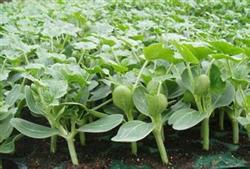
Raising watermelon seedlings in a heated hotbed has the characteristics of fast warming, even temperature, low cost and simple operation. It can cultivate robust watermelon seedlings in January and February when the air temperature is very low, and its seedling-raising effect is similar to that of an electric heating hotbed.
1. Build the seedbed. First dig a bed pool 4.5 m long from east to west, 1.6 m wide from north to south and 0.2 m deep. At the same time, dig a fire pit 1.3 m long from north to south, 1 m wide from east to west and 1.5 m deep at one end of the bed pool. Then, dig a 0.4 m wide ditch along the four sides of the bed pool bottom; the end at the fire pit is 0.4 m deep, and the end away from the fire pit is 0.2 m deep, with the bottoms of the north and south ditches forming a natural slope. Cut the middle soil mass into a slope that is 5 cm deeper than the original pool bottom at the fire pit end, and level with the dug ditch bottom at the other end. In the middle of the ditch bottom at the fire pit end, dig a small ditch 16 cm deep and 16 cm wide, which is the fire channel for heating, and along the ditch bottoms on the south and north sides dig toward the other end, then turn toward the center respectively, and along the central slope turn back to the fire-opening end.
On the wall inside the fire pit facing the seedbed, facing the center of the bed pool, dig inward an arched hole with a semicircular top, 0.6 m high, 0.45 m wide and 0.3 m deep. Above the inside of the hole, dig a fire channel with a diameter of 0.13 m toward the top fire channel in the bed pool so that it connects with the fire channel in the bed pool, and build a stove in the hole. Cover the fire channel in the bed pool with tiles or other items and seal it tightly with mud to prevent water leakage, then fill with soil and tamp it firm to restore the original height of the bed pool bottom. The two middle fire channels at the fire pit end should extend outside the bed and connect with the chimney on the bed wall. Finally, build enclosing walls around the bed pool; the north wall is 40 cm high, the south wall is 10 cm high, and the east and west ends are sloped walls.
2. Preparation before sowing. After the seedbed is built, place nutrition pots in the seedbed or fill it with nutrition soil and water it for "block-cutting" seedling raising. The nutrition soil uses 2/3 field soil that has not grown cucurbit crops, plus 1/3 fermented horse and mule manure, or it is made from sieved field soil and barnyard manure in equal halves. Mix 0.5 kg urea (or diammonium phosphate) into each cubic meter of bed soil, mix evenly, fill it into the bed and tamp it firm to a thickness of 10 cm. Three days before sowing, water the seedbed thoroughly with warm water; when the water has seeped down and the bed soil is not too sticky, cut blocks, cutting them into 10 cm "soil blocks" and filling the gaps with fine sand, then cover the bed surface with film and light the fire to heat it.
3. Sow at the right time. The sowing time should be specifically controlled according to the cultivation method and the required seedling age. Generally, extra-early-maturing watermelons should be sown in mid-February. Before sowing, soak and sprout the seeds. When the 5 cm soil temperature in the seedbed rises above 16°C, around noon on a sunny day, sow the treated seeds into the "soil blocks" or nutrition pots, covering with 1 cm of soil. After sowing, cover with film and seal it tightly, and at night add straw mats to keep warm and prevent cold.
4. Heating management. After sowing, keep the bed temperature at about 30°C; when most seedlings have emerged, keep the bed temperature at 20-25°C during the day and 15-20°C at night. After the heart leaves break, it can be kept at 22-28°C during the day and 15-20°C at night. After seedling emergence, the straw mats should be removed early and put on late to increase light in the bed. After true leaves appear, if the bed soil is found to be too dry, spray 30°C warm water at noon on a sunny day, and cover the film immediately after watering. If nutrient deficiency is found, spray 2% urea water on the leaves.