What are the methods for judging whether a watermelon is ripe?
1. Accumulated temperature method. Watermelons need a certain amount of accumulated temperature from flowering to ripening. Generally, early and mid-season varieties need 700--800°C from flowering to ripening, while late varieties need about 1000°C. Therefore, under conditions of timely sowing in spring and normal climate, the fruit development days of each variety are basically fixed. Early varieties need 28--3...
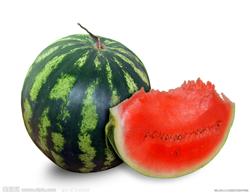
1. Accumulated temperature method. Watermelons need a certain amount of accumulated temperature from flowering to ripening. Generally, early and mid-season varieties need 700--800°C from flowering to ripening, while late varieties need about 1000°C. Therefore, under conditions of timely sowing in spring and normal climate, the fruit development days of each variety are basically fixed. Early varieties need 28--30 days, such as Jingxin No. 1; mid-season varieties need 30--33 days, such as Shubao; late varieties need about 35--40 days, such as Tedaxinhongbao. Therefore, using timing to determine fruit ripeness is the most reliable for watermelon farmers. The specific method is: when the watermelon flowers, after each plant is artificially pollinated, a tag is immediately hung to mark it, and it is harvested on time when the fruit reaches maturity, so that its degree of ripeness can be confirmed. However, for the same variety, the fruit-bearing position and the air temperature during fruit development have a great influence on how quickly the fruit ripens. If the fruit-setting node is high (that is, close to the roots) and the temperature during fruit development is high, then the number of days from flowering to harvest should be correspondingly shortened; otherwise, it should be extended. Therefore, after pollination, the daily temperature and sunshine duration should also be recorded so as to accurately judge the ripeness of the watermelon. Before harvesting a large batch of watermelons pollinated at the same time, one or two can also be tasted to check their ripeness.
2. Fruit trait observation method. After the fruit ripens, the rind is generally hard, smooth and glossy, the rind pattern is clear, and it shows the ripe-fruit rind color inherent to the variety. The fruit navel (where the corolla has fallen off) and the fruit stalk (where the peduncle is attached) shrink inward and become sunken, the part of the fruit touching the ground turns yellow and rough, and the bristles on the fruit stalk become sparse, turn yellow, and are inconspicuous; this indicates a ripe watermelon. In addition, the tendril at the same node as the fruit or at the node before it withering can also serve as a sign of fruit ripeness, though this varies with the vigor of the plant. For example, in multi-crop watermelon cultivation, during the harvest period of the first and second crops, the stems and leaves are growing vigorously; although the fruit is already ripe, the tendril does not necessarily wither. For the third crop, the stems and leaves are declining; although the tendril has already withered, the fruit is not necessarily ripe. Therefore, other conditions should be combined for comprehensive judgment.
3. Melon tapping and sound listening method. A ripe fruit feels smooth when stroked by hand, and when tapped with a finger it gives a dull "peng peng" sound. An unripe melon gives a solid "deng deng" sound. If it gives a "pu pu" sound, then it is overripe. It should be noted that when there is more rain during the fruiting period, although the sound heard after tapping is a solid sound, the melon is nevertheless ripe. In addition, for some tight-skinned varieties, after the fruit ripens, tapping with a finger still gives a solid "deng deng" sound, and these should be treated differently.
4. Specific gravity method. Generally, the specific gravity of a ripe watermelon is between 0.90--0.95. Greater than this figure indicates that it is not yet ripe, and less than 0.90 means the melon is overripe. This is because when a watermelon ripens, the vacuoles in the cells enlarge, the middle lamella of the flesh cells begins to separate, the intercellular spaces fill with air, and the gaps in the placental tissue around the seeds increase, so the specific gravity decreases. Holding the melon in the hand, it feels light; patting the melon surface lightly with the hand, the palm feels a slight quivering, which indicates a ripe melon.
If continuous fruiting is needed, after topdressing and watering during the fruiting period, sometimes mature fruits will show a return-to-unripe phenomenon 3--4 days after topdressing; such returned melons should have harvesting delayed by 4--5 days.
In order to obtain better economic benefits, when an earlier market launch is needed, ethephon (2-chloroethylphosphonic acid) can be used for ripening treatment. The treatment method is: when the fruit has already reached full size but is not yet ripe (that is, 26--28 days after flower drop), apply a 200 mg/kg ethephon solution evenly over the melon surface once in the late afternoon or early evening. A small amount of soap powder may be added to the solution to increase adhesion, and it can be harvested and marketed two days later. Treated fruits can be supplied to the market 3--5 days earlier than naturally ripened ones, and their quality is not only not reduced but is somewhat improved.
For those who cannot judge accurately, they should continuously accumulate experience in production practice, study the trait performance of ripe melons of common watermelon varieties, combine the temperature and sunshine conditions of the season, and use multiple means such as "looking with the eyes, listening with the ears, and holding with the hands" for comprehensive judgment. Only by continuously increasing the "feel" for judging ripe melons can one become proficient through practice and master it skillfully.