-

How to plant Terminalia chebula? Detailed explanation of cultivation methods and technical key points
How to plant Terminalia chebula
-

What are the difficulties in cultivating Schisandra chinensis? A complete analysis of practical countermeasures
Cultivating Schisandra chinensis artificially to replace wild resources has already become an inevitable trend in the development of the Schisandra chinensis industry. Many difficulties have also emerged in the production process of artificially planting Schisandra chinensis, and these difficulties have seriously hindered the path of Schisandra chinensis production toward intensive, large-scale, and industrialized development, and are also the fundamental reason for the current lack of large-scale successful experience in artificially cultivating Schisandra chinensis. Regarding the harm caused by pests and diseases, pesticide residues, and drift. The overall countermeasure is: adhere to the three principles of prevention, mitigation, and treatment. Prevention: in the process of Schisandra chinensis cultivation, consistently implement the policy of placing greater emphasis on prevention than on treatment, act early to seize the initiative. Take preventive measures before trouble arises and avoid being passive. In recent years, due to consecutive warm winters, the development of Schisandra chinensis has advanced, so all agronomic measures must also be carried out earlier. Among the 24 solar terms, after Awakening of Insects, Schisandra chinensis should be protected according to local phenological conditions. To prevent certain fungi in the atmosphere from attaching to the stems and vines of Schisandra chinensis, the specific measure is to spray Bordeaux mixture, prepared with equal amounts of quicklime and copper sulfate, one part each, and 200 parts water. After Schisandra chinensis leafs out, promptly spray broad-spectrum fungicides and foliar fertilizers, Bihu + polyoxins + fulvic acid. Mitigation: if nearby farmland is sprayed with butyl ester pesticides, we must take targeted measures and spray mitigating agents, or spray foliar fertilizers to improve immunity. At this stage, prevention should focus mainly on leaf blight. Spray pesticides against Deuteromycota fungi. Treatment: if diseases still occur when protective and mitigating measures are ineffective, apply the right remedy for the condition. Carry out timely treatment. Strictly prevent the loss of the optimal prevention and treatment timing, which causes losses. For the treatment of several common diseases, please follow the methods in the Schisandra chinensis pest and disease section below. Keep firmly in mind the lesson of the large-scale damage to Schisandra chinensis in Heilongjiang in 2007, and never allow the tragic situation to repeat itself.
-
What to do when white ants (termites) infest Ganoderma lucidum?
The white ant (Coptotermes formosanus Shiraki), also known as the termite or house termite, belongs to the class Insecta, order Isoptera. 1. Morphology and habits: Each colony contains three morphological forms and different functional types of termites. The large-winged ant (a type of reproductive ant), also called the flying ant, has a body length of 7.5-8.5 mm, wing length of 11 mm, a nearly round brown head, inconspicuous secretory pores, and 21 antennal segments. The thorax and abdomen are yellowish-brown. The wings are grayish-white and transparent, with the wings and front margins pale yellowish-brown. The soldier ant has a body
-
How to make watermelon rind taste good? The method for making licorice watermelon rind strips
Watermelon rind is rich in carbohydrates, minerals and vitamins, and has effects such as clearing heat and detoxifying, and promoting urination. The following introduces the technique for making licorice watermelon rind strips: Cut into strips. Thoroughly wash fresh watermelon rind with clean water, drain off the water, remove the green outer skin and the red flesh, then use a stainless steel knife to cut the watermelon rind into strips 0.2 cm wide and 6 cm long. Salting. First mix sodium benzoate and table salt, in amounts of 0.1% and 10% of the weight of the watermelon rind strips respectively. Then, in a container, salt in the order of one layer of watermelon rind and one layer of mixed salt, with a somewhat larger amount of mixed salt on the topmost layer. The salting time is generally 24 to 48 hours. Rinsing. Put the salted watermelon rind strips into a container holding clean water, changing the water once every 1 hour, until the salt content in the watermelon rind strips drops to 1% (the salt content is tested with a handheld salinity refractometer). Sugar processing. Put the rinsed watermelon rind strips into a bamboo basket and drain off the water. Then, in a container, process with sugar in the order of one layer of watermelon rind strips and one layer of sucrose. The amount of sucrose used is 20% of the fresh watermelon rind strips, and the sugar processing time is 24 to 48 hours. Baking. Take out the sugar-processed watermelon rind, drain off the sugar liquid thoroughly, arrange it evenly on a baking tray, send it into the drying room, and bake at 65 to 70 degrees C until the moisture content of the watermelon rind is 25%. Auxiliary ingredient formula. Calculated per 100 kg of fresh watermelon rind strips, prepare the auxiliary ingredients: sodium saccharin 0.05 kg, monosodium glutamate 0.2 kg, citric acid 0.05 kg, table salt 0.5 kg, potassium sorbate 0.01 kg. Soaking the auxiliary ingredients. Place the dried watermelon rind strips in a container. Dissolve the auxiliary ingredients according to the formula in licorice water, pour into the container, and mix the watermelon rind strips thoroughly from top to bottom. On the second day, mix from top to bottom another 1 to 2 times, leave for 2 days, take out the watermelon rind strips and bake them. The licorice aqueous solution is made by boiling 4 kg of licorice and 25 kg of water per 100 kg of fresh watermelon rind strips, and filtering it. Baking. Evenly arrange the watermelon rind strips that have been soaked with auxiliary ingredients on a baking tray, and send them into the drying room for baking. It is suitable to control the drying room temperature at 60 to 65 degrees C. During baking, turn them several times, and when the moisture content of the product drops to about 25%, the baking is finished. Mixing in licorice powder. Cool the watermelon rind strips at room temperature. Mix licorice powder (used in an amount of 0.1% of the fresh watermelon rind strips) into the watermelon strips, and mix evenly to obtain the finished product.
-
How should Gastrodia elata production develop? An analysis of development ideas and countermeasures
1. Current market conditions. Because the Gastrodia elata cultivation area increased substantially in the previous two years, and because cultivation techniques improved, total Gastrodia elata output has more than doubled compared with 3 years ago; in the Gastrodia elata production and sales market, on the one hand output has risen sharply, but on the other hand, because the increase in processing for medicinal use (patent medicines) has been relatively small, the market is currently in a sluggish state. The Gastrodia elata market is similar to other traditional Chinese medicinal herb markets, generally with a "market cycle" of 3-5 years, so waiting until the Gastrodia elata market picks up before carrying out sexual breeding is not feasible; if even the seed tubers are disposed of now
-
A Detailed Guide to Processing and Making Licorice Watermelon Seeds
Ingredients: 500 g watermelon seeds, 10 g peanut oil, 25 g refined salt, 3 g licorice, 50 g quicklime. Method: 1. Pour the quicklime into a large bowl, add 500 ml of clean water, stir well to make lime water, then add the watermelon seeds and soak for 4-5 hours, then remove them, rinse thoroughly with clean water, and remove the mucous membrane on the shells. 2. Put the refined salt and licorice into a pot, pour in 150 ml of clean water, place over high heat and boil for 10-15 minutes, filter out the licorice to make licorice salt brine
-
How to Control Termites in Ganoderma lucidum Cultivation? Detailed Methods
Termites, also called white ants, belong to the order Isoptera, family Termitidae. Termites occur mainly in hilly and mountainous areas, and are less common in plain areas. Termites are a large family, most abundant in tropical and subtropical regions. In the cultivation of Ganoderma lucidum and other edible fungi, ants mainly bore into and feed on log segments. Damage characteristics: termites bore into and feed on log segments, causing the bark and wood of the log segments to separate, inhibiting the growth of Ganoderma lucidum mycelium and the formation of fruiting bodies. This in turn reduces Ganoderma lucidum yield. Morphological characteristics: winged adults are 27-29.5 mm long, with a wingspan of 45-50 mm, head
-
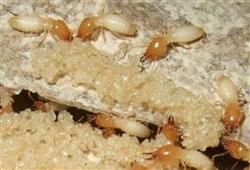
Lingzhi (Ganoderma lucidum) cultivation techniques: How do you control termites when growing lingzhi?
How do you control termites when growing lingzhi? Please explain: termites, also called white ants, belong to the order Isoptera, family Termitidae. Termites occur mainly in hilly and mountainous areas, and are less common in plains areas. The termite group is a large family, most thriving in tropical and subtropical regions. In the cultivation of lingzhi and other edible fungi, ants mainly bore into and feed on the log segments....
条件筛选