Three key points for protecting flowers and fruit of watermelon in hot and rainy seasons
Hot and rainy seasons are a test for most crops, and watermelons and melons are no exception. In this kind of weather, what we mainly do is protect their flowers and fruit to increase the fruit-setting rate and watermelon yield. Protection is mainly carried out from three aspects: Element one, cultivation management inside greenhouses. 1. In the hot summer...
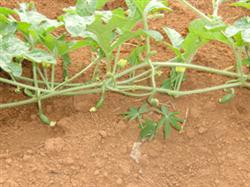
Hot and rainy seasons are a test for most crops, and watermelons and melons are no exception. In this kind of weather, what we mainly do is protect their flowers and fruit to increase the fruit-setting rate and watermelon yield. Protection is mainly carried out from three aspects:
Element one, cultivation management inside greenhouses
1. In the hot summer, because water evaporates quickly inside the greenhouse, the water requirement is very large, while watermelons and melons are at the stage of ripening and going to market at this time, and too much water will lead to a decline in quality or fruit cracking; therefore, irrigation time and irrigation amount should be strictly controlled in the field according to specific conditions. When watering, it is best to use drip irrigation facilities and adopt light and frequent irrigation to prevent fruit cracking; do not water for three days before harvest, so as not to affect the quality of the melons and fruits.
2. Harvest and bring to market in time, and select and retain second-crop melons at the proper time.
Element two, open-field cultivation management
1. Summer is a season with frequent rainstorms, so remember to clear field ditches and drain waterlogging in time.
2. Timely artificial pollination to protect flowers and fruit: for seedless watermelon, carry out artificial pollination from 6-8 a.m. on sunny days; on rainy days, pollination can be carried out by the method of covering flowers with paper caps; seeded watermelon can also be pollinated with artificial assistance. Placing straw under young melons before rainstorms can effectively prevent fruit drop caused by rainstorms.
Element three, pest and disease control
1. Phytophthora blight: at the early stage of the disease, spray the diseased parts or drench the roots. Commonly used agents include 58% metalaxyl-mancozeb wettable powder at 500-800 times dilution, or 40% fosetyl-aluminum (phosethyl-Al) wettable powder at 200-250 times dilution, or 64% oxadixyl-mancozeb wettable powder at 400-600 times dilution. Generally, spray or drench the roots once every 7-10 days, with 2-3 consecutive applications.
2. Viral disease: control aphids to prevent the disease, and timely control aphids; diseased plants found in the field should be pulled out and destroyed in time to prevent virus transmission. At the early stage of the disease, spray with 25% Virus K at 1000 times dilution, or 20% Virus A wettable powder at 500 times dilution, or 5% Junke emulsifiable concentrate at 800-1000 times dilution, or 0.5% Antiviral Agent No. 1 (fungal polysaccharide) aqueous solution at 300 times dilution, once every 7-10 days, spraying 2-3 times consecutively, which can reduce the damage.
3. Anthracnose: at the early stage of the disease, spray with 75% chlorothalonil wettable powder at 500-700 times dilution, or 50% thiophanate-methyl wettable powder at 600-800 times dilution, or 50% duo-meiling wettable powder at 500-700 times dilution, or 10% difenoconazole water-dispersible granules at 3000-6000 times dilution, etc., once every 7-10 days, for a total of 2-3 sprays. During continuous rainy weather, seize the gaps after the rain stops to spray as soon as possible. Generally, if it does not rain within 5 hours after spraying, it is effective. Do not wait until the weather clears to carry out control, so as not to delay the opportunity.
4. Fusarium wilt: after diseased plants are found in the field, pull out the diseased plants in time at the early stage of the disease and burn them in a centralized manner; scatter quicklime on the roots of the diseased plants and several plants before and after them, or drench the roots with chemicals for disinfection. Commonly used agents include 50% procymidone at 1200-1500 times dilution, or 50% iprodione wettable powder at 1000-1200 times dilution, or 50% thiophanate wettable powder at 500-600 times dilution, or 50% carbendazim wettable powder at 600-800 times dilution, or 40% guakuning wettable powder at 1000 times dilution. Drench 0.25-0.5 kg of solution per plant, once every 5-7 days, for 2-3 consecutive control applications.
5. Aphids and red spiders: spray with 10% imidacloprid at 1000 times dilution, or 2.5% cyhalothrin emulsifiable concentrate at 4000 times dilution, or 48% chlorpyrifos at 1000 times dilution, spraying once every 5-7 days.
6. Aulacophora beetles: adopt plastic film mulching cultivation, and scatter plant ash, sawdust, etc. on the ground around the stem base of melon seedlings to prevent adults from laying eggs at the root of melon seedlings. For chemical control of adults, spray with 2.5% deltamethrin emulsifiable concentrate at 3000 times dilution, or 10% cypermethrin emulsifiable concentrate at 3000 times dilution, or Chedi at 2000 times dilution. For control of larvae, drench the roots with 90% crystal trichlorfon at 1000 times dilution, or 5% derris extract emulsifiable concentrate at 500 times dilution, or tobacco infusion at 30-40 times dilution.
From the above, it can be seen that protecting the flowers and fruit of watermelons and melons is mainly managed through protected and open-field cultivation, and attention must always be paid to preventing pests and diseases during the growth process, so as to respond to problems in real time, ensure increased yield, and increase production and income for fruit growers.