-
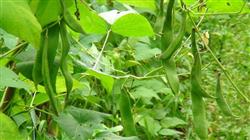
Key Techniques for Controlling Root Rot of Kidney Beans in Protected Cultivation
The suitable planting areas for white kidney beans in Shangri-La County are the mountainous and semi-mountainous areas of five townships along the Jinsha River: Hutiaoxia Town, Jinjiang Town, Shangjiang Township, Wujing Township, Sanba Township and Luoji Township. These areas sit against high mountains, have a beautiful environment, are free from the "three wastes" pollution of industry and mining, and are far from towns and cities. The soil is mostly red-brown earth and oil-sand soil...
-
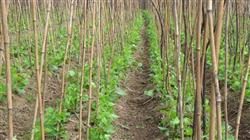
Key Techniques for High-Yield and High-Efficiency Cultivation of Autumn Kidney Beans
Autumn kidney beans, also known as sword beans or green beans, are one of the main autumn vegetables in Dongtai City, Jiangsu Province. From 2004 to 2007, cumulative planting promotion covered more than 20,000 mu, with a yield of 1,300-1,400 kg per mu and an output value of 1,800-2,200 yuan. In addition to supplying the market, most of the product is used for foreign trade dehydration processing. 1. Reasonable arrangement of crop rotation. Planting autumn kidney...
-
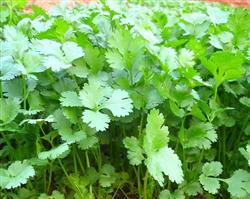
What are the key cultivation techniques for cilantro?
As a seasoning vegetable, cilantro is nutritious and simple to cultivate and manage. The key cultivation techniques for cilantro are introduced below: Characteristics of cilantro. Cilantro belongs to the Apiaceae family. It can tolerate low temperatures of -1°C to 2°C, and its suitable growing temperature is 17°C to 20°C. Above 20°C it grows slowly, and at 30°C it stops growing. Cilantro has...
-
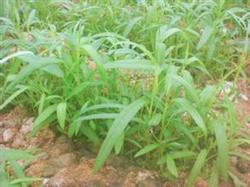
Introduction to Water Spinach Cultivation Techniques and Management Methods
It is once again the season when water spinach hits the market. Below is an introduction to the cultivation methods for water spinach: Water spinach, also known as water convolvulus, has a long harvest period and is a leafy vegetable that grows in summer. It can break the structure of northern summers being short on leafy vegetables and long on pod-bearing vegetables, and is not limited by high temperatures or heavy rain. Therefore, the north has begun to introduce and cultivate it, and has achieved success. First...
-
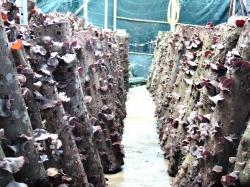
Detailed Explanation of High-Yield Cultivation Techniques for Black Fungus (Wood Ear Mushroom) on Logs
A sandy ground or flat grassland with a warm microclimate, small temperature difference between day and night, humid air, ample sunshine, close to a water source but not prone to waterlogging; for larger-scale cultivation sites, transportation conditions should also be considered. Low-lying plots with poor drainage are not suitable for use as mushroom yards. 1.2 Establishment of the mushroom yard: After selecting the site, it is necessary to...
-
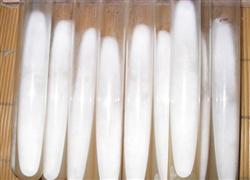
Detailed Explanation of Key Techniques for Identifying Wood Ear (Black Fungus) Spawn
1. The mycelium is snow-white, like fine wool, with short, neat, dense, thick and strong strands, advancing evenly side by side until it reaches the bottom of the bottle, growing uniformly and consistently from top to bottom, coming out in a solid block when dug out, not loose. 2. After the mycelium has fully colonized the bottle, brown water droplets are generally secreted on the surface of the mycelium. Later, pale yellow...
-
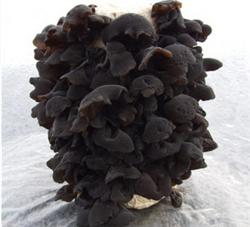
Detailed Explanation of Black Fungus (Wood Ear Mushroom) Spawn Production Techniques and Key Operation Points
After 2-3 flushes of fruiting bodies are harvested in hanging-bag cultivation of black fungus, the bags no longer produce mushrooms due to nutrient depletion and lack of moisture inside the bags, and are generally discarded as waste. In practice, we adopt a sand-covering treatment, and through multiple trials it has been shown that 3-4 more flushes can still be harvested. The specific method is as follows: remove the spawn bags, soak the spawn substrate in nutrient solution for one day to allow it to absorb sufficient water (nutrient...
-
Detailed Explanation of Wood Ear Mushroom Inoculation Techniques: Master the Key Operational Steps
There are many raw materials suitable for bag cultivation of Auricularia polytricha (hairy wood ear), such as mixed wood sawdust, cottonseed hulls, broken cottonseed, bagasse, mulberry branches, cassava stalks, rice straw, soybean stalks, peanut vines, and so on. Except for mixed wood sawdust, cottonseed hulls, broken cottonseed, and bagasse, the remaining raw materials must be crushed into powder before they can be used for production. The bag cultivation process for Auricularia polytricha is similar to that for golden needle mushroom (Flammulina velutipes) bags...
-
Cultivation Techniques for Interplanting Snap Beans in Greenhouse Tomatoes
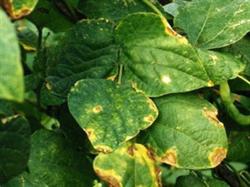
Symptoms: The disease can occur from the seedling stage to the mature plant stage, mainly affecting leaves, stems and vines, pods and seeds. The cotyledons of diseased seedlings show red-brown canker-like lesions, and lesions at the stem base encircle the stem, appearing as a red-brown canker, causing the seedlings to break and die. Control methods: 1. Implement a crop rotation of more than 3 years. 2. From disease-free fields...
-
Detailed Explanation of Key Points for High-Yield Cultivation Techniques of Runner Beans
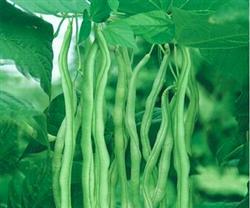
Runner beans originated in Mexico and the Americas and began to spread around the world in the 17th century. They are also known as multiflora beans and large-flowered runner beans. They have a long cultivation history, and due to large export volumes, the planted area has expanded year by year. They are nutritious and high in protein, serving as both a vegetable and a grain, and can also be used for pastries and bean paste. They are an important agricultural and sideline product for earning foreign exchange through export...
条件筛选