Key Techniques for High-Yield and High-Efficiency Cultivation of Autumn Kidney Beans
Autumn kidney beans, also known as sword beans or green beans, are one of the main autumn vegetables in Dongtai City, Jiangsu Province. From 2004 to 2007, cumulative planting promotion covered more than 20,000 mu, with a yield of 1,300-1,400 kg per mu and an output value of 1,800-2,200 yuan. In addition to supplying the market, most of the product is used for foreign trade dehydration processing. 1. Reasonable arrangement of crop rotation. Planting autumn kidney...
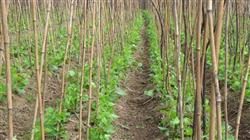
Autumn kidney beans, also known as sword beans or green beans, are one of the main autumn vegetables in Dongtai City, Jiangsu Province. From 2004 to 2007, cumulative planting promotion covered more than 20,000 mu, with a yield of 1,300-1,400 kg per mu and an output value of 1,800-2,200 yuan. In addition to supplying the market, most of the product is used for foreign trade dehydration processing.
I. Reasonable arrangement of crop rotation. There are many crop rotation options for planting autumn kidney beans. In addition to following leafy vegetables, they can also follow solanaceous fruits or cucurbit vegetables. Autumn kidney beans are also the best intercrop for corn, especially climbing varieties, which can climb up corn stalks. Climbing kidney bean varieties intercropped with tomatoes, cucumbers, etc., can be sown beside the trellis poles before the previous crop is pulled up, making use of the previous crop's trellis materials. Dwarf varieties can be intercropped with various vegetables.
II. Land preparation and fertilization. Choose sandy loam soil with deep soil layers and good permeability for planting. For autumn cultivation, it is best to carry out sun-baking of the soil clods and weeding. After plowing, prepare the land and make beds. At the same time, broadcast basal fertilizer at 1,000-3,000 kg of decomposed soil-ash miscellaneous fertilizer per mu. For acidic soil and calcium-deficient plots, apply an appropriate amount of lime powder.
III. Appropriate close planting. Select early-maturing, aging-resistant, green-pod varieties. For quick-frozen export processing, the varieties are required to have round, straight, tender pods, no strings, no leathery membrane, and a raw material utilization rate of over 90%. For climbing varieties, choose Green Pearl, 78-209, etc.; for dwarf varieties, choose Provider from the United States, Nanhu from France, etc. Generally sow from late July to early August, and they flower and set pods when the autumn weather turns cool. Row spacing is 60 cm, and plant spacing should be reduced to 20 cm or it is advisable to keep 1 more seedling per hole.
IV. Field management.
(1) Timely thinning and fixing of seedlings: Fix seedlings promptly after full emergence, keeping 2 seedlings per hole, removing the weak and keeping the strong, removing the small and keeping the large, removing the diseased and keeping the healthy.
(2) Cultivation and weeding: Carry out shallow cultivation during the seedling stage and clear weeds in the field.
(3) Trellising and vine guiding: Insert trellises when the main stem just begins to produce vines. Trellis styles include braided style, inverted-V style, and fence style, with the inverted-V trellis being the most commonly used. When inserting the trellis, obliquely insert 1-2 support poles at both ends of the trellis for reinforcement. After the trellis is set up, carry out one round of manual vine guiding (toward the left) to avoid vine tangling. The height of the trellis poles should preferably be 1.5-2 m.
(4) Fertilizer and water management. The principle of water and fertilizer management is dry flowers and warm pods, controlling early and promoting later. Apply less fertilizer before flowering, more after flowering, and heavily during the pod-setting stage. Apply nitrogen, phosphorus, and potassium in combination, with heavy application of potassium fertilizer. Apply trellising fertilizer in time, generally 2,000-2,500 kg of human and livestock manure per mu, applied in opened pits. Apply flower and pod fertilizer heavily; after kidney beans set pods, the fertilizer requirement is large, so watering and topdressing should be emphasized, generally applying 25-30 kg of 45% compound fertilizer per mu. If there is a long drought without rain during the pod-setting stage, water in time, generally once every 5-7 days, maintaining the maximum field water-holding capacity at 60-70%. Promptly carry out "flower turning." At the late harvest stage, remove most of the lower yellow leaves and topdress continuously 2-3 times to extend the harvest period by 10-15 days.
V. Pest and disease control. The main pests include cabbage caterpillars, pod borers, aphids, etc. Use 15-25 ml of 2.5% deltamethrin per mu diluted in 30-40 kg of water for spraying. For diseases such as anthracnose and rust, use a 500-fold solution of 70% thiophanate-methyl wettable powder for control.
VI. Timely harvest. For dwarf varieties, it is about 40 days from sowing to the beginning of harvest, and the harvest period is 15-20 days; for climbing varieties, the harvest period is about 30 days. Under normal circumstances, begin harvesting tender pods 10-15 days after flowering. Products used for dehydration and canning have strict requirements and should be harvested 3-5 days earlier than fresh-eating pods.