-
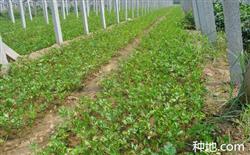
How to cultivate celery? Detailed explanation of planting methods and techniques
How should celery be planted? What are the steps? 1. Land preparation and bed making: choose a seedbed with higher terrain, convenient drainage and irrigation, loose soil, and fertile sandy loam, plow and expose to the sun, and apply sufficient decomposed base fertilizer (to make the soil loose, apply more barnyard manure). Because the young buds have weak soil-piercing ability and emerge slowly, it must be fully...
-
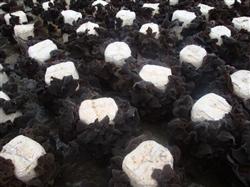
A Detailed Guide to Black Fungus Planting Methods and Cultivation Techniques
I. Overview Black fungus is also called wood ear, smooth wood ear, or cloud ear. Taxonomically it belongs to the class Basidiomycetes, order Tremellales, family Auriculariaceae, genus Auricularia. There are about a dozen or more species in this genus, such as black fungus, hairy wood ear, wrinkled wood ear, felt-cap wood ear, horny wood ear, shield-shaped wood ear, and so on. Among these wood ears, only the smooth wood ear has a plump, tender texture and a delicious flavor...
-
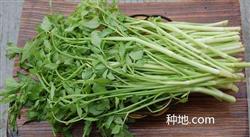
Detailed Explanation of Pollution-Free Water Dropwort Cultivation Techniques
How to grow water dropwort in summer? Water dropwort is a semi-cold-hardy aquatic vegetable, and it stops growing when the temperature exceeds 30°C. In the Suzhou area, planting generally begins in mid-to-late September, and harvesting ends in early-to-mid March of the following year. To solve the problem of the summer vegetable shortage, we have developed a summer planting production model and techniques for water dropwort...
-
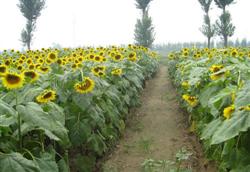
Detailed Explanation of Sunflower Cultivation Methods and Planting Techniques
Annual herbaceous flower, prefers warmth and high temperatures. Robust and requiring no special management, with strong nutrient absorption, it can grow in any soil. Cultivation points: optimal germination temperature: 22-30°C, optimal growth temperature: 15-35°C, planting requirements: sow seeds directly about 1CM deep, germination occurs in about 5-7 days, transplant when seedlings have 4-6 true leaves...
-
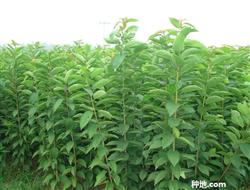
How to cultivate large cherry saplings? Detailed explanation of seedling methods and techniques
How to cultivate large cherry saplings? What to pay attention to High-quality saplings are the foundation of large cherry production. The quality of saplings not only directly affects how fast the tree grows, how early it bears fruit and how high the yield is, but also has a great impact on the adaptability and stress resistance of the tree. Therefore, in production, attention should be paid to propagating high-quality...
-
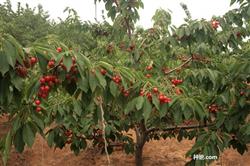
What are the irrigation methods and techniques for cherry orchards
How should a cherry orchard be irrigated? Seeking guidance. Cherry tree roots are shallow and have high requirements for soil aeration. Compared with other deciduous fruit trees, they have larger leaf area and higher transpiration, so in dry and hot conditions the water in the fruit is lost in large amounts through the leaves; soil drought during fruit development can cause fruit drop; and rain after a long drought or irrigation can easily...
-
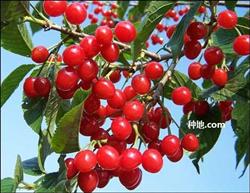
Want more cherries? Master these techniques for protecting flowers and fruit
Want more cherries? Seeking guidance: There are two main reasons for a cherry tree bearing little fruit: 1. Improper cultivation and management lead to excessively vigorous tree growth, no flower buds forming, affecting fruiting. 2. Severe pests and diseases or poor fertilizer and water conditions leave the tree with insufficient stored nutrients, causing poor flower bud development and severe flower and fruit drop during the blooming period...
-
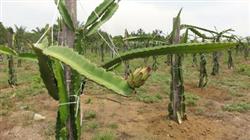
What are the key field management techniques for dragon fruit?
Dragon fruit begins to flower and bear fruit about 12-14 months after planting, and can flower 12-15 times per year. The fruiting period runs from April to November, and fruit can be harvested 30-40 days after the flowers fade. A single fruit generally weighs 500-1000 grams. In the second year after planting, each column produces more than 20 fruits, and by the third year it enters the full fruiting stage. With a relatively high level of management, 667 sq m...
-
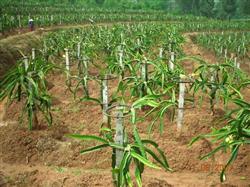
Key Cultivation Techniques for Dragon Fruit in Northern Regions
Dragon fruit, also known as cactus honey fruit, red dragon fruit, etc., is a perennial climbing succulent fruit. Dragon fruit originated in the tropical rainforests of the Americas and was later introduced to China. Greenhouse cultivation of dragon fruit has made "growing southern fruit in the north" a success. The following are the key techniques for greenhouse cultivation of dragon fruit, including cutting propagation and seedling raising, management during growth and development stages, greenhouse...
-
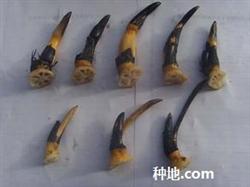
Where can I learn lotus root cultivation techniques? Detailed guidance requested
Can lotus root be propagated using the terminal bud as seed? How should it be done? Traditional lotus root cultivation habitually uses the lotus root body as seed, with the amount of lotus root used reaching as high as 400 kg per 667 sq m. If the terminal bud of the lotus root is cleverly used as seed, it not only saves a large amount of lotus root seed but is also simple and easy to do. 1. Seedling raising and land preparation. Choose fertile, deep dry land, and in early spring every 66...
条件筛选