Detailed Explanation of Black Fungus (Wood Ear Mushroom) Spawn Production Techniques and Key Operation Points
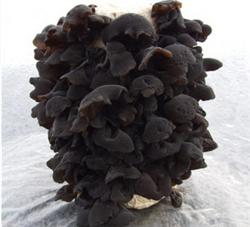
After 2-3 flushes of fruiting bodies are harvested in hanging-bag cultivation of black fungus, the bags no longer produce mushrooms due to nutrient depletion and lack of moisture inside the bags, and are generally discarded as waste. In practice, we adopt a sand-covering treatment, and through multiple trials it has been shown that 3-4 more flushes can still be harvested. The specific method is as follows: remove the spawn bags, soak the spawn substrate in nutrient solution for one day to allow it to absorb sufficient water (nutrient...
 (1) Preparation of Mother Spawn
Use test tubes to make slanted medium, and inoculate the original test-tube spawn (stock culture; the mother spawn used for production is the production mother spawn, which can be used to subculture stock spawn).
1. Medium Formulas
Formula 1: Comprehensive Potato Medium
Potato 200 g, glucose 20 g, dipotassium hydrogen phosphate 2 g, magnesium sulfate 0.5 g
Vitamin B1 10 mg, agar 20 g, water 1000 mL, pH natural
Formula 2: Synthetic Medium
Potato 20 g, glucose 20 g, potassium dihydrogen phosphate 2 g, peptone 10 g, beef extract 5 g
Yeast extract 5 g, magnesium sulfate 0.8 g, water 1000 mL, pH natural
2. Medium Preparation Method
First wash and peel the potatoes, cut them into thin slices, weigh out 200 g, add 1000 mL of water, boil for 15-20 minutes, filter through 4 layers of gauze, take the filtrate and add water to make it up to 1000 mL, add 20 g of agar, heat again, and after the agar dissolves, add the other chemicals in the formula.
The medium should be dispensed before it solidifies (agar medium solidifies at 40°C). Generally, a funnel or dispensing bottle is used, with a piece of soft rubber tubing attached at the lower end, and below the rubber tubing another short section of glass tubing is attached. A spring water-stop clamp is installed on the rubber tubing. When dispensing, insert the narrow end of the glass tube into the test tube, but do not let it touch the tube wall. The amount filled into each test tube is 1/4 of the tube length. After filling, plug with a cotton plug. Tie every 10 test tubes into a bundle, seal and tie the cotton plugs with plastic wrap, and bind them with string.
3. Sterilization
Bundle the dispensed test tubes well, place them in an autoclave, and sterilize for 20 minutes at a pressure of 1 kg/cm (reaching a temperature of 121°C in the pot), so that all microorganisms including spores are killed. When the pressure drops to 0, slowly release the gas in the pot, and while the medium has not yet solidified, arrange the test tubes into slants.
4. Inoculation and Cultivation
Using aseptic operation methods, inoculate the spawn onto the test-tube slant, place at 28°C, and after 3 days lower the temperature to 24°C to continue cultivation. After about 12-15 days, the mycelium grows over the entire test-tube slant, and this becomes the (production) mother spawn.
(2) Preparation of Stock Spawn
The mother spawn is inoculated onto stock spawn medium for expanded propagation and breeding, which is the stock spawn. Stock spawn generally uses wide-mouth bottles or bags.
Formula 1: Sawdust and Bran Medium
Hardwood 78%, bran 20%, sugar 1%, gypsum powder 1%, water 65%, pH natural
Formula 2: Cottonseed Hull and Sawdust Mixed Medium
Cottonseed hull 90%, sugar 1%, bran 5%, superphosphate 3%, gypsum powder 1%, pH natural
2. Mixing Materials and Filling Bags
Select fresh raw materials free of mold. According to the quantity needed for production, calculate the total amount of ingredients. Mix the bran and gypsum powder evenly into the culture material. After the sugar and superphosphate are dissolved in water, add water according to the above dry material amount at a ratio of 1:1.3 and mix evenly. The moisture content of the culture material is preferably 60%; the moisture content is suitable when the culture material is tightly squeezed in the hand and water is about to drip between the fingers. After piling and covering for 30 minutes, fill into bottles (bags). Use machinery or manual filling into bags and press slightly firm. (Plastic bag specifications are usually 9*21*0.04, that is, bag width 9 cm, length 21 cm, single-layer thickness 4 cm.) Firmly, insert a plastic ring over the bag opening to form a bottle-like shape, then plug the bag opening with a suitably tight cotton plug, or wrap and tie it well with kraft paper.
There are two methods for sterilizing stock spawn: high-pressure sterilization and normal-pressure sterilization. High-pressure sterilization is also called pressurized steam sterilization. Sterilization principle: under conditions of high temperature (120°C) and high pressure (1 kg/cm2), sterilize for 2-3 hours to kill all microorganisms including spores. Normal-pressure sterilization is called flowing steam sterilization. Due to differences in sterilization equipment, conditions, and basic factors, the temperature varies between 90-103°C. Its heat and penetrating power are not strong, and the sterilization purpose is achieved by maintaining a sufficient time at a certain temperature, usually maintaining at 100°C for 8-10 hours.
4. Inoculation and Cultivation
Whether using an inoculation box or inoculation room, before inoculation, the inoculation box or inoculation room must be disinfected with 0.2% Lysol water or bleaching powder, then place the sterilized material bottles (bags) into the inoculation box or inoculation room, irradiate with ultraviolet light for 30 minutes, and carry out inoculation under aseptic conditions, or before inoculation use a smoke agent for closed fumigation and disinfection. That is, when igniting the smoke agent for disinfection, doors and windows should be closed. For disinfection of the inoculation room, one room requires igniting 3 boxes of smoke agent of 50 g specification; for disinfection of the inoculation box, only 40 g by weight is used each time, but it is further divided into 20 packets, of which 2 packets need only be ignited (each packet 2 g). Generally, for 18×180 cm mother spawn test tubes, each tube can inoculate 4-6 bottles (bags) of stock spawn. Place the inoculated spawn bottles (bags) into the incubation room for cultivation. The incubation room temperature should be 22-26°C, relative humidity below 80%, light should be weak scattered light, and good ventilation conditions should be maintained during the incubation period. Stock spawn from inoculation to mycelium fully covering the bottle (bag) requires 30-40 days.
(3) Preparation of Cultivation Spawn
Further expanding and propagating the stock spawn gives the cultivation spawn. Cultivation spawn is generally prepared using plastic bags, with specifications of 15×33×0.05, sealed with a cotton-free cover. One bottle of stock spawn can inoculate 50 bottles (bags) of cultivation spawn. The cultivation spawn medium formula, material mixing, bag filling, sterilization, inoculation, and incubation management are consistent with those for stock spawn when prepared using plastic bags.
(4) Spawn Quality Assessment
Spawn quality is not only related to whether incubation can succeed, but also affects yield and benefits. Those engaged in wood ear cultivation must strictly control quality. Spawn quality assessment has two aspects of meaning: first, whether the isolated and cultured spawn is the species required for cultivation. Second, whether the spawn is a superior strain. Normal mycelium of black fungus spawn should be pure white with vigorous vitality. After 45 days of incubation, chrysanthemum-shaped or plum-blossom-shaped gelatinous primordia will appear from top to bottom between bottles (bags), with color from light brown to dark brown. If light yellow liquid accumulates at the bottom of the bottle (bag), or yellow slime appears in the upper half, and the medium shrinks, it is expired and aged spawn and should be discarded.
If the spawn mycelium only grows to 1/3-1/2 of the bottle (bag) and then light black gelatinous ear primordia appear, it indicates that the spawn is prematurely mature, or has been expanded too many times, or is due to too strong light in the incubation room. If the mycelium only grows in one corner and does not spread, it may be caused by the medium being too dry, too wet, or unevenly dry and wet. If the mycelium stops spreading and there is an obvious inhibition line, it is mostly caused by contaminating microorganisms. During the incubation process, if contaminating microorganisms are found, they should be detected and removed promptly and not used.