Detailed Explanation of Key Points for High-Yield Cultivation Techniques of Runner Beans
Runner beans originated in Mexico and the Americas and began to spread around the world in the 17th century. They are also known as multiflora beans and large-flowered runner beans. They have a long cultivation history, and due to large export volumes, the planted area has expanded year by year. They are nutritious and high in protein, serving as both a vegetable and a grain, and can also be used for pastries and bean paste. They are an important agricultural and sideline product for earning foreign exchange through export...
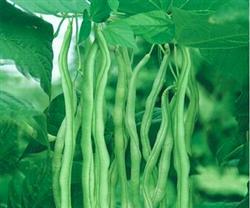
Runner beans originated in Mexico and the Americas and began to spread around the world in the 17th century. They are also known as multiflora beans and large-flowered runner beans. They have a long cultivation history, and due to large export volumes, the planted area has expanded year by year. They are nutritious and high in protein, serving as both a vegetable and a grain, and can also be used for pastries and bean paste. They are an important agricultural and sideline product for earning foreign exchange through export.
I. Morphological Characteristics of Runner Beans
Runner beans have a well-developed root system and are generally annual, but can become perennial in areas where winters are not too severe. The root system is well-developed and deep-reaching, making the plant relatively drought-tolerant. The stems are vining, vigorous in growth, and strongly branching, with stems reaching over 4 m in length. The leaves are green, alternate, trifoliolate, and heart-shaped, with cotyledons remaining underground. The flowers are papilionaceous, arranged in racemes, with peduncles 15-18 cm long. Many flowers bloom but few pods set. The pods are green and hard, grown for their seeds, and turn yellow when mature. The seeds are kidney-shaped; plants with white flowers produce white seeds, and plants with red flowers produce speckled seeds. The 1000-seed weight is 800-1500 g.
II. Types of Runner Beans
There are two types of runner beans, namely large white runner beans and large black runner beans. Plants with white flowers produce white seeds, called large white runner beans; plants with red flowers produce seeds mostly with large purple-black patches or streaks, called large black runner beans or large-flowered runner beans. Because both flower colors are bright and beautiful and can be used for ornamental purposes, they are also collectively called ornamental beans.
III. Environmental Requirements of Runner Beans
1. Temperature: Runner beans are suitable for cultivation in temperate and tropical high-altitude areas. They are relatively cold-tolerant and intolerant of high temperatures. They are only damaged by frost when temperatures drop below 5 degrees, and the aboveground parts die when exposed to frost. Growth and development require areas with a frost-free period of more than 120 days. The most suitable germination temperature is 20-25°C, the suitable growing temperature is 18-20°C, and pollination and pod setting become difficult above 30°C or below 15°C. They are especially suitable for cultivation in the highland mountainous areas of Yunnan.
2. Light: They are a cross-pollinated, short-day crop and prefer ample sunlight. The shorter the daylight period and the more abundant the sunlight, the earlier runner beans flower, set pods, and mature. Conversely, when the daylight period is prolonged and sunlight is insufficient, flowering, pod setting, and maturity are delayed, the branches and leaves grow excessively, and they may even fail to flower and set pods.
3. Water: Throughout the entire growth period, runner beans require relatively abundant and even moisture, with the flowering and pod-setting stage being the period of greatest water demand. If water is lacking at this time, it has a relatively large impact on yield. In Yunnan and Guizhou, natural rainfall usually meets the requirements, so irrigation may be unnecessary.
4. Soil: Runner beans have a relatively well-developed root system and are suited to cultivation in deep, well-drained medium loam soils. They are not well suited to heavy clay and poorly drained soils. The soil pH should preferably be neutral to slightly acidic.
IV. Key Cultivation Points
1. Seize the optimal seasonal timing and sow at the right time. Sowing can be done when the soil temperature reaches 10 degrees, generally from April to June. The sowing rate is 6.5-8 kg per mu, and the sowing depth should be 10-15 cm.
2. Apply sufficient base fertilizer and topdress at the right time. Apply about 1500 kg of farmyard manure per mu and 40-50 kg of compound fertilizer (30 kg phosphate fertilizer, 10-15 kg potassium fertilizer) as base fertilizer. For topdressing, apply compound fertilizer twice as appropriate at the beginning of flowering and at the pod-setting stage, 10-15 kg per mu each time.
3. Reasonable close planting. Single-ridge or double-ridge high-bed cultivation is required, with row spacing of 0.8-1 m and plant spacing of 0.35-0.45 m. Sow 2-3 seeds per hill, with 1500-2200 hills per mu. It can be grown in pure stands or intercropped or relay intercropped with corn and potato (2:1, 4:1).
4. Trellising and tip removal. Set up trellises when the main stem is 30-40 cm tall or when 5-6 true leaves appear, with trellis height above 2 m; remove the growing tips when the plant is about 50 cm tall. By repeatedly removing new growing tips, the plant forms a short bushy shape, reducing height and increasing the number of flowers and pods.
5. Timely control of diseases, insect pests, and weeds (wilt disease, powdery mildew, viral disease, aphids, pod borers, red spider mites, and cowpea weevils).