Key Techniques for Controlling Root Rot of Kidney Beans in Protected Cultivation
The suitable planting areas for white kidney beans in Shangri-La County are the mountainous and semi-mountainous areas of five townships along the Jinsha River: Hutiaoxia Town, Jinjiang Town, Shangjiang Township, Wujing Township, Sanba Township and Luoji Township. These areas sit against high mountains, have a beautiful environment, are free from the "three wastes" pollution of industry and mining, and are far from towns and cities. The soil is mostly red-brown earth and oil-sand soil...
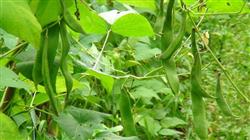 Root rot of kidney beans is a commonly occurring disease in protected cultivation, and it is severe in fields with continuous cropping on the same land. In ordinary diseased fields, yields drop by about 30%, and in severely diseased fields by more than 80%. The following aspects should be addressed to control this disease.
1. Seedbed disinfection Before raising kidney bean seedlings, first disinfect the seedbed soil. The method is to use 50% carbendazim and 50% thiram, at 10 grams of each per square meter, mixed with 10 grams of fine soil, and spread evenly over the surface of the bed; then rake it so that the medicated soil is mixed with the surface soil.
2. Hole application before transplanting For direct-sown plots or before transplanting seedlings, carry out soil treatment by application into the holes. The chemicals used are 50% carbendazim and 50% thiram, at 500 grams of each per 500 holes, mixed with 10 times their amount of fine soil, and spread into the holes before sowing or transplanting.
3. Root drenching During the growing period of kidney beans, if plants with root rot are found, do not water them at this time. First earth up the soil, then drench the roots with a solution made of 65% anthracnose thiram at 500 times plus a strong root-strengthening agent at 2000 times. Apply 150 grams to 250 grams of the solution per plant, once a week, for 2 to 3 consecutive drenchings, and the diseased plants will recover their growth.