Introduction to Water Spinach Cultivation Techniques and Management Methods
It is once again the season when water spinach hits the market. Below is an introduction to the cultivation methods for water spinach: Water spinach, also known as water convolvulus, has a long harvest period and is a leafy vegetable that grows in summer. It can break the structure of northern summers being short on leafy vegetables and long on pod-bearing vegetables, and is not limited by high temperatures or heavy rain. Therefore, the north has begun to introduce and cultivate it, and has achieved success. First...
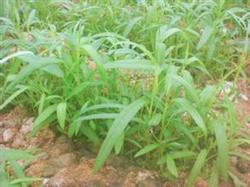
It is once again the season when water spinach hits the market. Below is an introduction to the cultivation methods for water spinach:
Water spinach, also known as water convolvulus, has a long harvest period and is a leafy vegetable that grows in summer. It can break the structure of northern summers being short on leafy vegetables and long on pod-bearing vegetables, and is not limited by high temperatures or heavy rain. Therefore, the north has begun to introduce and cultivate it, and has achieved success.
I. Cultivation Season and Cultivation Methods
Open-field cultivation of water spinach can be carried out from spring to summer. If needed according to the market, cultivation in greenhouses, polytunnels or low tunnels can achieve year-round production and supply the market at any time.
II. Cultivation Techniques
1. Land preparation and sowing. In the north, direct sowing is generally adopted. Before sowing, deeply plow the soil, apply 2500-3000 kg of decomposed organic fertilizer or 1500-2000 kg of human feces and urine, and 50-100 kg of plant ash per mu, mix evenly with the soil, then harrow level and fine. Before sowing, first treat the seeds, that is, soak them in warm water at 50-60°C for 30 minutes, then soak the seeds in clean water for 20-24 hours, remove and wash them, then place them at a temperature of about 25°C to germinate. During germination, keep them moist and rinse the seeds with clean water once a day. Once the seeds split and show a white point, they can be sown. The seeding rate is 6-10 kg per mu. Sowing generally adopts dense drilling, with a row spacing of 33 cm, and soil is covered after sowing. Broadcast sowing or hole sowing can also be used.
2. Field management. Water spinach has a very large demand for fertilizer and water. In addition to applying sufficient base fertilizer, topdressing is also required. When the seedlings grow to 5-7 cm, water and fertilize to promote seedling growth, and thereafter water frequently to keep the soil moist. After each harvest, apply 1-2 topdressings. When topdressing, apply light fertilizer first and then heavier fertilizer, mainly nitrogen fertilizer, such as urea. During the growth period, timely hoeing and weeding should be carried out. After the rows close, weeding and hoeing are no longer necessary.
The management principle for water spinach is: apply more fertilizer, harvest frequently.
The main diseases and pests of water spinach include white rust, cabbage caterpillar, and cotton leafworm larvae, among others. Cabbage caterpillar and cotton leafworm larvae can be controlled with a 20% fenvalerate 8000-fold solution; for white rust, a 1:1:200 Bordeaux mixture or 0.2-degree lime sulfur mixture, or a 65% zineb 500-fold solution can be used, spraying once every 10 days, with the aim of controlling the disease and preventing it from developing.
3. Harvesting. If water spinach is harvested only once, it can be harvested and marketed in one go when the plant height is 20-35 cm. If it is harvested multiple times, thinning can be done when the plant height is 12-15 cm, and the thinned seedlings can be marketed; when the plant height is 18-21 cm, the seedlings can be pulled and marketed along with final thinning, and the remaining seedlings can be harvested and marketed multiple times. When the seedlings grow to 33 cm tall, carry out the first harvest. For the first harvest, leave 2 stem nodes on the stem. For the second harvest, cut the second node left on the stem. For the third harvest, cut the first node left at the base of the stem, so that the base of the stem can sprout again. In this way, the stems and vines harvested later can remain thick and strong. When harvesting, pinching by hand is more suitable; if a knife or other iron tool is used, the cut area is prone to rusting and dying. Generally, a single harvest can yield 1500 kg per mu, and multiple harvests can yield 5000 kg per mu.