What are the key cultivation techniques for cilantro?
As a seasoning vegetable, cilantro is nutritious and simple to cultivate and manage. The key cultivation techniques for cilantro are introduced below: Characteristics of cilantro. Cilantro belongs to the Apiaceae family. It can tolerate low temperatures of -1°C to 2°C, and its suitable growing temperature is 17°C to 20°C. Above 20°C it grows slowly, and at 30°C it stops growing. Cilantro has...
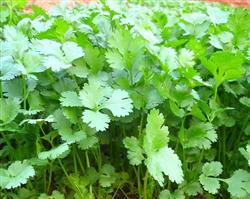
As a seasoning vegetable, cilantro is nutritious and simple to cultivate and manage. The key cultivation techniques for cilantro are introduced below:
Characteristics of cilantro. Cilantro belongs to the Apiaceae family. It can tolerate low temperatures of -1°C to 2°C, and its suitable growing temperature is 17°C to 20°C. Above 20°C it grows slowly, and at 30°C it stops growing. Cilantro is not strict about soil requirements, but soil with good structure, strong fertilizer and water retention capacity, and high organic matter content is favorable for cilantro growth.
Variety selection for cilantro. Cilantro has large-leaf varieties and small-leaf varieties. Large-leaf varieties have taller plants, larger leaves, few and shallow notches, a mild fragrance, and relatively high yield; small-leaf varieties have shorter plants, smaller leaves, deep notches, a strong fragrance, cold tolerance, and strong adaptability, but slightly lower yield. Generally, small-leaf varieties are mostly chosen for cultivation.
Open-field cilantro cultivation techniques Cilantro can be cultivated in the open field in spring, autumn, and winter. During the seedling stage, do not water too much. When the seedlings grow to 10 cm, the plants grow vigorously, so water frequently to keep the soil surface moist. While watering, apply quick-acting nitrogen fertilizer 1 to 2 times. Pay attention to intertillage and appropriate thinning, and pull out weeds when thinning. In summer, appropriate shading is needed, and protection against heavy rain erosion is necessary. Drain promptly after rain to ensure uniform emergence.
Greenhouse cilantro cultivation techniques. Generally, direct sowing is done from September to October, and one winter irrigation is given before winter to help the seedlings overwinter. Cover with a greenhouse in January, and no ventilation is needed from January to February. When the seedlings turn green again, carry out intertillage, loosening of the soil, and weeding. When the seedlings are 10 cm tall, the plants enter the vigorous growth period, and the greenhouse should be kept at 15°C to 25°C. Apply about 15 kg of ammonium sulfate per mu each time, topdressing 1 to 2 times, which can advance the harvest.