Detailed Explanation of Key Techniques for Greenhouse Cultivation of Crown Daisy in Autumn and Winter
Because crown daisy (Glebionis coronaria) has characteristics such as tolerance to low temperatures, preference for cool conditions, intolerance to strong light, and relatively low light saturation point and photosynthetic intensity, cultivating crown daisy in greenhouses during autumn and winter is not only feasible but can also be brought to market during the Spring Festival period, greatly improving economic returns. The key cultivation points are as follows: 1. Timing In northern regions, from early October...
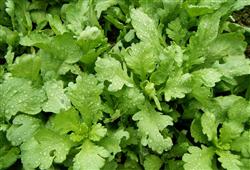
Because crown daisy has characteristics such as tolerance to low temperatures, preference for cool conditions, intolerance to strong light, and relatively low light saturation point and photosynthetic intensity, cultivating crown daisy in greenhouses during autumn and winter is not only feasible but can also be brought to market during the Spring Festival period, greatly improving economic returns. The key cultivation points are as follows:
1. Timing: In northern regions, from early October to mid-November, for market during the Spring Festival period.
2. Seed selection: Varieties with strong cold resistance, relatively good disease resistance, good quality, and high yield should be selected.
3. Sowing: When sowing, clear the residual stubble of the previous crop in the greenhouse, prepare the soil and apply fertilizer. Apply 3000-4000 kg of farmyard manure per mu, plow to a depth of 15-20 cm, and make semi-high beds, which helps increase soil temperature. Bed width 1-1.2 m, bed surface width 0.8-1 m, bed height 8-10 cm, sowing width 7-8 cm. After sowing, cover with 1.5 cm of soil. Sowing rate per mu is 2500-3000 g. Seedlings emerge 6-7 days after sowing.
4. Management: Strengthen management after seedling emergence. Early-stage temperatures are relatively high, while late-stage temperatures are low. Control temperature at 17-20°C. Ventilate when temperature exceeds 28°C, because temperatures above 30°C are unfavorable for growth. At this point, photosynthesis decreases or stops, growth is affected, leaves become thin and small, fiber increases, and quality deteriorates. The minimum temperature should be controlled above 12°C. Below this temperature, pay attention to cold protection and add cold protection facilities to avoid frost damage or freezing death. During the seedling stage, since it is in the cold season, generally do not water, to promote deep root development. Additionally, high humidity and low temperature easily lead to damping-off disease. When 8-10 leaves have grown, choose sunny and warm weather to water for the first time. Combine watering with one topdressing, applying 15-20 kg of ammonium sulfate per mu. Water 2-3 times during the growing period, watering in the morning during sunny and warm weather. The water amount must not be too large. Control humidity below 95%. If humidity is high, choose a sunny day with high temperature at noon to ventilate and remove moisture to prevent disease occurrence.
When crown daisy grows in a greenhouse, due to relatively weak light, low temperature, and high humidity, it is prone to damping-off disease, leaf blight, and downy mildew. Once disease occurs, timely control measures should be taken.