Detailed Explanation of High-Yield Cultivation Techniques for Greenhouse Grown Crown Daisy
Crown daisy (Glebionis coronaria) is an annual leafy vegetable of the Asteraceae family. Its key cultivation techniques are as follows: 1. Site selection and land preparation. The land for cultivating crown daisy is best sandy loam soil with convenient irrigation conditions. After selecting the site, plow it, apply a small amount of dried manure as base fertilizer, mix it evenly with the topsoil, and make flat beds 1.4-1.5 m wide...
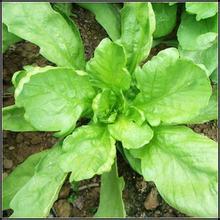 Crown daisy, also known as penthorum, spring chrysanthemum, or chrysanthemum stem, belongs to the genus Chrysanthemum of the Asteraceae family. It is a vegetable variety grown for its tender stems and leaves. Its growing period is relatively short; generally, it can be harvested 40-50 days after sowing. This vegetable has strong adaptability, strong cold resistance, and simple field management, making it an ideal variety for greenhouse production of leafy vegetables in deep winter. Below is an introduction to the key points for high-yield cultivation of greenhouse crown daisy.
I. Selecting superior varieties
In northern regions, small-leaf crown daisy is generally chosen, also known as mosaic-leaf crown daisy or fine-leaf crown daisy. The leaves are pinnately deeply lobed, finely divided in shape, with relatively thin leaf flesh and a rather firm texture. Both tender stems and leaves are edible. Because of its strong cold resistance, short growing period, and very strong aroma, it is deeply welcomed by vegetable farmers and is extremely suitable for protected cultivation in northern regions.
II. Fertilization and land preparation
Before sowing, apply 3000-5000 kg of decomposed farmyard manure, 50-70 kg of superphosphate, and 50 kg of ammonium bicarbonate per mu. Spread them evenly on the ground, then deep plow and deep till, level and make beds 1-1.5 m wide, and lightly tread them once with the feet to prevent sinking after watering.
III. Timely sowing
For greenhouse production, sowing is generally done in mid-December, so that the market period falls before the Spring Festival and higher economic returns are easier to obtain. Whether using dry seed sowing or pregerminated seed sowing, both broadcasting and drilling can be used. For drilling, open furrows in the bed at about 15 cm intervals, with a furrow depth of 1 cm. Water in the furrows with a watering can, and once the water has seeped in, broadcast the seeds, then evenly cover them with soil taken from the furrows. After covering with soil, take out the surface soil from the adjacent bed to be sown next, in preparation for the next round of sowing.
IV. Post-sowing management
1. Water and fertilizer management. After sowing, keep the bed surface moist to facilitate emergence. When the seedlings are 3 cm tall, water thoroughly for the first time; water 2-3 times during the whole growth period. When the seedlings are 9-12 cm tall, apply the first topdressing, flushing 10-15 kg of quick-acting nitrogen fertilizer per mu with the water, for a total of 2 topdressings.
2. Temperature management. After sowing, the temperature can be slightly higher, with daytime temperatures of 20°C-25°C on sunny days and 10°C at night. Seedlings can emerge after 4-5 days. After emergence, keep daytime temperatures at 15°C-20°C and nighttime at 8°C-10°C, but be sure to prevent high-temperature damage. When the plants have 1-2 true leaves, begin thinning. For broadcast sowing, the seedling spacing should preferably be kept at 4 cm square. If the drilling method is used, thin out overly dense seedlings.
V. Disease control
The main diseases of crown daisy include leaf blight and downy mildew. In the early stage of disease onset, spray 40% sulfur-multi suspension concentrate at 500 times dilution, or 70% thiophanate-methyl wettable powder at 500 times dilution, or 50% iprodione wettable powder at 1500 times dilution. Apply once every 5-7 days, for 2-3 consecutive sprays.
VI. Harvesting and marketing
Crown daisy harvesting is divided into one-time harvesting and staged harvesting. One-time harvesting is done 40-50 days after sowing, when the seedlings are about 20 cm tall, by cutting close to the ground. Staged harvesting has two methods: one is thinning harvest, and the other is cutting while retaining 1-2 side branches. After each harvest, water and topdress once to promote the sprouting and growth of side branches. After 20-30 days, another harvest can be made. The yield per harvest is 1000-1500 kg per mu. It is best to finish harvesting before the Spring Festival, during the peak demand period.