Detailed Explanation of Key Cultivation Techniques for High-Yield Navel Oranges
1. Choose dwarfing rootstocks and graft dwarfing varieties, which is beneficial for early fruiting. Generally, the large-leaf small-flower strain of trifoliate orange (Poncirus trifoliata) is selected as the dwarfing rootstock. Trifoliate orange is currently a citrus rootstock with a dwarfing effect, and it has four strains, among which the large-leaf small-flower strain has a more ideal dwarfing effect. 2. Bend the roots for shallow planting, control the main...
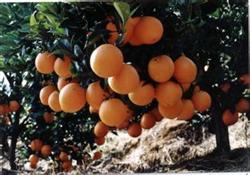
I. Choose dwarfing rootstocks and graft dwarfing varieties, which is beneficial for early fruiting. Generally, the large-leaf small-flower strain of trifoliate orange (Poncirus trifoliata) is selected as the dwarfing rootstock. Trifoliate orange is currently a citrus rootstock with a dwarfing effect, and it has four strains, among which the large-leaf small-flower strain has a more ideal dwarfing effect.
II. Bend the roots for shallow planting and control the deepening of the main root. This can control the excessive growth of the main root, thereby promoting the development of a large number of horizontal roots and absorbing roots, and increasing the nutritional area of the root system.
III. Shape with a low trunk, pinch short shoots, and control excessive growth of the canopy. This can increase the number of branching nodes in the canopy and enable it to quickly form an early-fruiting canopy. Navel oranges generally have fruiting ability only after having 6-7 branching nodes. After planting navel oranges, implement low-trunk shaping, with an average trunk height of less than 15 cm, among which 20% of the plants produce main branches from the base. At the same time, each time the spring, summer, and autumn shoots reach 15-20 cm in length, pinch the short shoots to promote side branches and increase the number of branching nodes.
IV. Improve the soil and cut roots, increase soil organic matter, and use a reasonable ratio of nitrogen, phosphorus, and potassium to meet the nutritional needs of navel oranges for early fruiting and high yield. In the 2-3 years after planting, dig deep on the east and west sides and the south and north sides of the navel orange plants respectively to expand the holes and bury fertilizer to improve the soil. Root cutting can control excessive root growth and promote early fruiting and high yield of navel oranges.
V. Twisting shoots, pulling branches, and circling branches are beneficial for nutrient absorption and accumulation, promote flower bud differentiation, and can lead to earlier fruiting and earlier high yield. For navel oranges planted with bent roots, while hanging and pulling upright vigorous branches and opening their angles, in early to mid-October, that is, after the autumn shoots have become lignified, twist the long and strong autumn shoots. The method is to hold the base of the autumn shoot with the left hand, twist the shoot 180 degrees with the right hand, and slightly injure the xylem, or loop the long and strong autumn shoots or pull them flat against each other. This can slow the excessive growth of autumn shoots, causing the nutrients produced by photosynthesis in the upper part of the autumn shoots in a short period to accumulate on the branches and shoots, which is beneficial for flower bud differentiation, increases the number of flowers, and improves flower quality and fruit set rate.