Detailed Explanation of Key Points for Navel Orange Harvesting and Fresh-Keeping Techniques
It is now the navel orange harvest season. If fruit growers only focus on early orchard management while neglecting post-harvest fruit handling and fresh-keeping storage techniques, the fruit will deteriorate and rot, resulting in a bumper harvest without a bumper income. Pay attention to harvesting techniques. For navel orange fruit intended for storage after harvest, picking is generally best when 80% of the fruit surface has colored and the fruit has not yet softened...
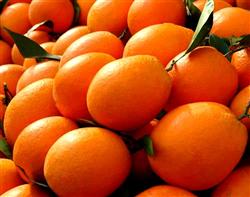
It is now the navel orange harvest season. If fruit growers only focus on early orchard management while neglecting post-harvest fruit handling and fresh-keeping storage techniques, the fruit will deteriorate and rot, resulting in a bumper harvest without a bumper income.
Pay attention to harvesting techniques
For navel orange fruit intended for storage after harvest, picking is generally best when 80% of the fruit surface has colored and the fruit has not yet softened. In the half month before harvest, it is not advisable to apply chemical fertilizer or irrigate heavily; harvesting is best done on sunny days; pickers should keep their nails trimmed flat, because the quality of harvesting technique directly affects the storability of navel orange fruit, and bruise-free harvesting is the key to reducing diseases during the storage period. Use the two-cut method for harvesting: the first cut should be made 1 cm from the fruit stem, and the second cut should be flush with the fruit stem. When picking, work from the outside inward and from top to bottom, and during harvesting, handle the fruit gently and load and unload it gently. At the same time, diseased and insect-damaged fruit, cracked fruit, and deformed fruit should be removed to avoid mixing them in.
Post-harvest fruit handling
Use a 2.4-D 5000-fold solution plus a thiophanate-methyl 800-fold solution as the fruit-dipping fungicidal fresh-keeping liquid. First put the liquid (dissolve 2.4-D with hot water) in a large vat or water tank, then use bamboo or wooden baskets (baskets) to hold the fruit and dip it in the liquid. Wait until the entire fruit surface has been immersed in the liquid, about 30 seconds, then take it out and drain off the excess liquid; stack it in a ventilated, dry, cool place, or spread it in piles inside the warehouse. The pile height should preferably be 30 to 45 cm, open the windows for ventilation, let it dry naturally, and after 3 to 5 days of pre-storage it can be packaged.
Packaging and grading
The storage and fresh-keeping packaging bags used for navel oranges are commercially available special colorless transparent high-pressure polyvinyl chloride film bags. The specifications selected can depend on the fruit size; generally, two models are sufficient: 17 x 13 cm (0.6 silk) and 19 x 15 cm (0.6-1.0 silk). After bagging the fruit, twist the bag opening tightly, and the crossing point should be at the navel end or the stem end. During packaging, any diseased or damaged fruit found should be removed without exception; fruit with water on the surface should be wiped dry before bagging. After packaging, the fruit should be boxed according to grade group (specification) and stacked separately, or spread in piles inside the warehouse. The height of loose piles should preferably be 37 to 45 cm, and boxed fruit (cartons or bamboo baskets) can be stacked 5 to 6 layers high. If there is no special warehouse, a single-story house with good ventilation that has not stored pesticides or chemical fertilizers can be used.
Storage methods
One to two weeks before the fruit is put into storage, the warehouse should be disinfected. Commonly, a 40% formalin 50-fold solution is sprayed in the warehouse, or sulfur is used for airtight fumigation for 2 to 3 hours, then ventilated for 2 to 3 days until there is no medicinal smell, after which the door is closed for later use. In the early storage period, except on rainy or foggy days, all ventilating doors and windows should be opened day and night to lower the indoor humidity and temperature as quickly as possible; from December to around the Spring Festival, when temperatures are lower, ventilation can be done once every 2 to 3 days, and generally cold-protection measures should be strengthened; after the beginning of spring, as the warehouse temperature rises accordingly, the vents should be kept closed during the day to insulate against heat, while at night and early morning the windows should be opened for ventilation to lower the temperature; from March to April, pay attention to turning the fruit once every 15 days and picking out the rotten fruit.
If the quantity of fruit is small or it is only for home consumption, after individual fruit packaging, methods such as water-vat storage, jar storage, pine-needle storage, sand storage, cellar storage, or hillside storage can also be used, and the results are also good.