Detailed explanation of key points for greenhouse cultivation techniques of garland chrysanthemum
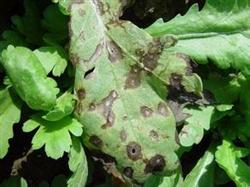
Garland chrysanthemum gray leaf spot is a fungal disease. Circular to nearly circular lesions form on the leaves, and semicircular or irregular lesions form on leaf margins. The lesions are 2-4 mm in diameter, grayish brown in the center with dark brown edges and broad concentric rings. Under high humidity, gray mold-like growth appears on the lesions. The pathogen mainly overwinters with diseased plant residues, and diseased plants produce...
 Garland chrysanthemum is a semi-cold-tolerant vegetable. It prefers a cool and humid climate. The optimum growing temperature is 18-20°C. Growth is poor above 29°C, and growth is slow below 12°C. It can tolerate short periods of low temperature around 0°C. It is not strict about light requirements and is relatively tolerant of weak light; it is a long-day crop. If the temperature can be well controlled, it can be grown in a greenhouse.
Land selection. During the vegetative growth period, garland chrysanthemum stems can reach 20-30 cm in height, so the low southern part of a greenhouse used for growing tall crops (such as common beans, yardlong beans, etc.) can be used for planting.
Variety selection. Garland chrysanthemum has two types: large-leaf varieties and small-leaf varieties. Greenhouse cultivation mainly uses small-leaf varieties. Small-leaf varieties are relatively cold-tolerant, with a growing period of 40-50 days.
Cultivation techniques. For cultivating garland chrysanthemum, the soil is required to remain moist at all times. To keep it separate from the planting beds of tall crops, the beds for cultivating garland chrysanthemum should be made as independent level beds to facilitate watering. To promote emergence, seeds can be soaked to accelerate germination, and the wet-covering method can be used for drilling or broadcasting. After sowing, cover with 1 cm of soil and cover tightly with plastic film. Generally, 4-5 kg of seed is used per mu.
After emergence, remove all the plastic film and keep the bed surface alternating between dry and moist. At the 1-2 true leaf stage, thin the seedlings and pull out weeds, keeping the spacing between seedlings at about 4 cm. Pay attention to frequently monitoring the humidity inside the greenhouse to avoid excessive moisture, which can cause diseases in the tall crops in the greenhouse.
During the growth period, apply 1-2 applications of quick-acting nitrogen fertilizer along with irrigation. When the plant height reaches about 20 cm, begin harvesting; it should not be too late, so as not to affect quality. After the first cutting, water and fertilize again to promote the development of side branches, and harvest again after 20-30 days. Each topdressing amount is 10 kg of urea per mu.