Cultivation Techniques and Pest and Disease Control Methods for Crown Daisy
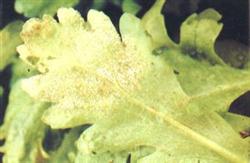
I. Field Identification: Crown daisy downy mildew can occur from the seedling stage to the adult plant stage. In the early stage, chlorotic yellow spots with indistinct edges appear on the leaves, and the underside of the lesions is densely covered with a white to pale yellowish-white mold layer, and the diseased leaves wither rapidly. As the disease progresses, the upper surface of the diseased leaves in the later stage is also densely covered with a white to pale yellowish-white mold layer. In severe cases...
 I. Cultivation Techniques
1. Soil selection Choose a field with fertile, loose soil, good water and fertilizer retention, and convenient drainage and irrigation.
2. Variety selection Crown daisy has two types, large-leaf varieties and small-leaf varieties. Greenhouse cultivation mainly uses small-leaf varieties. Small-leaf varieties are relatively cold-tolerant, with a growing period of 40-50 days.
3. Sowing methods
3.1 Seed treatment Before sowing, soak the seeds for 24-28 hours, then remove them and place them in an environment of 15-20°C to promote germination, keeping them moist and rinsing once a day.
3.2 Preparation of the planting field After plowing and fine leveling, make beds 1-1.2 m wide and 10-15 m long, apply 3500-4000 kg of decomposed barnyard manure per mu, together with 15-20 kg of ternary compound fertilizer as a base fertilizer.
3.3 Planting method Both drilling and broadcasting are acceptable. For drilling, the row spacing is 8-10 cm, the sowing width is 5-6 cm, and the seeding rate is 2.5-3 kg per mu. Dibbling can also be used, with a spacing of 3.5 cm square, and the seeding rate is 0.85 kg per mu. After sowing, cover with 1 cm of soil and cover with plastic film. After emergence, remove all the plastic film.
4. Field management
Keep the bed surface alternating between dry and wet. At the 1-2 true leaf stage, thin the seedlings and pull out weeds, keeping the spacing between seedlings at about 4 cm. Pay attention to frequently observing the humidity inside the greenhouse to avoid excessive moisture. Apply the first topdressing when the plants have 4 true leaves, applying 5-7.5 kg of urea per mu; apply the second topdressing at 8-10 true leaves, applying 7.5-10 kg of urea per mu. About 40 days after sowing, when the seedlings are about 15 cm tall, they can be harvested, either by cutting with a knife, cutting with scissors, or picking by hand. 1-2 days after harvesting, apply 7.5 kg of urea per mu to promote vigorous growth of side branches. After that, harvest once about every 20 days until flowering.
II. Pest and Disease Control Techniques
Common pests and diseases mainly include leaf blight, downy mildew, brown spot, leafminer, whitefly, aphids, and so on. Pest and disease control should focus on prevention. Comprehensive measures such as strengthening field management, doing a good job of cleaning the garden, and selecting disease-resistant varieties should be adopted. For chemical control, high-efficiency, low-toxicity, and low-residue pesticides should be selected.
For leaf blight, 50% iprodione wettable powder at 1500 times dilution, or 50% carbendazim wettable powder at 1500 times dilution can be sprayed, used alternately. For downy mildew, 64% oxadixyl-mancozeb wettable powder, or 75% chlorothalonil wettable powder at 500 times dilution can be sprayed. For brown spot, 80% mancozeb wettable powder at 500 times dilution, or 78% copper calcium sulfate wettable powder at 500 times dilution can be sprayed. Generally spray once every 7-10 days, for 2-3 consecutive sprays. For leafminer, 2.5% fenpropathrin, or 4.5% beta-cypermethrin at 2000 times dilution, or 0.9% abamectin at 1500-2000 times dilution, or 1.8% abamectin at 3000-4000 times dilution can be sprayed. For aphids, 10% imidacloprid emulsifiable concentrate at 1000-2000 times dilution, or 4.5% beta-cypermethrin at 1500 times dilution, etc. can be sprayed, which can also control whitefly. Stop applying pesticides 15 days before harvest.