Cultivation Techniques and Management Key Points for Taiwan Green Jujube
Taiwan green jujube was developed from the Indian jujube through years of improvement and selection. Its fruit is large (typically weighing 60-100 grams), with a small pit, crisp flesh, sweet taste, and high nutritional value; moreover, it bears fruit in the same year it is planted, and can enter the full production period in the second year. Taiwan green jujube is a vigorous grower with strong adaptability to temperature, able to withstand high temperatures of 35 degrees and lows of -10...
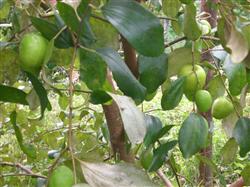
Taiwan green jujube was developed from the Indian jujube through years of improvement and selection. Its fruit is large (typically weighing 60-100 grams), with a small pit, crisp flesh, sweet taste, and high nutritional value; moreover, it bears fruit in the same year it is planted, and can enter the full production period in the second year. Taiwan green jujube is a vigorous grower with strong adaptability to temperature, able to withstand high temperatures of 35 degrees and low temperatures of -10 degrees, making it suitable for cultivation in tropical and subtropical regions. The high-yield cultivation techniques and measures are introduced below.
I. Site Selection
Taiwan green jujube has strong adaptability and can be planted in Taiwan, China, Fujian, Guangdong, Guangxi, Hainan and other provinces in China, but in areas with higher latitudes where cold air arrives early, measures such as promoting early flowering, early fruiting and bagging to protect fruit should be adopted to improve yield and quality. Taiwan green jujube is not strict about soil requirements; sandy soil, loam, sandy loam and slightly acidic soil can all be used for planting, but it has higher requirements for water sources, sunlight and fertilizer. It is advisable to choose paddy fields, terraced fields and sloping land with sufficient light and convenient irrigation and drainage for planting. In dry, water-scarce, barren, poorly lit areas with many typhoons, quality and yield will be greatly affected.
II. Variety Selection
At present, the main varieties cultivated for Taiwan green jujube are: Gaolang No. 1 (also known as Wushizi or Hongyun), Wuqian, Biyun, Huangguan, Wuguan, Telong, Shiji jujube, etc.
Different varieties differ greatly in yield, fruit shape, quality and flavor. For example, the Huangguan variety has the largest fruit shape, with a single fruit weight of up to 150 grams, resembling an apple, but its sugar content is relatively low at only 11 degrees, its taste is relatively bland, and its flesh is also relatively loose; the Hongyun variety has a single fruit weight of about 50 grams, egg-shaped, with a sugar content of 14 degrees, good quality and flavor, and a relatively high price; the Wuqian variety is the most popular among many varieties, with oval-round fruit, a single fruit weight of 80-100 grams, ripe fruit light green, sugar content of 13-15 degrees, white flesh, crisp texture, and a clean sweet taste with fragrance. Its commercial fruit sells for the highest price.
It is not advisable to plant too many varieties in each orchard; choosing 1-2 excellent varieties for planting is sufficient, but 2% pollinator trees should be planted to increase the fruit-setting rate.
III. Reasonable Close Planting and Timely Planting
Taiwan green jujube grows very fast, so the planting density should not be too high, generally 20-30 plants per mu. With a higher planting density, the early yield is higher; after 4-5 years, if the canopy is too large and shades itself, appropriate thinning can be carried out.
Dig holes for planting, with each hole 80 cm long and 80 cm wide, and about 60 cm deep, apply sufficient basal fertilizer, and dig shallow water ditches for drainage.
Planting Taiwan green jujube from March to May is most ideal. During this period, the temperature is not yet very high, there is more rain, and the air is humid; even when planting bare-root seedlings, the survival rate is as high as about 95%, and the growth rate is also very fast. It begins to flower in August, and fruit begins to mature in November. With proper management, a single plant can produce about 10 kg of fruit in the same year, achieving the goal of planting, going into production, and earning returns in the same year. If bagged seedlings are used, they can be planted throughout the year, and the survival rate generally can reach more than 95%. High-quality bagged seedlings can still flower and bear fruit in the same year even when planted in July-August. If bare-root seedlings are planted during the hot summer season, and the bare-root seedlings are not well packaged, have undergone long-distance transport, and the interval is long, the survival rate cannot be guaranteed.
IV. Fertilization Techniques
Taiwan green jujube grows quickly, bears many fruits, has high yield, and requires a large amount of fertilizer. If fertilizer is insufficient, it is difficult to achieve high yield and high quality.
1. Basal Fertilizer
The proportion of basal fertilizer applied to Taiwan green jujube is relatively large, accounting for about 50% of the annual fertilization amount. For newly planted fruit trees, basal fertilizer is applied when digging the holes, with each hole receiving 10-15 kg of decomposed poultry and livestock manure, 1 kg of bran fertilizer, and 0.5 kg of phosphate fertilizer. Various basal fertilizers must be mixed evenly with soil fertilizer before backfilling. After backfilling with organic fertilizer, backfill the topsoil, and make it about 20 cm above the ground to prevent water accumulation on rainy days. For two-year-old trees, apply sufficient basal fertilizer within 15 days after harvesting the fruit and pruning. Fertilization amount: about 20 kg of decomposed manure, 1.5 kg of bran fertilizer, and 1 kg of phosphate fertilizer, applied in a ring ditch dug around the canopy, but at a certain distance from the tree trunk. As the tree age increases and the fruit yield increases, the amount of basal fertilizer applied should also be appropriately increased.
2. Topdressing
Taiwan green jujube has a well-developed root system, with most roots distributed in the shallow soil layer, so topdressing takes effect quickly and has good results. Topdressing is generally carried out in three applications:
The first application is after new shoots emerge (generally April-May), mainly to promote new shoot growth. For one-year-old trees, apply 0.1 kg of compound fertilizer plus 0.05 kg of urea per plant; for two-year-old trees, apply 0.2 kg of compound fertilizer plus 0.1 kg of urea per plant; afterward, as the tree age increases, the topdressing amount should be appropriately increased. When topdressing, the fertilizer can be directly and evenly broadcast within the canopy area, then covered with a thin layer of soil.
The second topdressing is carried out after initial flowering (July-August). The amount of topdressing varies with tree age, but overall the fertilization amount is equivalent to the first application.
The third topdressing is generally applied in November, after the fruit set from the first batch of flowers begins to mature, with the purpose of promoting fruit enlargement in the middle and later stages. The fertilization amount is about 30% more than the first topdressing.
3. Root-external Topdressing (Foliar Fertilizer)
From after initial flowering to the period when fruit drop stops (about July-October), spray 0.2% monopotassium phosphate plus 0.2% urea once every 15 days, for 3-4 consecutive sprays. In addition, trace element fertilizers such as borax and magnesium sulfate should also be sprayed regularly to prevent trace element deficiency symptoms such as leaf yellowing caused by a lack of trace elements. Trace element fertilizers are generally applied 1-2 times per month. 10-15 days before fruit harvest, 0.2% monopotassium phosphate plus 0.5% glucose solution can also be sprayed once to increase fruit sugar content.
V. Water Management
Taiwan green jujube has a relatively large water requirement. During the initial flowering period, the soil should be kept moist to facilitate branch and shoot growth. From 20 days of flowering to the young fruit stage (July-September), the water requirement should be relatively reduced; the surface soil should preferably maintain a certain degree of dryness, and the pits and ditches only need to remain moist. Irrigation should not be applied, so as to facilitate flower bud differentiation and fruit setting. After the fruit grows to the size of a fingertip, the soil should be kept moist frequently. During this period, sudden drying and wetting can easily cause a large amount of fruit drop, so special attention should be paid.
The orchard should not have long-term water accumulation; multiple shallow water ditches can be dug in the middle of the orchard for drainage.
VI. Pruning and Training
The branches of Taiwan green jujube are mainly laterally slanting, the canopy area is large, and there are many branches. Reasonable pruning is required to form a good tree shape, facilitate ventilation and light penetration, reduce pest and disease damage, and improve yield and quality.
1. Trunk Training
For one-year-old young trees, cut the trunk 30 cm above the graft union to induce lateral branch growth, then select 3-4 side branches (primary branches) that are thick, strong, and well positioned to grow in all directions as main branches, and cut off all the other excessive branches.
For trees two years old or more, after the fruit is harvested (February-March), renew the trunk (other varieties can also be grafted by the cut-grafting method), saw off the trunk 20 cm above the graft union, and after new shoots grow, keep one appropriately positioned, thick and strong side branch or two side branches in opposite directions as the new trunk, and cut off all the remaining shoot buds. When the trunk grows to about 50 cm, cut off the tail end to promote the growth of primary branches. Depending on tree age, the trunk can retain 3-5 primary branches.
To promote early flowering and early maturity of Taiwan green jujube, it is sufficient to retain a relatively tall old trunk when training the trunk. After the fruit is harvested, select 1-2 old trunks or main branches as the new trunk. The new trunk should retain a height of about 1-1.5 m. When the primary branches growing from the trunk reach 50 cm, cut off the tail shoots to promote the growth of secondary branches. All the other good main branches can be sawed off or ring-barked at the base to let them die, retaining a height of 1-1.5 m as a frame for new branches. This method can advance the flowering period and harvest period by 1-2 months, and is especially suitable for areas where cold air arrives early.
2. Branch Pruning
Too many branches and unreasonable branch positions are not conducive to light penetration and ventilation, are inconvenient for field operations, and also affect fruit quality and yield. Therefore, branch and shoot pruning needs to be carried out reasonably.
Branch and shoot pruning generally begins in June and ends in November after all fruits have set. Cut off crossing branches, excessively dense branches, water sprouts, upright branches, slender branches, pest- and disease-damaged branches, and branches close to the ground. By November, if there is already quite a lot of fruit, the young fruit or flower clusters at the tail ends of the branches can be cut off to avoid too many flowers and fruits affecting fruit enlargement.
VII. Trellising
The branches and shoots of Taiwan green jujube are long and relatively brittle, and the branches and shoots often break due to bearing too much fruit, so trellises are needed to support the fruiting branches. The height of the trellis is generally 80-180 cm, depending on tree age and trunk height. The width of the trellis generally accounts for 80%-90% of the canopy.
To simplify work and save costs, trees two years old or more can also use old branches and shoots as part of the support. For the method, see the trunk training section above.
VIII. Prevention and Control of Pests, Diseases and Weeds
Taiwan green jujube has relatively few pests and diseases. The main pests and diseases are: powdery mildew, scale insects, caterpillars, fruit flies, etc. When the climate is dry, powdery mildew is more likely to occur and spreads relatively quickly, causing relatively great damage to young fruit and leaves. It can be controlled with fungicides such as triadimefon; spray the whole orchard once at the initial stage of the disease, then spray once every 7 days, for a total of 2-3 times. Scale insects can be killed by spraying with methidathion, omethoate, and fenpropathrin; caterpillars and fruit flies can be killed by spraying with trichlorfon and pyrethrins. Spraying should be stopped 10 days before fruit maturity. Spraying is best done in the morning or evening.
Taiwan green jujube has relatively shallow roots, so it is best not to use herbicides, but instead to use manual weeding.
IX. Fruit Thinning and Fruit Protection
Taiwan green jujube has many flowers and many fruits, and one inflorescence can produce 4-5 small fruits. Under normal circumstances, some young fruits can drop automatically, but after natural fruit drop, if too many fruits still remain set, manual assisted fruit thinning is needed. Fruit thinning should begin at the young fruit stage. First, in combination with pruning, cut off slender branches, water sprouts, and low-hanging branches near the ground that bear too much fruit, then thin out excessively dense fruit, small fruit, and yellow diseased fruit. No more than 2 fruits should be retained per inflorescence, but retaining 1 fruit per inflorescence is best. Thick and strong branches can retain more fruit, while young and slender branches should retain less fruit. By November, for branches bearing too much fruit, the flower clusters and young fruit at the tail ends of the branches can be cut off.
In order to reduce pest and disease damage and mechanical injury, manual bagging can be carried out when the fruit grows to the size of a fingertip. Plastic bags can be used, with specifications of 10 cm x 15 cm or 8 cm x 15 cm, and a small hole the size of a soybean should be made at the bottom of the bag to facilitate ventilation and drainage. After bagging the fruit, tighten the bag opening and fasten it with a stapler. Bagged fruit weighs about 10% more than unbagged fruit, has smooth skin, and no insect holes. When the temperature drops suddenly, it can also prevent the fruit from freezing damage, but it requires more labor, and the fruit sugar content will also decrease slightly. Whether to bag or not should be determined according to different situations.
X. Harvesting
When Taiwan green jujube matures, the fruit skin changes from green to light green or yellow-green, and the fruit appearance is plump with glossy skin color. The fruit should be harvested promptly when ripe. If long-distance transport is required, it can be harvested when 90% ripe. If the fruit is overripe, the flesh will become soft and loose, the quality and flavor will deteriorate, the selling price will also be low, and it will not keep well for storage and transport. Handle gently during harvest to avoid damage that affects commercial value.