Detailed Explanation of Key Techniques for Scientific Harvesting, Storage and Fresh-Keeping of Fresh Jujubes
Fresh jujubes are now widely cultivated in rural areas across the country. Their fruit has a bright red appearance, a crisp and sweet refreshing taste, and is rich in various nutrients. The vitamin C content of fresh jujubes is 60-80 times that of apples and 30 times that of citrus. Scientific storage and fresh-keeping of jujubes can greatly reduce losses for growers, achieve increased production and efficiency. Ensuring a long-term supply of fresh jujubes on the market...
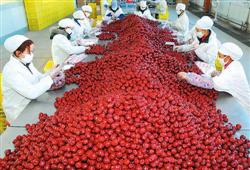
Fresh jujubes are now widely cultivated in rural areas across the country. Their fruit has a bright red appearance, a crisp and sweet refreshing taste, and is rich in various nutrients. The vitamin C content of fresh jujubes is 60-80 times that of apples and 30 times that of citrus. Scientific storage and fresh-keeping of jujubes can greatly reduce losses for growers, achieve increased production and efficiency. Ensuring a long-term supply of fresh jujubes on the market and increasing farmers' income.
I. Scientific Harvesting of Jujubes
There are many varieties of jujubes, with different ripening periods and varying storage tolerance. Practice has shown that dual-purpose varieties (for both fresh eating and drying) store better than fresh-eating varieties, small-fruit varieties store better than large-fruit varieties, late-maturing varieties store better than early-maturing varieties, and varieties resistant to fruit cracking store better than those prone to cracking. Fresh-eating jujubes should be harvested at the crisp-ripe stage; fresh jujubes intended for storage are best harvested when the fruit is half-red, which is also the most storage-tolerant stage; jujubes harvested at the fully ripe stage are suitable for drying. Most jujube varieties in the south mature in August, while some mature in October-November. Jujubes have a long flowering period, and even on the same tree the fruiting is early or late, so harvesting should be done in batches according to ripeness. Picking fruit on a sunny morning after the dew has dried is best; during harvest, fruits of different varieties and different ripening stages should be picked separately, stored separately, packed separately, and stored separately; diseased fruits, rotten fruits, bruised fruits, and substandard fruits should be removed as soon as possible after harvest. To improve the storage tolerance of fresh jujubes, half a month before harvest, a 0.2% calcium chloride solution can be sprayed on the tree canopy, or a 150-fold high-fat film or 1000-fold thiophanate-methyl and sodium superphosphate solution can be sprayed, which can prevent jujube fruits from mold infection.
II. Storage and Fresh-Keeping of Fresh Jujubes
1. Room-temperature wet sand storage: Choose a cool, dry room (large boxes, baskets and other containers can also be used). First sweep the surroundings and sprinkle quicklime for disinfection, then spread a 3-5 cm thick layer of wet fine river sand on the ground, place a layer of fresh jujubes on top (one jujube thick), then spread another layer of wet sand, and stack in this way up to a height of 30-40 cm. Afterward, just keep the sand moist (a small amount of clean water can be added periodically. This method can store jujube fruits for more than 30 days.)
2. Spontaneous modified atmosphere storage: This method is suitable for the northern regions of China. Use 0.07 mm thick polyethylene film to make plastic bags of 70 cm x 50 cm (standard fresh-keeping plastic film bags can also be used). Fill each bag with 15 kg of fresh jujubes, tie the bag opening tightly with rope or heat-seal the bag opening with an iron, and place in a cool shed (place the fruit bags upright one by one on shelves 60-70 cm above the ground, leaving a ventilated walkway every 4-5 bags). In the early stage of storage, ventilation and heat dissipation should be strengthened, and the temperature inside the shed should be as low as possible to prevent high-temperature fermentation of fresh jujubes. After the winter temperature drops below 0°C, there is no need to worry about the jujubes freezing, but attention should be paid to preventing rodent damage during storage.
3. Frozen storage and fresh-keeping: Fresh jujubes should be harvested, selected, and packaged promptly, and put into cold storage for frozen storage in a timely manner. Before storage, put the fresh jujubes into plastic film bags, 1-2 kg per bag, and seal the openings. When the quantity is large, use wooden boxes and the like to line the large plastic film bags inside the boxes, with 20 kg of fruit per box. After the fruit is packed, quickly place it in a freezer at about -15°C for storage. After the jujube fruits are frozen, maintain the storage temperature at 0°C. When the jujube fruits are taken out of storage, soak them in cold water for 30 minutes to restore their original shape and release their original flavor. This method can keep them fresh for 10-12 months. This method is mostly used in Shandong, Hebei, ** and other regions.
4. Low-temperature storage: Put fresh jujubes that are 50% colored into plastic bags with 2-3 small holes of 3-4 cm diameter punched on one side (0.5-1 kg of fruit per bag), then place them in cold storage at 0-10°C with 60% relative air humidity. It should be noted that before storage, fresh jujubes should be soaked in a 2% calcium chloride solution for 30 minutes, then pre-cooled at 7-8°C for 1-2 days. After the jujube temperature drops to 7-8°C, they can be put into storage. This method can store them for 2-3 months.
5. Small-package sealed air-extraction storage: Choose polyethylene film bags with a thickness of 0.7 mm that can hold 5 kg of fruit per bag, and each bag is required to have an air vent. After the fresh jujubes are bagged, seal them and extract the air from the bags, then place them in a cool low-temperature storage (storage temperature 1-2°C, relative air humidity 80%-90%) for storage. This method can store jujube fruits for 8-9 months.
III. Red Jujube Storage
The product after fresh jujubes are sun-dried or oven-dried is called red jujube. Red jujubes for storage require moderate dryness, no pests or diseases, no damage, uniform size, and a rosy luster.
1. Southern storage method: Red jujubes are stored in a dry, cool and disinfected warehouse, preferably in a warehouse at 5°C. Red jujubes are generally stored in cloth bags or hemp bags. Before red jujubes are taken out of cold storage, they should be moved to a place with a slightly higher temperature for transition and gradually moved outside the warehouse. To prevent condensation water droplets from forming on the red jujubes, they should not be repackaged immediately upon leaving the warehouse; instead, they should be spread out to cool. After the condensed water droplets disappear, they can be repackaged in new packaging for transport.
2. Northern storage method: When the quantity is large, when stacking in hemp bags, the stacks should be 50-60 cm away from the wall, and walkways wide enough for people to pass should also be left between stacks to facilitate ventilation and passage. During the plum rain season, an additional hemp bag should be placed over each bag of red jujubes to increase moisture-proofing. When the outside temperature is low and dry, the ventilation holes of the warehouse can be opened to expel the air inside and replace it with dry air. During red jujube storage, if a few small piles of lime powder are placed in the warehouse, the humidity inside the warehouse can be significantly reduced.
3. Simple household storage method: For small quantities, use jars, bowls, vats, plastic bags, etc., seal them, and store in a cool place. For slightly larger quantities, storing with rice husk ash is good and pollution-free. The method is: choose a clean, dry, cool room with a cement floor, first sweep the surroundings and sprinkle lime powder, then spread a 1 cm thick layer of rice husk ash on the ground, then spread a layer of red jujubes, and stack in this way, one layer of rice husk ash and one layer of red jujubes, up to a height of 30-40 cm. This method is moisture-proof and sterilizing, and can store for 2-3 months.