-
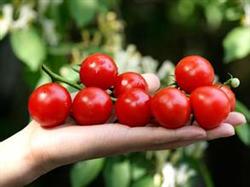
Key Technical Points for Early Spring Cultivation of Fresh-Eating Cherry Tomatoes
Cherry tomato, originally from Taiwan, China, is a type of cherry tomato grown mainly for fresh fruit consumption, commonly known as cherry tomato. For early spring cultivation, a 6 m span plastic greenhouse can be used, with seedlings raised in mid-November, transplanting in February of the following year, and fresh fruit harvest in early May, yielding 6000 kg of fresh fruit per mu. 1. Seed treatment....
-
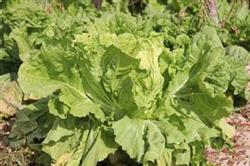
Detailed Explanation of Technical Measures for Chinese Cabbage Disease Control
Downy mildew, viral disease, soft rot, and tipburn are the main diseases of Chinese cabbage. 1. Downy mildew can occur from the seedling stage to the heading stage, mainly affecting the leaves of Chinese cabbage. It first appears on the lower leaves, producing water-soaked, pale yellow, angular lesions on the leaves, which gradually expand and turn yellowish-brown...
-
Key Technical Points and Operation Methods for Single-Application Fertilization of Rice
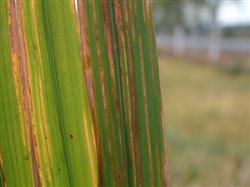
Distribution Rice bacterial leaf streak, commonly known as rice fine streak disease, is one of the important worldwide rice diseases. Its pathogen belongs to the genus Xanthomonas bacteria, and the bacteria mostly invade through leaf stomata; symptoms can appear at any growth stage of rice. The lesions are short and fine narrow streaks, with the stripes appearing between the leaf veins; when viewed against the light...
-
Control Methods and Technical Key Points for Grape Downy Mildew
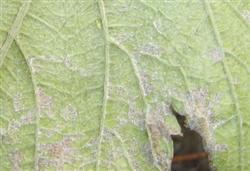
Control methods: 1. Remove fallen leaves and diseased branches, bury them deep or burn them. 2. Timely pinch off growing tips, prune, drain and weed, and apply more phosphorus and potassium fertilizer. 3. At the early stage of the disease, that is, after July, apply chemicals as soon as slight lesions are seen on the underside of leaves. The chemicals include: Pubo, Ridomil, Sandofan, metalaxyl, Shuangmeiyitejing, etc., used alternately, spraying 4 to 5 times in a row...
-
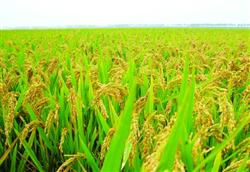
Methods and Key Technical Points for Topdressing Potassium Fertilizer on Rice
Topdressing potassium fertilizer on rice can achieve a significant yield increase. Sufficient potassium is beneficial for enhancing photosynthesis, promoting the synthesis and accumulation of sugars, and improving plant resistance. It can also enhance the respiratory capacity of the rice root system, promote the absorption of nitrogen and the synthesis of proteins, making the rice grains large and plump, with high and stable yields.
-
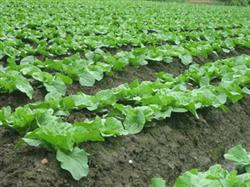
How to fertilize autumn-sown Chinese cabbage? Detailed technical points
Chinese cabbage, also called heading cabbage or yellow-bud white, originated in China. China is also rich in variety resources. Its yield per unit area is high, generally 3500-4000 kg per mu, with high yields above 5000 kg. I. Botanical characteristics. Chinese cabbage has a well-developed root system, and the radicle can form a thickened fleshy taproot. The main root is slender...
-
Key Technical Points for Winter Management of Bagged Mango Seedlings
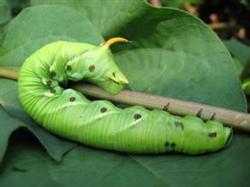
Control methods: 1. Capture larvae based on their damage characteristics. 2. Blacklight traps can be used to trap adult insects. 3. Chemical control: Decis, trichlorfon, dichlorvos, etc. can be used.
-
Autumn Mango Fertilization Management Methods and Technical Key Points
Fungal diseases. At present, 6 pathogens causing mango sooty mold have been identified in China. They damage leaves, branches and shoots, and fruit, affecting leaf photosynthesis and fruit appearance. Control methods: First, rational close planting and pruning to keep the canopy well ventilated and exposed to light. Second, focus on controlling aphids, scale insects, and flat-headed leafhoppers...
-
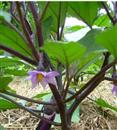
How to manage spring early-maturing eggplant during the fruiting period? Practical technical key points
For eggplants grown in spring under plastic film low tunnel cover, from flowering to fruit harvest, under suitable conditions it takes about 18-25 days, and the initial harvest period of the first fruit (door eggplant) is in early to mid-May. During fruit growth, the weather has already turned warm, so the film can be fully uncovered during the day to give the plants plenty of light, but it must be covered well again in the evening. If the nighttime temperature...
-
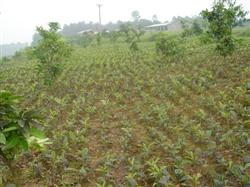
Detailed Explanation of Key Technical Points for Spring Management of Loquat
(1) Land preparation: When building a loquat orchard on flat land, planting trenches should be dug, generally 0.80-1.0 m wide and about 0.80 m deep, with the distance between planting trenches generally about 3 m, and the length of the planting trenches determined by the size of the orchard plot or the length of the slope. When digging the trenches, place the topsoil and subsoil separately, with the topsoil placed on the upper edge; when backfilling, backfill the topsoil first, and divide it into 3-...
条件筛选