Detailed Explanation of Technical Measures for Chinese Cabbage Disease Control
Downy mildew, viral disease, soft rot, and tipburn are the main diseases of Chinese cabbage. 1. Downy mildew can occur from the seedling stage to the heading stage, mainly affecting the leaves of Chinese cabbage. It first appears on the lower leaves, producing water-soaked, pale yellow, angular lesions on the leaves, which gradually expand and turn yellowish-brown...
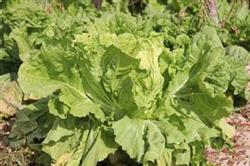
Downy mildew, viral disease, soft rot, and tipburn are the main diseases of Chinese cabbage.
1. Downy mildew can occur from the seedling stage to the heading stage, mainly affecting the leaves of Chinese cabbage. It first appears on the lower leaves, producing water-soaked, pale yellow, angular lesions on the leaves, which gradually expand and turn yellowish-brown. In severe cases, the leaves dry up and become inedible. The severity of this disease is closely related to climate, variety, and cultivation techniques. In autumn, frequent rainfall and relative humidity above 70% favor the occurrence of downy mildew; sowing too early, excessive density, one-sided application of nitrogen fertilizer, and poor field drainage lead to severe occurrences.
Control measures:
(1) Agricultural control: First, rational close planting: plant 2500-3000 plants per mu for medium and early-maturing varieties, and 2000-2400 plants per mu for late-maturing varieties; second, balanced fertilization: apply multi-element compound fertilizer as topdressing, avoiding one-sided application of nitrogen fertilizer; third, drain promptly after rain to prevent waterlogging in the field.
(2) Chemical control: In the early stage of the disease, spray the leaves with 40% fosetyl-aluminum at 800 times dilution, 58% metalaxyl-mancozeb at 500 times dilution, or 1.5% Shuangyiwei at 1000 times dilution; for severe cases, spray the leaves with Shuangke or 72% DuPont Curzate at 800 times dilution, once a week, for 2-3 consecutive sprays.
2. Viral disease: Symptoms fall into two types. First, the mosaic type: leaves develop green mottling or mosaic patterns of uneven intensity; second, the crinkle type: heart leaves appear crinkled and deformed, hard and brittle in texture.
The occurrence of this disease is related to climate, management, and other factors. When Chinese cabbage is sown and encounters high temperatures and drought, root growth and development are inhibited, disease resistance declines, and high temperatures and drought favor aphid occurrence, leading to a high probability of virus transmission and severe viral disease. In addition, extensive management, water deficiency, and nutrient deficiency lead to severe occurrences.
Control measures: Chinese cabbage viral disease is transmitted by aphids, so aphid control is crucial. Spray with 10% imidacloprid at 2000 times dilution, once every 7-10 days, for 2-3 consecutive treatments. After Chinese cabbage is infected, spray the leaves with 1.5% Zhibingling No. 2 at 800 times dilution or Bingdu Kexing or Kangrun No. 1 at 1000 times dilution, once a week, for 2-3 consecutive treatments.
3. Soft rot: It occurs from the rosette stage to the heading stage of Chinese cabbage. There are often two types. First, the wilting type: Chinese cabbage wilts at noon on sunny days, recovers in the morning and evening, and after several days the entire plant dies; second, the soft rot type: the affected leaf stalks or heads of Chinese cabbage become slimy and soft-rotted, and give off a foul odor.
The severity of this disease is related to climate, crop rotation, sowing time, and so on. For example, frequent rainfall and surface waterlogging favor disease occurrence. In addition, sowing too early and continuous cropping plots lead to severe occurrences.
Control measures: (1) Agricultural control: Avoid continuous cropping, prevent surface waterlogging, and promptly remove diseased plants, carry them out of the field and destroy them to prevent spread. (2) Chemical control: Alternately spray with 72% agricultural streptomycin at 3000 times dilution, 3% Kejunkang at 1000 times dilution, and 20% Longkejun at 500 times dilution, once a week, for 2-3 consecutive sprays.
4. Tipburn: It generally begins to occur at the rosette stage of Chinese cabbage. Young tender leaves show dry edges, and symptoms become obvious at the heading stage. The upper part of the leaves gradually dries and turns yellow, the mesophyll becomes like dry paper, and the veins turn yellowish-brown to dark black. The affected area is mainly in the middle of the head.
This disease is a physiological disorder, mainly caused by a deficiency of the nutrient elements calcium and manganese.
Control measures:
(1) Increase the application of organic fertilizer.
(2) Chemical control: At the seedling stage, rosette stage, or before the heading stage of Chinese cabbage, spray with 0.7% manganese sulfate plus Lufenwei No. 3.