-
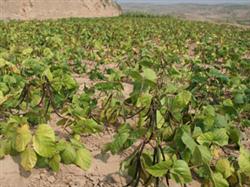
Key Technical Points for Direct Seeding Cultivation of Mung Bean in Summer
When mung bean seedlings reach the 2-leaf 1-heart stage, remove the clustered seedlings. Thin to final stand at the 4-leaf stage, with a plant spacing of 13 to 16 cm and a row spacing of about 40 cm, leaving 10,000 to 15,000 plants per mu; for late-sown fields, up to 20,000 plants per mu may be retained. From emergence to flowering and canopy closure, mung bean must be kept free of weeds through frequent cultivation and hoeing, generally no fewer than 4 times, with the depth of cultivation going from shallow...
-
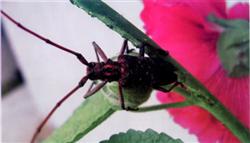
Control Methods and Key Technical Points for the Mango Stem Borer
The mango stem borer belongs to the order Coleoptera, family Cerambycidae, and occurs in mango-producing areas throughout southern China. Its larvae bore into and feed on branches and trunks, weakening the affected plants; in severe cases, the plants can die, and infested branches are easily broken by wind. The pest has 1 generation per year, overwintering mainly as larvae, while a small number of pupae or adults can also overwinter inside the bore holes. The following year...
-
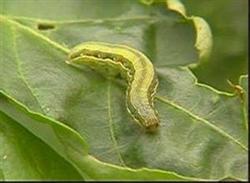
Control Methods and Technical Key Points for the Cabbage Moth
The cabbage moth, also known as the cabbage cutworm and vegetable armyworm, has the Latin scientific name Mamestra brassicae Linnaeus and belongs to the order Lepidoptera, family Noctuidae. The cabbage moth has an extremely diverse diet, with known hosts reaching over 100 species across 45 families. Among vegetables, its main hosts include cabbage, cauliflower, Chinese cabbage, radish, rapeseed, solanaceous and fruiting vegetables, legumes,...
-
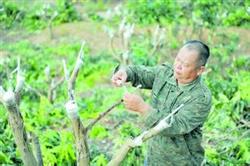
Detailed Explanation of Mango Top-Grafting and Re-Varietying Methods and Technical Points
I. Pre-Grafting Preparation Before re-varietying, strengthen fertilizer and water management for the trees to be re-varietyed. Prune the above-ground part appropriately, removing diseased branches, dead branches, shaded branches, overly dense branches, and crossing branches; for large perennial trees, saw off the main and side branches in spring or autumn at 1.2-1.5 m above the ground (saw in spring and graft in autumn, or saw in autumn and graft the following spring)...
-
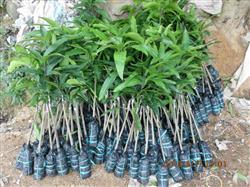
How to cultivate Ganoderma lucidum with mango sawdust? Detailed technical points
1. Scion selection: Collect scions from a superior mother tree in a certified mother stock orchard or from outstanding individual adult trees. The mother plant must be of a pure variety, high-yielding, consistently productive, of high quality, and free of quarantine pests and diseases. Where conditions permit, nurseries should establish a scion orchard dedicated to supplying scions for collection. Select branches from the outer canopy facing the sun, vigorous, well-filled, with plump buds, and disease-free...
-
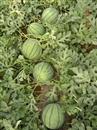
Key Technical Points for High-Yield Open-Field Watermelon Cultivation in Spring
It is currently the season for sowing and raising seedlings of open-field watermelons. To do a good job of watermelon cultivation and increase farmers' income, the key technical points for spring open-field watermelon cultivation are introduced as follows: 1. Variety selection. Varieties should be chosen according to market demand, selecting those that are well-suited to the market, with good quality, high yield and strong disease resistance, such as Qinghong...
-
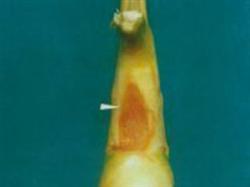
Detailed Explanation of Key Technical Points for Field Management of Water Bamboo
[Symptom characteristics] Water bamboo soft rot mainly occurs in the water bamboo shoots during transportation, sales and storage after harvest. Infected water bamboo shoots initially show nearly round to irregular, nearly translucent water-soaked spots, after which the lesions spread rapidly, the affected tissue softens and rots, and a foul odor is noticeable, ultimately causing part or most of the tissue of the water bamboo shoot to rot so that it is inedible. Affected...
-

Detailed Explanation of Tuna Artificial Farming Methods and Technical Key Points
Artificial Farming Methods for Tuna
-
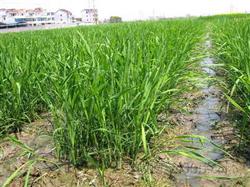
Key Technical Points for Seed Selection and Purification-Rejuvenation of Water Bamboo (Zizania latifolia)
When selecting seeds for planting water bamboo, the "three selections" are generally carried out, namely primary selection, re-selection and fine selection. Six to seven days before the autumn water bamboo harvest, the primary selection is carried out. The method is to select plants with medium height, large fleshy stems, flat stalks, long leaf sheaths, and uniform, neat growth, matching the variety's characteristics, as seed plants. During the water bamboo harvest period, the re-selected plants are those from which gray water bamboo and male...
-

What are the key technical points for selecting sunflower seeds in the field?
I. Selection of the plot, determination of sowing date, sowing rate and density: When planting sunflowers, never practice continuous cropping or intercropping in adjacent strips; the same plot must be left at least 3 years apart. Continuous cropping leads to the occurrence of pests and diseases and an imbalance in soil nutrients, causing severe yield reduction. Soil salt content should not exceed 4500 plants/667 sq m, and follow the rule "sparse planting on fertile land, ...
条件筛选