How to fertilize autumn-sown Chinese cabbage? Detailed technical points
Chinese cabbage, also called heading cabbage or yellow-bud white, originated in China. China is also rich in variety resources. Its yield per unit area is high, generally 3500-4000 kg per mu, with high yields above 5000 kg. I. Botanical characteristics. Chinese cabbage has a well-developed root system, and the radicle can form a thickened fleshy taproot. The main root is slender...
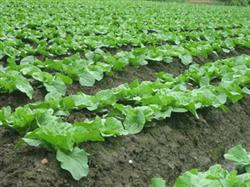 The goal of fertilizing Chinese cabbage is to achieve both high yield and high quality. From the nutritional characteristics of Chinese cabbage, its demand ratio for nitrogen, phosphorus and potassium is 1:0.5:1.2, which shows that its potassium requirement is even greater than its nitrogen requirement. In actual Chinese cabbage production, however, attention is generally paid only to nitrogen fertilizer, while balanced potassium supplementation is often neglected. Based on the fertilization situation for Chinese cabbage in recent years, three principles should be grasped.
Apply nitrogen fertilizer in appropriate amounts. At present, the main problems in Chinese cabbage fertilization are: the phenomenon of blindly applying excessive nitrogen fertilizer is serious, and the amount applied at one time is too large, leading to nitrogen loss and blocked calcium absorption. The fertilization principle should be based on soil fertility conditions, optimizing the amounts of nitrogen, phosphorus and potassium fertilizers, with basal fertilizer as the main part and a combination of basal fertilizer and topdressing. Topdressing should be mainly nitrogen, with reasonable combination of nitrogen, phosphorus and potassium, and appropriate supplementation of trace elements. To plan for a fresh vegetable yield of 3500-4500 kg of Chinese cabbage per mu, 2000 kg of organic fertilizer, 15-20 kg of pure nitrogen, 4-6 kg of phosphorus (P2O5), and 14-20 kg of potassium (K2O) are needed; for 4500-6000 kg per mu, apply 3000 kg of organic fertilizer, 18-23 kg of pure nitrogen, 5-8 kg of phosphorus (P2O5), and 16-202 kg of potassium (K2O), with organic fertilizer and phosphorus and 30% potassium fertilizer as basal fertilizer, and 70% nitrogen and potassium fertilizer applied as topdressing separately at the rosette stage and before head formation. For high quality and high yield of Chinese cabbage, how much nitrogen fertilizer is appropriate? Production practice has proved that for every 1000 kg of fresh vegetables produced, about 2.0 kg of pure nitrogen needs to be absorbed from the soil; producing 5000 kg of fresh vegetables requires the absorption of 10 kg of pure nitrogen in total, which can come from soil, organic fertilizer and chemical fertilizer respectively. Under the condition of applying large amounts of organic fertilizer, the amount of chemical nitrogen fertilizer should be reduced. Applying an appropriate amount of nitrogen fertilizer has a good effect on the growth and development of Chinese cabbage, is beneficial to photosynthesis, and is the key to achieving high quality and high yield of Chinese cabbage. However, in some remote areas, nitrogen fertilizer supply may be insufficient, resulting in thin and pale leaves and coarse hard tissues, which not only affects yield but also gives poor quality. But at present, the actual amount of nitrogen applied in most Chinese cabbage production far exceeds the demand, and excessive application of nitrogen fertilizer not only makes the outer leaves of Chinese cabbage thick, poor in head formation, and low in yield and quality, but also causes high leaf water content, poor storage tolerance after harvest, easy rotting, and susceptibility to pests and diseases in the late growth stage. Therefore, in addition to an appropriate amount, the timing of nitrogen fertilizer use is also very important. Throughout the entire growth period of Chinese cabbage, the amount of nitrogen absorbed at different stages is also different. It is very little at the seedling stage, about 2% of the total, increases to about 28% at the rosette stage, and is greatest at the head-forming stage, about 70% of the total. Therefore, nitrogen fertilizer should be applied in stages, reflecting light application early and heavy application later.
Increase the proportion of phosphorus and potassium fertilization. Adding potassium fertilizer to basal fertilizer and topdressing is beneficial to head formation and disease resistance of Chinese cabbage. In topdressing at the head-forming stage, attention should be paid to applying potassium fertilizer. If the supply of phosphorus and potassium is insufficient during the head-forming stage, Chinese cabbage will not form heads. At present, in vegetable production, the application of potassium fertilizer is often neglected. The suitable potassium application rate is generally 16 kg of potassium sulfate per mu. The best application method is to apply it twice, as basal fertilizer and topdressing: the basal fertilizer is applied at the bottom of the hole when planting, and the topdressing is carried out after the rosette stage seedling-holding period ends, together with nitrogen topdressing and irrigation.
Ensure calcium supply. Supplementing calcium nutrition by applying calcium superphosphate as basal fertilizer is very beneficial for preventing the occurrence of "internal tipburn" in Chinese cabbage. Chinese cabbage is a calcium-loving crop, and calcium deficiency, especially excessive nitrogen application, easily causes "tipburn." Controlling nitrogen fertilizer and supplementing calcium nutrition are the core techniques for preventing "internal tipburn" in Chinese cabbage. In addition to applying calcium-containing fertilizer as a basal application, the calcium supplementation method can also adopt foliar spraying, spraying 0.3-0.5% calcium chloride or calcium nitrate per mu every 10-15 days, with a control effect of more than 95%.