-
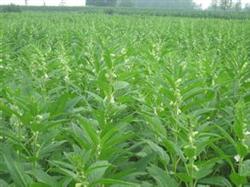
High-Yield Fertilization Methods and Key Technical Points for Sesame
(1) Land preparation: Sesame seeds are small, the root system is weak, and seedlings grow slowly, so fine land preparation is one of the important measures for achieving full emergence and strong seedlings from a single sowing. Sesame is afraid of waterlogging; in low-lying and rainy areas, on the basis of plowing and land preparation, ditches should be opened and raised beds made to do a good job of drainage and waterlogging prevention. In the urban area of Tianjin, spring rain and snow are scarce, so for spring-sown sesame, winter plowing and harrowing should be carried out...
-

How to manage cowpeas during the pod-setting stage? Key technical points explained
Management of cowpeas during the pod-setting stage
-
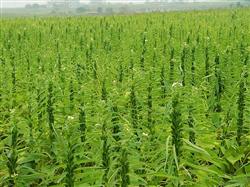
A Complete Analysis of the Key Technical Points for Sesame Cultivation and Management
Most farmers believe that sesame is a low-yielding, drought-tolerant crop that requires only extensive management. As a result, for many years the yield of spring sesame has been less than 150 kg per mu, and the yield of summer sesame or intercropped sesame has been below 100 kg per mu. Experiments have proven that as long as good seed is combined with good methods and cultivation measures are improved, sesame yields can be increased by more than 20%. 1. Applying...
-
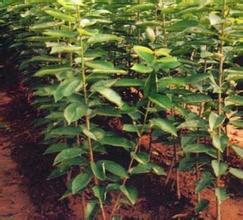
Methods and Technical Key Points for Cultivating Dwarf Sweet Cherry Nursery Stock
Cherry trees are tall and not suitable for growing in greenhouses; under natural production they need 5 to 6 years to bear fruit and only enter the full-bearing period after 10 years, resulting in a long payback period and high management costs. After years of exploration, fruit tree experts in China developed a method using Nanking cherry as the rootstock, FL-80 plum as the interstock, and grafting sweet cherry varieties onto it, ...
-

January eggplant pest and disease control and management technical points
For eggplants raised as seedlings in early spring, the main focus is controlling soil-borne diseases: damping-off, Rhizoctonia rot and sclerotinia rot. To disinfect the seedbed soil, mix 50 kg of seedbed soil with 20 g of 68% Jinlei water-dispersible granules and 10 ml of 2.5% Shileshi suspension concentrate, sieve and blend the soil, then fill nutrient pots with it, or spread it over the seedling bed. During the seedling stage, spray 0.1%-0.2% monopotassium phosphate, ...
-
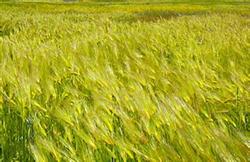
Technical Key Points and Methods for Introducing Barley to Different Regions
I. Seed Preparation and Seeding Rate For barley seeds, the high-quality, high-yield variety S-4 should be selected, and variety S500 can be used as a companion variety. For fields following grain stubble, the seeding rate is 10-11 kg per mu; for fields following flue-cured tobacco or corn, the seeding rate is 8-9 kg per mu. II. Timely Sowing Barley has less strict requirements for sowing time than wheat, and can...
-
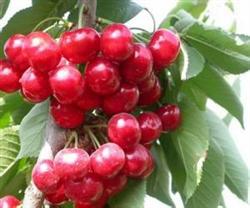
What are the key technical points for summer management of sweet cherry trees?
Summer is a critical period for the growth of sweet cherry trees, and pests and diseases are also very likely to occur, so fruit growers should pay attention to the summer management of sweet cherry trees. Doing the following points well will allow sweet cherry trees to smoothly pass through this growing season in summer. Pinching In summer, sweet cherry trees grow vigorously, and excessive leaves and branches have a certain impact on the fruiting of the following year...
-
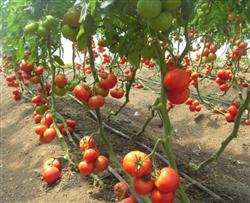
Key Technical Points for Fertilizer-Saving and Water-Saving Cultivation of Tomatoes in Winter Warm Greenhouses
Fertilizer saving: Considering cost reduction, input reduction and fertilization efficiency, apply 10000 kg of chicken manure, 50 kg of urea and 50 kg of ternary compound fertilizer per mu. This is the optimal fertilization rate for fruit vegetables in winter warm greenhouses in the coastal area of Shandong. Water saving: Use drip irrigation, with the suitable relative soil moisture content being 80%, which can also save 70.4% of water compared with conventional furrow irrigation...
-
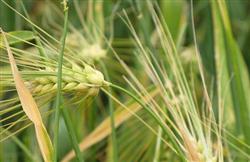
Technical Measures to Reduce Barley Losses from Snow and Ice Disasters
At present, the growth of barley in the field has entered a critical stage. To ensure high and stable barley yields, it is especially important to strengthen field management during the middle and late stages. Generally, the following cultivation and management measures should be adopted. Scientific and economical water use. Choose to irrigate barley once each from booting to heading and from grain filling to the milk-ripe stage. The heading and grain-filling periods are a...
-
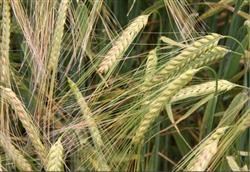
Key Technical Points and Cultivation Management Methods for Beer Barley Planting
Beer barley is a special type of barley used for brewing beer. Beer is nutritious and is known as "liquid bread", and there is great market demand for it. There are many barley varieties used for brewing both in China and abroad, mainly including Zaoshu No. 3, Aizao No. 3, Humai No. 4, Zhoumai No. 1, Zhepi No. 1, Yan 75-21, Manker, Ante, the Sisi system, and others...
条件筛选