Key Technical Points and Operation Methods for Single-Application Fertilization of Rice
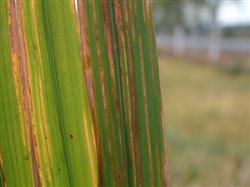
Distribution Rice bacterial leaf streak, commonly known as rice fine streak disease, is one of the important worldwide rice diseases. Its pathogen belongs to the genus Xanthomonas bacteria, and the bacteria mostly invade through leaf stomata; symptoms can appear at any growth stage of rice. The lesions are short and fine narrow streaks, with the stripes appearing between the leaf veins; when viewed against the light...
 "Single-application fertilization of rice" refers to single-application full-layer fertilization of rice, also known as "full basal fertilizer application." This fertilization method is based on the growth and nutritional characteristics of rice, follows the principles of balanced fertilization and modern fertilizer manufacturing technology, and scientifically formulates the nutrients required for the entire growth period of rice into a special fertilizer with a total nitrogen, phosphorus, and potassium nutrient content greater than 30% for one-time application, so as to ensure the long-term needs of the field throughout the whole process. Its advantages are: it does not damage seedlings and keeps plants steady without excessive growth; it does not cause premature aging, and the color fades well in the later stage; the incidence of diseases and insect pests is low; and the 1000-grain weight and seed-setting rate are high. Through trial demonstrations and extension in recent years, our city has achieved obvious economic and social benefits. Compared with conventional fertilization, this fertilization method increases yield by 35-40 kg per mu on average, with a yield increase rate of 7-9%; the average net output value per mu increases by 50-80 yuan. Its key fertilization technical points include the following three aspects.
1. Apply more organic fertilizer
For rice fields with general fertility, apply 1000-1500 kg of barnyard manure per mu per season. Increasing the application of organic fertilizer is an important condition of this fertilization technology and plays a decisive role in ensuring the normal supply of nitrogen in the middle and late stages of rice.
2. Master the application rate and application period of the formulated fertilizer
Application rate of 30% formulated fertilizer per mu: about 40 kg for high-fertility fields and about 60 kg for medium-fertility fields. The total nitrogen fertilizer application per mu should in principle remain 11-12 kg (including organic fertilizer). The application period is before transplanting (seedling throwing), during the final plowing and harrowing, as a basal fertilizer applied in one broadcast application, so that mud and fertilizer blend together and the fertilizer is distributed throughout the whole layer, thereby achieving a balanced supply of nutrients with both slow and quick availability. However, for hybrid rice whose leaf color turns yellow relatively severely before initial heading, 1-2 kg of urea per mu may be appropriately supplemented as a grain fertilizer.
3. Manage water and slurry well
Early rice requires shallow-water transplanting and one-cun water for regreening; late rice requires one-cun water for transplanting and deep water for regreening. After the seedlings have regreened, both early rice and late rice should use shallow water and frequent irrigation, with timely field exposure in the middle stage; there should be a water layer at booting and heading, and alternating wet and dry conditions after grain filling to promote plump grains. Carry out timely integrated control of diseases and insect pests.