Control Methods and Key Technical Points for the Mango Stem Borer
The mango stem borer belongs to the order Coleoptera, family Cerambycidae, and occurs in mango-producing areas throughout southern China. Its larvae bore into and feed on branches and trunks, weakening the affected plants; in severe cases, the plants can die, and infested branches are easily broken by wind. The pest has 1 generation per year, overwintering mainly as larvae, while a small number of pupae or adults can also overwinter inside the bore holes. The following year...
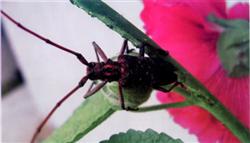
The mango stem borer belongs to the order Coleoptera, family Cerambycidae, and occurs in mango-producing areas throughout southern China. Its larvae bore into and feed on branches and trunks, weakening the affected plants; in severe cases, the plants can die, and infested branches are easily broken by wind. The pest has 1 generation per year, overwintering mainly as larvae, while a small number of pupae or adults can also overwinter inside the bore holes. From March to April of the following year, adults begin to emerge from the bore holes; after mating, females lay eggs in cracks on young branches, in the leaf axils of old leaves, or at the forks of branches. From April to May, the eggs hatch into larvae, which immediately bore into the pith of the branches; they tunnel and feed from top to bottom, opening a ventilation and excretion hole about every 30 cm along the tunnel. Based on the living habits and damage characteristics of the mango stem borer, the comprehensive control measures for the mango stem borer are as follows:
First, during winter orchard cleaning, prune and burn the infested branches.
Second, during the period when adults appear, use black light traps to kill the adults, or manually capture them while they are mating.
Third, dip a cotton ball in 80% dichlorvos emulsifiable concentrate or a 5-10 times dilution of 40% dimethoate emulsifiable concentrate, plug it into the bore hole, then seal the hole opening with clay to poison and kill the larvae.