-
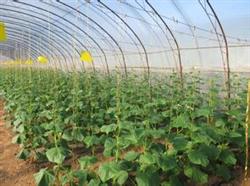
Key Technical Points for Multi-Layer Covered Seedling Raising of Cucumbers in Spring Greenhouses
I. Greenhouse Structure. The best span for the greenhouse is 6-8 m. Put on the greenhouse film in early November. Set up a 1.5 m low tunnel inside the greenhouse and cover it with 3 m wide greenhouse film. At night, cover the low tunnel with a thick straw mat, and add a layer of old greenhouse film over the straw mat, which greatly enhances heat preservation. After seedling raising, cucumbers can still be planted in the greenhouse. II. Nutrient...
-
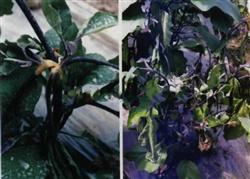
How to prevent and control pests and diseases in early spring eggplant? Key technical points to master
For eggplant seedlings raised in early spring, the main focus is preventing and controlling soil-borne diseases: damping-off, rhizoctonia rot and sclerotinia rot. For seedbed soil disinfection, mix 50 kg of seedbed soil with 20 g of 68% Jinlei water-dispersible granules and 10 ml of 2.5% Shileshi suspension concentrate, sift the soil and mix well, then fill nutrient pots, or spread it over the seedling bed. During the seedling stage, spray 0.1%-0.2% monopotassium phosphate...
-
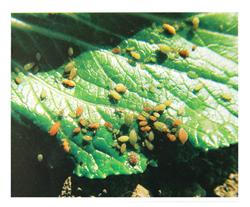
How to control aphids on rapeseed? These technical points need to be mastered
Aphids, commonly known as greasy bugs, are the main insect pest of rapeseed in Linxiang District, occurring in all major rapeseed-producing areas; when drought is severe in winter and spring, the pest is heavier in plots lacking irrigation conditions. Aphid damage mainly occurs from the bolting stage to the maturity stage of rapeseed, and untimely or improper control can cause a certain amount of yield loss. 1. Rapeseed aphids...
-
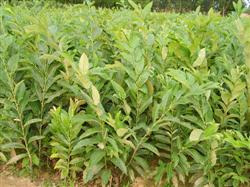
Key Technical Points for Spring Irrigation and Moisture Conservation in Chestnut Orchards
Chestnut (Castanea mollissima) is a deciduous tree and one of the woody grain tree species, with a long lifespan, known as the "iron-stemmed crop." The chestnut fruit is nutritious and delicious, and can serve as a substitute for grain; all parts of the chestnut tree can be used medicinally, and tannin extract can also be obtained from the bark, branches and leaves, and the pith of the wood, while the leaves can also be used to raise camphor silkworms and oak silkworms. Chestnut wood is hard, with straight grain, moisture-resistant and rot-resistant...
-
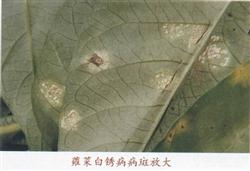
How to prevent and control downy mildew in water spinach? A detailed explanation of practical technical points
1. Practice a 2-to-3-year crop rotation with other vegetable varieties. 2. Before sowing, dress the seed for sterilization at a ratio of 300 g of 35% metalaxyl per 100 kg of seed; 3. In the early stage of the disease, spray with 50% copper metalaxyl wettable powder at 6000 to 7000 times dilution, or with 72.2% Previcur AS at 8000 times dilution, applying once every 7 to 10 days...
-
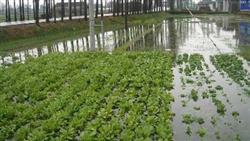
How to prevent and control waterlogging damage in peanuts? Detailed explanation of key technical points
Peanut waterlogging damage occurs for two reasons: first, low-lying terrain, heavy clay soil, and poor drainage; second, during seasons with long rainfall periods or excessive rainfall, surface water and groundwater are in excess and cannot be drained away in time. From the perspective of the water requirements for peanut growth and development, the suitable soil relative humidity at the seedling stage of peanuts is 50%-60%. When the soil relative humidity is higher than 70% or there is standing water...
-
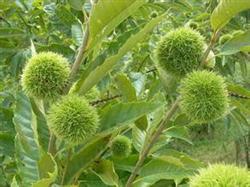
Key Technical Points for Skillfully Applying Boron Fertilizer to Chestnut Trees
According to surveys, in areas where chestnuts grow normally, 15% of the burrs are empty, and in some cases the rate is even as high as over 50%, seriously affecting chestnut growth. Boron deficiency is the main cause of empty chestnut burrs. Applying boron fertilizer can markedly inhibit the formation of empty chestnut burrs and increase yield. In spring, before the chestnuts sprout, apply it in a ring-shaped trench or in holes...
-
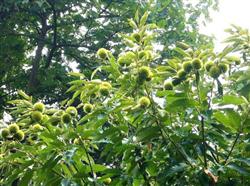
Chestnut Pest and Disease Prevention and Control Methods and Technical Key Points
In Anhui Province, chestnuts are mainly distributed in the mountainous areas of southeastern and western Anhui. Since the 1990s, they have also been developed on a large scale in the Jianghuai hilly region. The main chestnut-producing counties (cities) include Jinzhai, Huoshan, Shucheng, Yuexi, Guangde, Ningguo, Taihu, and others. There are about 150 species of pests and diseases harming chestnuts in our province, with common and severe occurrences affecting chestnuts...
-
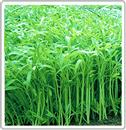
Detailed Explanation of the Key Technical Points for Water Spinach Cultivation and Management
Water spinach, also known as bamboo-leaf vegetable, tongxin cai, weng cai, tong cai or vine vegetable, is a fast-growing leafy green vegetable that has been actively introduced in various regions in recent years. Its main management techniques are as follows: (1) Raising seedlings. The seed coat of water spinach is relatively thin and not hard, and it absorbs water rather quickly, so sowing dry seeds and allowing them to germinate is sufficient. Soaking seeds to promote germination and then sowing. ...
-
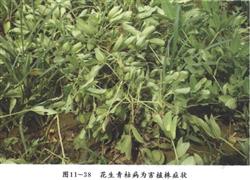
How to prevent and control peanut bacterial wilt and stem rot? Detailed explanation of technical key points
I. Peanut bacterial wilt 1. Symptoms. Peanut bacterial wilt mostly begins to develop around flowering, but the disease is most severe during the peak flowering and pegging stage, and the condition eases somewhat after pod setting. Its most notable symptom is: the aboveground leaves of diseased plants wilt rapidly, the vascular bundles of the underground roots turn brown, and along the root-stem section, when moist, squeezing the cut surface can exude...
条件筛选