Detailed Explanation of Mango Top-Grafting and Re-Varietying Methods and Technical Points
I. Pre-Grafting Preparation Before re-varietying, strengthen fertilizer and water management for the trees to be re-varietyed. Prune the above-ground part appropriately, removing diseased branches, dead branches, shaded branches, overly dense branches, and crossing branches; for large perennial trees, saw off the main and side branches in spring or autumn at 1.2-1.5 m above the ground (saw in spring and graft in autumn, or saw in autumn and graft the following spring)...
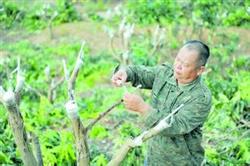
I. Pre-Grafting Preparation
Before re-varietying, strengthen fertilizer and water management for the trees to be re-varietyed. Prune the above-ground part appropriately, removing diseased branches, dead branches, shaded branches, overly dense branches, and crossing branches; for large perennial trees, saw off the main and side branches in spring or autumn at 1.2-1.5 m above the ground (saw in spring and graft in autumn, or saw in autumn and graft the following spring), leaving some small branches. After new shoots emerge from the saw cuts, keep only 2-3 evenly distributed new shoots per cut; once the new shoots have matured and reached a diameter of 0.5-0.8 cm or more, grafting can be done on the new shoots. Stop fertilizing 15 days before grafting, which can slow sap flow and benefit grafting.
II. Grafting Period
Graft when the sap is about to flow, that is, before new shoots emerge, when both the rootstock and scion peel easily. When top-grafting and re-varietying in high temperatures, low temperatures, or rainy weather, the survival rate is relatively low, whereas spring grafting (March-April) and autumn grafting (mid-August to mid-September) can achieve a survival rate of over 90%. Although top-grafting and re-varietying in May can survive, when the buds sprout after survival they encounter high temperatures, and dieback is very likely to occur; grafting in October can also survive, but at this time drought occurs and temperatures gradually drop, so after survival and sprouting they encounter low temperatures, grow slowly, and the new shoots may even suffer frost injury or freeze to death.
III. Top-Grafting Methods
From mother branches with excellent fruiting performance, select vigorous, pest- and disease-free mature or lignified branches on the outer part of the canopy as scions. Methods include bud patch grafting, single-bud side grafting, and single-bud cut grafting. For trees whose trunks and branches have not been shortened, top-graft on the original branches at 1 m to 1.5 m above the ground using bud patch grafting or single-bud side grafting; on new branches of trunks that have already been cut, use the cut grafting method, and bud patch grafting can also be used. When grafting, it is best to use very thin film for wrapping. Wrap the scion bud eye with a single layer of film, and after survival the sprouting bud can grow through the film, reducing the step of cutting the film.
IV. Timely Unbinding
After the graft survives, the film should not be removed too early, otherwise the new shoots will wither. Generally, unbinding when the first new shoots turn green is safest; unbinding too late will affect the thickening growth of the rootstock and scion and may cause rot. For bud-branch side grafting and bud patch grafting, 30-40 days after grafting, first cut off the branch tips 8-10 cm above the graft union; after the new buds have become mature branches, then unbind and carry out a second cut of the rootstock, that is, cut to just above the graft union as appropriate.