-
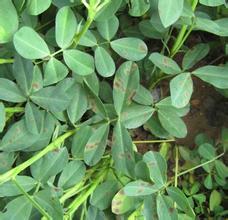
Control Methods and Technical Key Points for Peanut Web Blotch
Peanut web blotch, also known as brown stripe disease and cloud-pattern blotch disease, often occurs mixed with leaf spot disease, and can cause early defoliation of peanut leaves, severely affecting peanut yield. I. Disease occurrence pattern The disease mostly begins during the flowering stage, with the peak period from pod setting to maturity, mainly damaging leaves, initially producing circular or irregular...
-
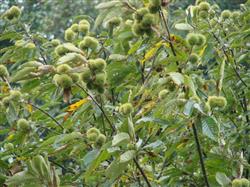
Key Technical Points for Pressing Green Manure under Chestnut Trees in the Rainy Season
Pressing green manure under chestnut trees can improve the soil and prevent water and soil erosion. It has many advantages such as low investment, low cost, and a high comprehensive utilization rate. The techniques for pressing green manure under chestnut trees in the rainy season are introduced as follows: 1. Sources of green manure for chestnut. First, artificially cultivated green manure, commonly including leguminous plants such as false indigo (Amorpha fruticosa) and mung bean; second, wild green manure,...
-
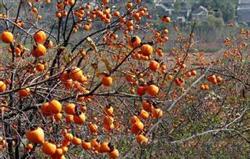
What are the key technical points for summer management of a persimmon orchard?
Summer management of a persimmon orchard should pay attention to the following matters: 1. Fruit thinning For astringent persimmons, from mid-May to early June, and for sweet persimmons, from early June to early July, after the physiological fruit drop ends, select and keep healthy young fruits free of pests and diseases at a ratio of 20 to 25 leaves per fruit. The ones to remove are deformed fruits, pest- and disease-damaged fruits, and fruits set on branches less than 15...
-
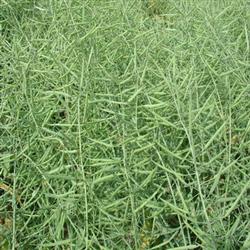
Correct Methods and Technical Key Points for Fertilizing Winter Rapeseed
Rapeseed "flowering but not seeding," also known as stunted non-seeding. That is, from the onset of the disease in the plant until maturity, it continues to bloom successively, but cannot set seed normally. It is a physiological disease caused by planting rapeseed on boron-deficient soil, mainly occurring in Brassica napus varieties, but in recent years it has also been found in Brassica rapa rapeseed. After the disease occurs...
-
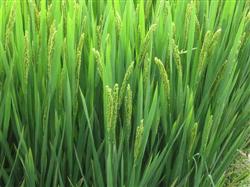
Key Technical Points for Pest and Disease Control in the Middle and Late Stages of Rice
Currently, rice is at the booting stage. In order to seriously carry out pest and disease control in the middle and late stages of rice and ensure increased yield and income this year, Shuangfengqiao Subdistrict recently took strong measures to strengthen pest and disease control in the middle and late stages of rice. Because last winter and this spring were a warm winter year, the overwintering populations of the rice stem borer (Chilo suppressalis), rice leaf roller (Cnaphalocrocis medinalis), and rice planthopper were large...
-
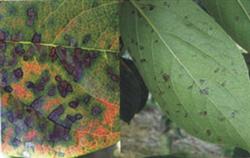
How to manage sweet persimmon after harvest? Detailed explanation of key technical points
Anthracnose is the main disease of persimmon, mainly harming fruit, branches and shoots, and the trunks and branches of seedlings. It causes a large amount of fruit drop and the death of branches. When the disease is severe, fruit drop can reach 20%-40%, seriously affecting the yield and quality of persimmons. The control methods are as follows. 1. Water and fertilizer management Strengthen water and fertilizer management, enhance tree vigor, and improve disease resistance...
-
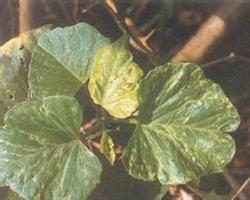
Key Technical Points and Recommendations for Mid-Season Field Management of Sweet Potato
In recent years, farmers have often reported that after the sweet potato seedlings they cultivated were transplanted into the field, the leaves turned yellow and wrinkled, and the plants grew very slowly, or in rural colloquial terms, "died without growing." Such potato vines basically produce no yield later on. According to investigation, the main cause is severe occurrence of sweet potato virus disease. Sweet potato virus disease is a common disease of sweet potato...
-
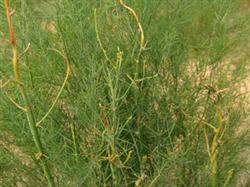
How to prevent and control asparagus pests and diseases? A detailed explanation of practical technical points
Asparagus stem blight and brown spot are the main diseases harming asparagus, developing quickly and causing severe damage. At present, there is no specific cure. Practice has proven that adopting a comprehensive disease prevention strategy based mainly on agronomic measures, supplemented by chemical control, can achieve twice the result with half the effort. The specific methods are: 1. Pinch off the growing tips at the right time to prevent lodging. As...
-
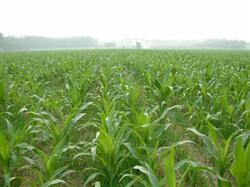
Key Technical Points for Summer Field Management of Spring Corn
At present, spring corn in the Qianxi area has entered the jointing stage, which is the peak period of water and fertilizer demand for corn and also a critical period for yield formation, so summer management of corn should be strengthened. 1. Timely topdressing Corn topdressing should be mainly nitrogen fertilizer, preferably applied in two split applications, namely 20 kg of urea per mu at the large trumpet stage...
-
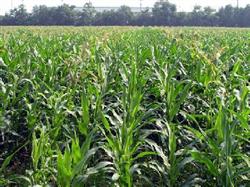
Technical methods for phosphorus and potassium fertilizer management for high-yield maize
The effect of applying phosphorus and potassium fertilizers varies greatly depending on the soil's available nutrient content. Increasing the application of phosphorus and potassium helps produce strong seedlings that emerge early, strong plants with large ears, a higher grain-to-leaf ratio, and more grains and greater grain weight, and is an important condition for improving population quality. However, after phosphorus and potassium fertilizers are applied, most are absorbed and fixed by the soil, the absorption and utilization rate in the current season is low, and in the soil...
条件筛选