-

How to fertilize kidney beans? Detailed explanation of scientific fertilization methods
How to fertilize kidney beans
-
How to Fertilize Chinese Yam? A Detailed Guide to Scientific Fertilization Methods
During the seedling stage and the vine-spreading stage, Chinese yam mainly grows leaves and branches, so fertilizers should be mainly nitrogen-based. After budding, it enters the peak growth stage, the underground tubers begin to expand, and the fertilizer demand is relatively large. This is the key period for fertilization, and nitrogen, phosphorus, and potassium should be applied in combination. I. Base fertilizer. Choose a good field, and before plowing, apply 2000 kg-4000 kg of decomposed farmyard manure and 60 kg-80 kg of compound fertilizer per mu as base fertilizer, then plow the soil 30 cm deep and harrow it fine.
-
What are the key points of scientific fertilization techniques for yam?
Yam, also known as Chinese yam, is a perennial twining herb of the Dioscoreaceae family, using its tuberous root for medicinal purposes. It is mainly produced in the three provinces of Henan, Shanxi, and Shaanxi, and is also cultivated in Jilin, Liaoning, Shandong, and other places. The tuberous root of yam contains saponins, mannan, phytic acid, allantoin, choline, dopamine, arginine, amylase, protein, fat, starch...
-
Detailed Explanation of Fertilization Techniques for Persimmon Orchards: Master Scientific Fertilization Methods
The main cultivation and management techniques are: 1. Implement the "Three Improvements" 1.1 Improve the orchard site: The vast majority of mature mountain persimmon orchards have terraces with no ridge in front and no ditch behind, and the terrace surface is low in front and high in back, causing severe soil and water erosion and exposed root systems. To improve the orchard site, the terrace surface of the persimmon orchard should be shaped with a ridge in front and a ditch behind, with the front ridge 10-15 cm high...
-
What to Do When Sweet Potatoes Grow Too Vigorously After Rain? A Detailed Guide to Scientific Vigor Control
Deep plowing, soil improvement and bed formation The timing of sweet potato tuber formation, the number of tubers, and the speed and duration of tuber bulking are all directly related to how well the soil drains and aerates. If soil aeration is poor, insufficient oxygen will hinder root respiration and nutrient uptake, thereby inhibiting tuber bulking. Therefore, if you want sweet potatoes...
-
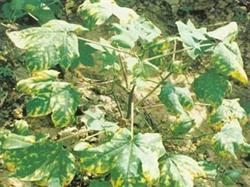
Scientific prevention and control methods for cotton Fusarium wilt and Verticillium wilt
Cotton Fusarium wilt and Verticillium wilt are the main diseases affecting high yield and high efficiency of cotton. Only by correctly identifying the symptoms and taking corresponding measures can yield and quality be improved and benefits increased. I. Cotton Fusarium wilt: This disease can occur at the cotyledon stage, with the first peak of incidence appearing at the squaring stage. At the seedling stage, the symptoms of Fusarium wilt are complex and varied...
-
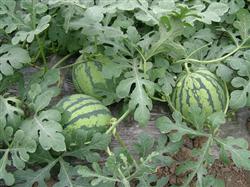
Five scientific measures for spring cultivation of mini watermelons
Cultivating mini watermelons in early spring has become a planting project favored by many melon growers, but due to climate and other reasons, the cultivation of mini watermelons still requires very scientific methods. Below, we explain 5 measures for scientifically cultivating mini watermelons: 1. Temperature management. Because the natural temperature in early spring is low, after transplanting the focus should be on keeping warm, keeping the greenhouse film tightly closed...
-
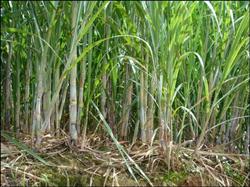
Key Points of Scientific Fertilization Techniques for Sugarcane Cultivation
Sugarcane enters the elongation stage from the time jointing begins and the average stem elongation exceeds 3 cm per ten-day period until elongation basically stops. This is also the golden season for rapid sugarcane jointing and growth, and doing a good job of field management is the key to a bumper harvest. Therefore, the following measures must be carried out well: 1. Apply heavy stem-promoting fertilizer. The sugarcane elongation stage is the period for developing large roots and...
-
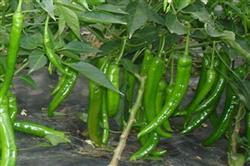
How to fertilize peppers scientifically in spring? A detailed guide
Selecting good seeds: Winter-spring season cultivation is essentially early-maturing cultivation, so attention must be paid to the early maturity of the variety while also considering high yield and disease resistance. Suitable varieties include Hongyingda, Andale, Shengfangzhou, as well as Bulgarian hot pepper and Sujiao No. 5. Land preparation and fertilization: apply 10000 kg of high-quality manure or compost per mu as a base dressing, and apply urea in furrows...
-
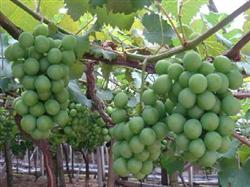
Scientific methods for using the grape ripening agent ethephon
1. Pay attention to watering for varieties prone to fruit cracking, keeping the soil from drying out before the fruit expands and grows, so that the skin will not age; then when the rainy season comes and the soil has too much moisture, fruit cracking will be reduced; 2. When conditions permit, it is recommended to bag the grapes; bagged grapes have fresh, tender skin with strong elasticity, and even if rain accelerates expansion, they are less likely to crack...
条件筛选