How to fertilize peppers scientifically in spring? A detailed guide
Selecting good seeds: Winter-spring season cultivation is essentially early-maturing cultivation, so attention must be paid to the early maturity of the variety while also considering high yield and disease resistance. Suitable varieties include Hongyingda, Andale, Shengfangzhou, as well as Bulgarian hot pepper and Sujiao No. 5. Land preparation and fertilization: apply 10000 kg of high-quality manure or compost per mu as a base dressing, and apply urea in furrows...
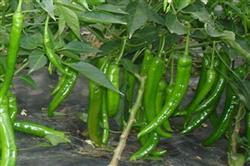 1. Fertilization principles
(1) Increase the application of high-quality organic fertilizer according to local conditions.
(2) Control fertilization during the flowering period. From the start of flowering to fruit set on branches, except when the plants are severely deficient in fertilizer and a small amount of quick-acting fertilizer may be applied, fertilization should be controlled to prevent flower drop, leaf drop, and fruit drop.
(3) During the young fruit stage and harvest stage, quick-acting fertilizer should be applied promptly to promote the rapid expansion of young fruit.
(4) From after pepper transplanting to before the flowering period, combine promotion and control, using dilute fertilizer applied frequently.
(5) Avoid using high-concentration fertilizers, avoid topdressing on wet soil, avoid topdressing at noon during high temperatures, and avoid overly concentrated topdressing.
2. Fertilization amount and ratio
(1) Apply 2~4 cubic meters per mu of high-quality farmyard manure as a one-time base fertilizer.
(2) For yield levels below 2000 kg/mu: apply nitrogen fertilizer (N) 10~12 kg/mu, phosphate fertilizer (P2O5) 3~4 kg/mu, potassium fertilizer (K2O) 8~10 kg/mu; for yield levels of 2000~4000 kg/mu: apply nitrogen fertilizer (N) 15~18 kg/mu, phosphate fertilizer (P2O5) 4~5 kg/mu, potassium fertilizer (K2O) 10~12 kg/mu; for yield levels above 4000 kg/mu: apply nitrogen fertilizer (N) 18~22 kg/mu, phosphate fertilizer (P2O5) 5~6 kg/mu, potassium fertilizer (K2O) 13~15 kg/mu.
(3) 20%~30% of the total nitrogen fertilizer is used as base fertilizer, and 70%~80% as topdressing; all phosphate fertilizer is used as base fertilizer; 50%~60% of the total potassium fertilizer is used as base fertilizer, and 40%~50% as topdressing.
(4) In the middle growth stage of peppers, pay attention to spraying foliar boron fertilizer and foliar calcium fertilizer products diluted 500 times, respectively, to prevent and control pepper blossom-end rot.