Scientific methods for using the grape ripening agent ethephon
1. Pay attention to watering for varieties prone to fruit cracking, keeping the soil from drying out before the fruit expands and grows, so that the skin will not age; then when the rainy season comes and the soil has too much moisture, fruit cracking will be reduced; 2. When conditions permit, it is recommended to bag the grapes; bagged grapes have fresh, tender skin with strong elasticity, and even if rain accelerates expansion, they are less likely to crack...
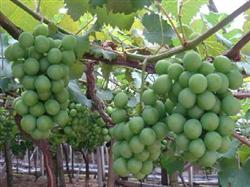 People in the industry know that, under normal circumstances, the ripening agent used for grapes is ethephon. Ethephon is a plant biostimulant that can promote the decomposition of chlorophyll, the formation of pigments, the transformation of organic acids, and the formation of aromatic compounds in the fruit. Tests show that when varieties such as Kyoho begin to ripen, spraying or dipping the clusters with 250-300 mg/kg ethephon can advance ripening by 6-8 days, and they can be eaten on the fifth day after spraying.
When using ethephon to ripen grapes, pay attention to the following:
① The concentration must be suitable. If the concentration is too low, the effect is not obvious, while a concentration higher than 500 mg/kg easily causes fruit drop.
② The most suitable treatment time is when the fruit begins to ripen, that is, when colored varieties begin to color and the berries of white varieties turn slightly yellow; the treatment effect is best at this time.
③ The most suitable ripening concentration differs among varieties, so in production, tests must be carried out to find the best treatment concentration and method.
④ Because ethephon promotes the formation of the abscission layer, using ethephon alone to promote ripening often causes berry drop, making grape clusters unsuitable for storage and transport. To reduce this side effect, when using ethephon, 10-20 mg/kg naphthaleneacetic acid or 10-15 mg/kg 2,4,5-T can be added, which has a good effect in preventing berry drop.