-
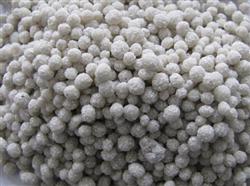
What should be noted when applying fertilizer? A detailed explanation of the key points of scientific fertilization
What should be noted when applying fertilizer? How should fertilizer be applied to benefit crops? We invite experienced netizens to help introduce this. Our country is a populous country and a major agricultural country, feeding 22% of the world's population with 7% of the world's land. Fertilizer has played an indispensable role in this, but long-term improper use of fertilizer can cause soil compaction, salinization...
-

How to use chlorine-containing compound fertilizers well? An analysis of scientific application methods
How should chlorine-containing compound (mixed) fertilizers be used well? Please explain the methods. Introduction to chlorine-containing compound (mixed) fertilizers: refers to compound (mixed) fertilizers whose potassium source comes from potassium chloride and whose nitrogen source is partly or entirely ammonium chloride. Chlorine is one of the nutrient elements essential for crop growth, but improper application can adversely affect crop growth....
-
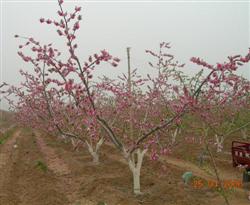
What are the scientific application methods for bio-organic fertilizers?
How should nitrogen fertilizer be applied to fruit trees? Please provide guidance. If there is too much nitrogen in the fruit tree, it will cause an imbalance between carbohydrates and nitrogen in the tree or disrupt its relationship with other elements, resulting in excessive vegetative growth, spindly branches and leaves, poor flower bud differentiation, and serious flower and fruit drop; in summer and autumn, when the nitrogen content in fruit leaves exceeds 2....
-

Methods and Key Technical Points for Scientific Potassium Fertilizer Application in Rice
How should potassium fertilizer be applied to rice? What method to use In rice production, scientific and rational application of potassium fertilizer plays an important role in cultivating strong seedlings, improving resistance to disease, insects and lodging, increasing the seed-setting rate, and achieving high and stable yields. According to monitoring, for every 500 kg of rice grain produced, about 15 kg of potassium chloride...
-
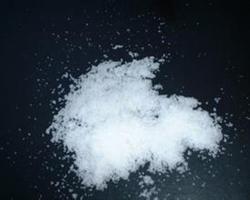
Types of Nitrogen Fertilizers and Scientific Application Methods
At present, the effective utilization rate of nitrogen fertilizers in our country is generally very low. How to reduce nitrogen loss and improve nitrogen fertilizer utilization rate is a problem of common concern to the vast number of farmers. Here are seven methods for improving the effective utilization rate of nitrogen fertilizers, introduced to the vast number of farmers: 1. Implement mixed application and deep application, and strengthen water management. A large number of field...
-

How can fertilizer be applied for the best effect? Master scientific fertilization methods
Many fertilizers are used in crop cultivation, and each has its own characteristics. For example, organic fertilizers and inorganic fertilizers, solid fertilizers and liquid fertilizers, macronutrients and micronutrients, single fertilizers and compound fertilizers, etc. Different fertilizers should be applied using different fertilization techniques. Generally, slow-release fertilizers such as organic fertilizers and compound fertilizers should be used as base fertilizer,...
-
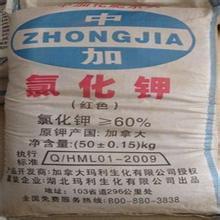
Five key points for efficient and scientific application of potassium fertilizer
Veteran vegetable grower Master Chang switched to growing tomatoes these past two years, and his yields and returns have remained good, because he pays close attention to soil testing and fertilization. When he tested his soil last year, the organic matter in his greenhouse soil reached 27.25g/kg. Because the soil organic matter content was relatively high, this spring he did not use organic fertilizer, but instead applied 40 kg of compound fertilizer per mu, 7...
-
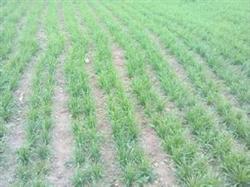
Methods and Techniques for Scientifically Applying Phosphate Fertilizer to Wheat
Wheat is a crop with a relatively high phosphorus requirement, and scientifically applying phosphate fertilizer is one of the key measures to improve phosphate fertilizer efficiency, reduce fertilization costs, and promote high-quality and high-yield wheat. 1. Apply after mixing and composting with organic fertilizer. Organic fertilizer is rich in organic matter, phosphoric acid, and various organic weak acids, which can turn insoluble phosphorus into soluble phosphorus...
-
Foliar fertilizers are effective, and scientific selection is key
After the pegging stage of autumn peanuts, drought weather and large day-night temperature differences affect pod development, causing pods to be not plump. If foliar topdressing is carried out multiple times after the pegging stage of autumn peanuts to supplement nutrients through the leaves and raise the nutritional level of the autumn peanut plants, the ability of the autumn peanut plants to resist drought and adapt to large day-night temperature differences can be enhanced, making the pods...
-
How to apply fertilizer scientifically in hot and dry weather
It is not advisable to apply large amounts of undecomposed cake fertilizer. Cake fertilizer has a relatively small carbon-to-nitrogen ratio and decomposes quickly, easily generating high temperatures. Applying undecomposed cake fertilizer will raise the local temperature, cause root burn and affect seed germination, and will also attract underground pests. The cake fertilizer should be crushed and soaked in human urine until it heats up before application. Compound fertilizer cannot be used alone...
条件筛选