-
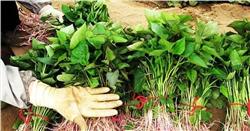
Complete collection of scientific sweet potato cultivation techniques, videos and pictures
I. Select good sweet potato varieties: Choose high-yielding varieties according to the characteristics of the sweet potato variety and the cultivation purpose. In spring sweet potato areas, it is advisable to choose medium-maturing varieties that are tolerant to fertilizer, recover quickly after transplanting, set tubers early, produce many and uniform tubers, and have a long duration of tuber enlargement. For example, in areas mainly for food use, Sushu 8, Anping 1, Xushu 34, Xushu...
-
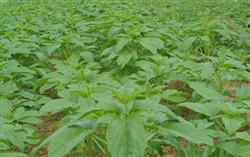
Summer Sesame Cultivation Techniques: How to Fertilize Scientifically
How should summer sesame be fertilized? Please advise on effective fertilization methods for sesame. To achieve a higher yield of summer sesame, nitrogen, phosphorus and potassium fertilizers need to be applied skillfully at the right times. When fertilizing, pay attention to the principles of one steady, two precise and three heavy. For details, refer to the following: One steady means fertilization at the seedling stage should be steady. Summer sesame grows slowly at the seedling stage...
-
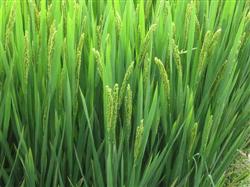
How to scientifically manage water and fertilizer in the middle and late stages of rice?
How should water and fertilizer be managed in the middle and late stages of rice? Please provide an introduction to the management methods. Water and fertilizer management in the middle and late stages of rice can refer to the following: (1) Apply panicle fertilizer cautiously as appropriate to promote large panicles, full grains, and high yield. Based on the earlier rice seedling growth and field diagnosis results, for fields with high soil fertility, strong water and fertilizer retention capacity, many tillers, and darker leaves, delay, reduce, and lower the application rate of panicle fertilizer, generally applying 4-5 kg of urea per mu at the 5th-7th stage of panicle differentiation or at the penultimate leaf stage; for fields with poor fertilizer retention capacity, insufficient tillering, and lighter leaf color, appropriately increase the panicle fertilizer rate earlier, generally applying 6-8 kg of urea per mu at the 4th leaf from the top stage when entering the panicle initiation stage, and spray trace element fertilizers such as potassium dihydrogen phosphate on the leaves at the initial heading stage to increase grain filling and raise yield.
-
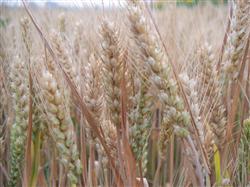
How to scientifically select and keep seed when harvesting wheat?
How do you select and keep seed when harvesting wheat? Here is an introduction. The work of selecting and keeping wheat seed can refer to the following methods: 1. Single-plant (spike) selection: that is, select good seed with the typical characteristics and traits of this variety, high purity and strong seed quality. This method is suitable when the amount of selected seed is small and the amount of seed used is small. Two to three days before harvest, go to the seed field or the main field...
-

How to fertilize sunflowers properly? A detailed guide to scientific fertilization methods
How to fertilize sunflowers properly? Please give guidance. When growing sunflowers, you can refer to the following methods for fertilization: 1. Nutrient requirements of sunflowers. Sunflowers are a crop with relatively high nutrient demands. The period from flower head formation to flowering is the peak period of nutrient demand for sunflowers. From emergence to flower head formation, phosphorus demand is relatively high; from flower head formation to...
-

How to grow sunflowers scientifically? Detailed explanation of key techniques
How to grow sunflowers scientifically? Here is an introduction and guide. Sunflower cultivation can follow the methods below: land preparation and sowing. Before planting, apply 30-35 dan of farmyard manure per mu or 25 dan of cattle pen manure, plus 3 dan of plant ash, then plow and harrow to form beds 2-2.5 m wide. Spring sowing of sunflowers is from late March to late April; the earlier the sowing, the...
-
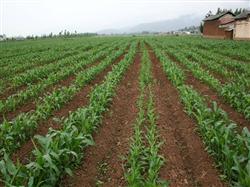
How to fertilize scientifically when growing summer corn?
How to fertilize when growing summer corn? Please explain the methods. For fertilizing summer corn, you can refer to the following methods: 1. Avoid applying too much fertilizer. Some farmers use more than 50 kg of urea per mu when growing summer corn, which reduces fertilizer use efficiency and corn quality and pollutes the soil. To...
-

What are the scientific methods for growing lettuce?
How do you grow lettuce scientifically? Please give a detailed introduction to the growing methods. Lettuce can be grown by referring to the following methods: 1. Soil selection: choose fertile, slightly acidic soil rich in organic matter, with strong water and nutrient retention, good aeration, and convenient drainage and irrigation. 2. Variety selection: for growing lettuce, varieties such as glass lettuce, crisphead lettuce, curly-leaf lettuce and Caesar are better.
-
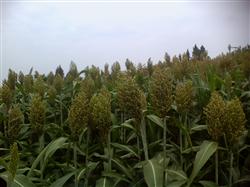
How to fertilize sorghum scientifically? Detailed explanation of key fertilization techniques
How to fertilize sorghum scientifically? Please give guidance. Sorghum has wide adaptability to soil and strong nutrient uptake capacity. When planted on sandy loam soil rich in organic matter and with relatively high fertility, it is easier to obtain high yields. On poor dry land with phosphorus deficiency and low potassium, fertilizer must be added to obtain a good harvest. Sorghum seedlings are small, and the fertilizer requirement is not...
-
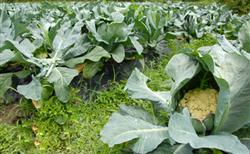
How to Fertilize Cauliflower Properly? A Detailed Guide to Scientific Fertilization Methods
How to fertilize cauliflower properly? Please give guidance. Cauliflower, also known as cauliflower (Brassica oleracea var. botrytis), has an edible portion that is a malformed flower head, and fertilization techniques differ depending on the variety. 1. Given that early-maturing varieties have a short growing season, the base fertilizer should be a quick-acting nitrogen fertilizer, applying about 8 kg of urea and about 8 kg of superphosphate per mu; for mid- and late-maturing varieties with a long growing season, the base fertilizer should be 1500 kg of barnyard manure, applied into the soil when tilling and preparing the land, followed by transplanting the seedlings. 2. Topdressing. In the early growth stage of cauliflower, frequently apply light applications of quick-acting chemical fertilizer as a 2% to 4% ammonium sulfate aqueous solution, about 700 kg per mu each time, or 10% to 30% human feces and urine, about 700 kg each time, applied around the roots. When the flower head begins to form, heavy topdressing should be applied to promote leaf and flower head growth. Apply about 800 kg of 40% human feces and urine per mu, or 10 kg of urea, about 20 kg of superphosphate, and about 8 kg of potassium sulfate, watered on.
条件筛选