Five key points for efficient and scientific application of potassium fertilizer
Veteran vegetable grower Master Chang switched to growing tomatoes these past two years, and his yields and returns have remained good, because he pays close attention to soil testing and fertilization. When he tested his soil last year, the organic matter in his greenhouse soil reached 27.25g/kg. Because the soil organic matter content was relatively high, this spring he did not use organic fertilizer, but instead applied 40 kg of compound fertilizer per mu, 7...
 Nitrogen (N), phosphorus (P) and potassium (K) are the three major nutrient elements essential for plant growth; a deficiency in any one of them will affect the normal growth, development and yield of crops. With the promotion of soil-testing formula fertilization technology, most farmers have gained some understanding of applying potassium fertilizer to crops, but in the specific application they should still observe the "five points of attention."
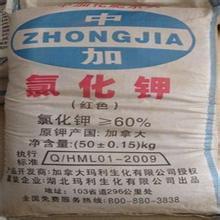
Pay attention to how crops respond to potassium fertilizer. The potassium fertilizers currently used in production are mainly KCl and K2SO4. KCl contains 50%-60% K2O and is inexpensive, suitable for general field crops and for sulfur-sensitive crops such as cucumber and bitter gourd; K2SO4 contains 48%-52% K2O and is more expensive, suitable for chlorine-sensitive crops such as watermelon, sweet potato, potato, grape, tobacco, peach and pear. Applying potassium to potassium-sensitive crops gives obvious results; leguminous crops and corn are both very sensitive to potassium.
Pay attention to the timing of potassium application. Potassium fertilizer should be applied early, generally mainly as a base application. For soils with poor fertilizer retention, it can be applied in several moderate doses to reduce potassium loss. For example: corn absorbs potassium mainly at the seedling stage, and by the flowering and tasseling stage it basically stops absorbing it.
Pay attention to the application rate. Scientific application of potassium fertilizer can increase crop yields, improve the quality of agricultural products, and strengthen the crops' resistance to lodging, disease and drought; but applying too much potassium fertilizer not only wastes it, it can also cause physiological disorders such as yellow leaves and dry heart, and may even affect yield and quality. Different crops need different amounts of potassium: watermelon and fruit trees need more potassium; corn and cotton need a moderate amount; leguminous crops such as peanut and soybean, and sweet potato and potato, are very sensitive to potassium but do not need much of it, while wheat and millet also need relatively little potassium.
Pay attention to applying it in combination with N, P and organic fertilizer. First, the normal metabolism within the crop requires that the various nutrients remain in relative balance; second, potassium fertilizer interacts with many nutrients, among which the K-N interaction is the most obvious, with a "complementary" effect; third, organic fertilizer can adsorb potassium ions and prevent potassium loss.
Pay attention to the application method and application depth. At present, the utilization rate of potassium fertilizer in our country is generally 34%-46%. To improve the utilization rate of potassium fertilizer, it should be applied deeply and in a concentrated way. Because potassium is easily fixed in the topsoil, potassium should be applied to the soil layer where roots are densely distributed, so that roots can absorb it easily; generally, methods such as band application and hole application are used.