What should be noted when applying fertilizer? A detailed explanation of the key points of scientific fertilization
What should be noted when applying fertilizer? How should fertilizer be applied to benefit crops? We invite experienced netizens to help introduce this. Our country is a populous country and a major agricultural country, feeding 22% of the world's population with 7% of the world's land. Fertilizer has played an indispensable role in this, but long-term improper use of fertilizer can cause soil compaction, salinization...
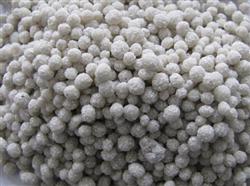 What should be noted when applying fertilizer? How should fertilizer be applied to benefit crops? We invite experienced netizens to help introduce this
Our country is a populous country and a major agricultural country, feeding 22% of the world's population with 7% of the world's land. Fertilizer has played an indispensable role in this, but long-term improper use of fertilizer can cause soil compaction, salinization, or volatilization and waste. Therefore, Zhongdi Network has compiled several key points to note during the fertilizer application process, listed in detail below for netizens' reference.
Key point one: Compound fertilizer is not suitable for application alone:
Because the nutrients in compound fertilizer are relatively fixed, it should be used in combination with other chemical fertilizers according to the needs of different soils, different crops, and plants at different stages for various nutrients, and according to the growth conditions of the crops at the time. For example, diammonium phosphate contains 18% nitrogen and 46% phosphorus. When used for crops with high nitrogen demand, the dosage should be calculated based on phosphorus, and the insufficient nitrogen should be supplemented with ammonium bicarbonate and urea.
Key point two: Dispersed application of phosphate fertilizer has improper effects:
Dispersed application of phosphate fertilizer is easily adsorbed and fixed by the soil, thereby losing its fertilizer effect. Therefore, the contact area between phosphate fertilizer and soil should be reduced. Trench application or hole application can be used, applying it in a concentrated manner near the crop roots.
Key point three: Long-term continuous use of ammonium sulfate is not good:
Because ammonium sulfate fertilizer is a physiologically acidic fertilizer, long-term application in one field will increase soil acidity, thereby destroying soil structure. In alkaline soil, the ammonium ions in ammonium sulfate are absorbed, while the sulfate ions remain in the soil and react with calcium, causing the soil to compact and harden.
Key point four: Ammonium bicarbonate has the best effect when covered with soil:
The soil covering depth for ammonium bicarbonate should be more than 6 millimeters. Generally, it is best to cover with soil immediately after application. In addition, ammonium bicarbonate is not suitable for application in greenhouses, as it easily decomposes into ammonia gas and volatilizes in greenhouses.
Key point five: Topdressing potassium fertilizer at a later stage has poor effects:
Because potassium is transferred from the lower stems and leaves of the crop to the young tender parts at the top for reuse, topdressing at the seedling stage or jointing stage, or applying it all at once as a base fertilizer, has better effects.
What is the role of zinc sulfate
What is the role of potassium fertilizer