Types of Nitrogen Fertilizers and Scientific Application Methods
At present, the effective utilization rate of nitrogen fertilizers in our country is generally very low. How to reduce nitrogen loss and improve nitrogen fertilizer utilization rate is a problem of common concern to the vast number of farmers. Here are seven methods for improving the effective utilization rate of nitrogen fertilizers, introduced to the vast number of farmers: 1. Implement mixed application and deep application, and strengthen water management. A large number of field...
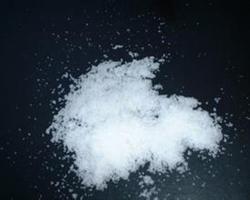 1. Ammonium bicarbonate: molecular formula NH4HCO3, contains about 17% nitrogen. It is a white crystalline substance with unstable chemical properties, easily absorbs moisture and decomposes, easily volatilizes, and has a strong pungent, eye-irritating ammonia odor. The greater the humidity and the higher the temperature, the faster it decomposes. It is easily soluble in water and shows an alkaline reaction (pH 8.2-8.4).
Ammonium bicarbonate is an unstable compound. At normal pressure, when the temperature reaches 70°C, it completely decomposes. At an air temperature of 20°C, the loss rates after 1 day, 5 days, and 10 days of open-air storage are 9%, 48%, and 74%, respectively. In a humid environment, it easily absorbs water, deliquesces, and cakes (caking itself is a manifestation of slow decomposition). During storage and application, corresponding measures should be taken to prevent volatilization loss.
It is suitable for all types of soil and crops. It should preferably be applied as a base fertilizer. When used as a top dressing, attention should be paid to deep application and covering with soil.
2. Urea: molecular formula (NH2)2CO, contains about 46% nitrogen. Ordinary urea is white crystalline and highly hygroscopic. Most urea currently produced is in semi-transparent granules and has undergone anti-moisture treatment. At an air temperature of 10-20°C, its hygroscopicity is weak. As the temperature rises and humidity increases, its hygroscopicity also increases.
Urea is a neutral fertilizer and has no side effects on soil after long-term application. After being applied to the soil, it is easily hydrolyzed into ammonium carbonate by the action of urease secreted by soil microorganisms and then absorbed and utilized by crops. Its hydrolysis process is: (NH2)2CO+2H2O→(NH4)2CO3. The hydrolysis rate is related to soil acidity, humidity, and temperature, and is also affected by factors such as soil type, degree of maturation, and fertilization depth. Under normal circumstances, the time required for urea to completely hydrolyze into ammonium carbonate is: about 10 days at an air temperature of 10°C, 4-5 days at an air temperature of 20°C, and about 2 days at an air temperature of 30°C. Therefore, the fertilizer effect of urea is relatively slow, and it should be applied appropriately earlier when used as a top dressing.
Urea is suitable for all types of soil and crops, and can be used as a base fertilizer, top dressing, and foliar spray (spray concentration 1-2%).
3. Ammonium chloride: molecular formula NH4Cl, contains 24-25% nitrogen. It is white crystalline, easily soluble in water, low in hygroscopicity, does not cake, has good physical properties, and is convenient for storage. Ammonium chloride is acidic and is also a physiologically acidic fertilizer.
Ammonium chloride should not be applied to acidic soil, saline-alkali land, or chlorine-sensitive crops (fruit trees, tobacco, etc.). Chloride ions have a certain inhibitory effect on nitrifying bacteria. After application to the soil, the nitrification and leaching loss of nitrogen is weaker than that of other nitrogen fertilizers. Therefore, ammonium chloride is a relatively good nitrogen fertilizer for paddy fields.
When applying ammonium chloride, it should be combined with watering, striving to leach chloride ions to the lower soil layers to reduce their adverse effects on crops. Ammonium chloride should not be applied as a seed fertilizer.
4. Ammonium nitrate: molecular formula NH4NO3, contains 33-35% nitrogen. Ammonium nitrate has two forms: crystalline and granular. The former is highly hygroscopic, while the latter has slightly lower hygroscopicity because its surface is coated with a moisture-proof agent. Ammonium nitrate is easily soluble in water and has a neutral pH.
Ammonium nitrate contains both ammonium nitrogen (NH4+-N), which has relatively low mobility in soil, and nitrate nitrogen (NO3--N), which has relatively high mobility. Both can be well absorbed and utilized by crops. Therefore, ammonium nitrate is a good nitrogen fertilizer that does not leave any residue in the soil and is a physiologically neutral fertilizer.
Ammonium nitrate is suitable as a top dressing for dryland crops, and application in small amounts in several split applications is more economical. It should not be applied to paddy fields, nor should it be used as a base fertilizer or seed fertilizer.