-
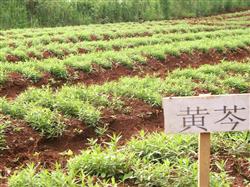
How to fertilize Scutellaria baicalensis (Baikal skullcap) when growing it? Introduction to scientific fertilization methods
How to fertilize when growing Scutellaria baicalensis? Please introduce the fertilization methods. When growing Scutellaria baicalensis, you can fertilize as follows. In the first year, after the seedlings are thinned to a stand, carry out the first fertilization, applying 500 kg of diluted human urine and manure per mu or 3-5 kg of urea, and in June-July topdress with 30 kg of ammonium phosphate. In the 2nd and 3rd years, after green-up, apply 40-50 kg of decomposed cake fertilizer, and in June...
-
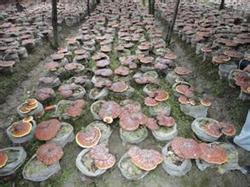
Detailed Explanation of Reishi Mushroom Cultivation Techniques: Scientific Cultivation Methods and Management Key Points
In recent years, bag-cultivated reishi mushroom has been widely promoted. The author summarizes years of reishi mushroom production practice, and now introduces several production technique key points as follows: 1. Choose a suitable cultivation period: In Taizhou City, Jiangsu Province, the most suitable cultivation period for reishi mushroom is from April 10 to May 10, and after May 20, the bags are opened successively for mushroom fruiting. Every year from June to...
-
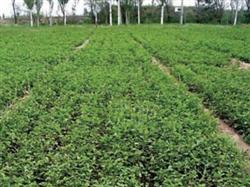
Licorice Market Prospects Analysis and Scientific Planting Techniques
Licorice is a plant of the Fabaceae family, the dried root and rhizome of Glycyrrhiza uralensis, Glycyrrhiza inflata, or Glycyrrhiza glabra, and is a commonly used bulk medicinal material. Wild licorice is mainly distributed in Inner Mongolia, Ningxia, **, Gansu, and other places; cultivated licorice is mainly distributed in the Hexi Corridor of Gansu, the surrounding area of Longxi, and parts of Ningxia. Licorice is a national-level se...
-
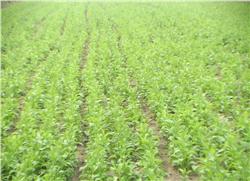
New high-yield techniques for Atractylodes macrocephala: scientific cultivation boosts production
Cultivation techniques and seedling raising (1) Preparing the seedbed: For Atractylodes macrocephala, one month before sowing, turn the soil, cover it with a 30 cm thick layer of weeds, and burn the soil to sterilize it and prevent pests and diseases; immediately after burning, turn the grass ash into the soil. If the soil is not burned, the soil can be turned in the winter of the previous year so that it is fully weathered by freezing. The soil...
-

How to Grow Danshen (Salvia miltiorrhiza)? Detailed Guide to Scientific Cultivation Methods
Scientific Cultivation Methods for Danshen (Salvia miltiorrhiza)
-
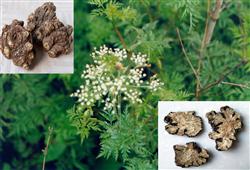
How to scientifically cultivate Angelica sinensis? Key techniques explained
How to scientifically cultivate Angelica sinensis? Here is an introduction. For cultivating Angelica sinensis, you can refer to the following methods: 1. Site selection and land preparation: Choose a gently sloping field facing south to north with half shade and half sun, requiring loose soil and good structure. Deep plow once before Grain Full (Xiaoman), break up the soil clods to make a seedbed; the bed surface is 1 m wide, and the length varies with the terrain. Dig drainage between beds...
-

How to fertilize Schisandra chinensis? Master the key points of scientific fertilization techniques
Fertilization techniques for Schisandra chinensis
-

A detailed guide to goji berry seedling cultivation: teaching you to scientifically grow goji berry seedlings
1. Site selection and land preparation: Choose sandy loam soil that is fertile and easy to drain and irrigate for the seedling field. Before raising seedlings, plow the soil 25-30 cm deep, apply sufficient base fertilizer, and make beds 1.0-1.5 cm wide, then wait for sowing. 2. Seedling raising and transplanting: Goji berries can be propagated by seed, cuttings, division, layering, and other methods. In field production, seed and cutting propagation are the main methods. 1. Seed propagation: before sowing, soak dried goji berries in water for 1-2 days, rub off the fruit skin and flesh, and rinse the seeds out in clean water. After removing the seeds, dry them, then mix them evenly with 3 parts fine sand
-
What are the scientific harvesting methods for lingzhi (Ganoderma lucidum)?
When the lingzhi stipe grows out of the bag opening, under suitable conditions it quickly forms a cap. The lingzhi fruiting body is initially white, then turns yellow, and after 2 to 3 months becomes purple, brown, or red. When the edge of the cap stops growing (no pale yellow ring at the edge) and brownish-red spores grow within the hymenium on the underside of the cap, the fruiting body has matured and can be harvested. Before harvesting, attention should be paid to collecting the spores released by the fruiting body so as to produce spore powder. When harvesting, pinch the stipe with your hand and gently twist it off, then trim away the part of the lower end of the stipe that bears the culture medium
-

How to fertilize Angelica sinensis properly? Master the scientific fertilization method
How to fertilize Angelica sinensis properly
条件筛选