-
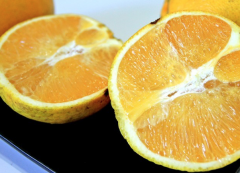
What is a navel orange, where does it come from, and how many years does it take to bear fruit?
Do you like eating yellow-fleshed oranges? The best shoppers in all of Taiwan are none other than the most important mothers-in-law and housewives in the family. They have a fast, tight purchasing network. Every morning, at the time when everyone else has just woken up, they are already at the market shopping
-
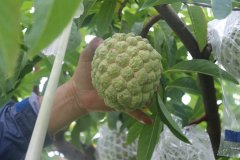
Where is the place of origin of sugar apple? Nutritional value, dietary taboos and preservation methods
Do you know the fruit sugar apple? Where did this fruit originate, and what are the nutritional values of sugar apple? Origin of sugar apple: The place of origin of the sugar apple cannot be determined with certainty; tropical America is where it was planted earlier and more widely. In the 16th century AD, it was introduced from South America to India, and by the early 17th century it was widely planted in India and southern China, and also spread to Australia, Polynesia, Hawaii, tropical America, Egypt and Palestine. According to documentary records, Taiwan, China's sugar apple was introduced during the Dutch occupation of Taiwan, and has been cultivated in Taiwan, China for more than 300 years.
-
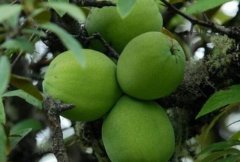
Introduction to the Origin, Uses, and Seed Sowing and Seedling Raising Methods of Tibetan Papaya
There is a unique papaya variety in our country, and that is the Tibetan papaya. This type of papaya is produced in Tibet, so it was named Tibetan papaya. Would you like to learn about it? Below we introduce it to you, and along the way also explain the seed sowing and seedling raising methods for papaya. Tibetan papaya
-
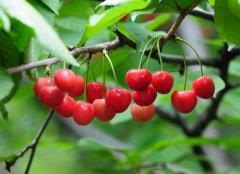
What Does the West Indian Cherry Taste Like? An Introduction to Its Place of Origin, Uses and Cultivar Characteristics
From California cherries and Northwest cherries in the Northern Hemisphere, then to New Zealand and Australia in the Southern Hemisphere. The largest sources of imported cherries in the country are mainly the United States, Canada and New Zealand-Australia, and the main production areas in the United States are California and the Northwest as the bulk. Generally speaking
-
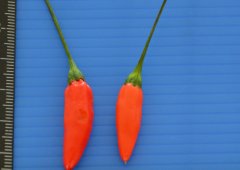
What are the origins and characteristic differences between facing-heaven chilies and lantern peppers?
There are relatively many factors influencing chili pepper cultivation profitability. Based on research by previous botanists and Kraft's (Kraft, 2013) records of wild species collected in Central and South America, it is inferred that the four currently important domesticated cultivated species of Capsicum are: C. annuum, C. chinese, C. frutescens,
-
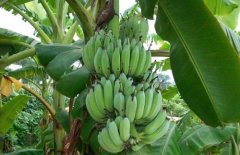
Banana tree varieties: Origin and characteristics of Musa ornata, Musa laterita, and Musa beccarii
The potted cultivation method for banana plants is a growing method that many people now know. In addition to being grown in gardens or pots, ornamental banana varieties with showy flowers have large, brightly colored blooms that are suitable for cut flowers use, and are even more distinctive when used in flower arrangements. Foliage varieties (
-
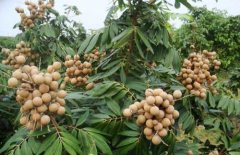
The Origin of the Longan, the Main Production Areas for Longan Cultivation in Taiwan, China, and the Classification of Varieties by Maturity Period
The longan belongs to the Sapindaceae family and is a subtropical evergreen fruit tree. It originated in mainland China, and its cultivation history in Taiwan, China is very early. It was already recorded in works such as the "Zhuluo County Gazetteer" in the 55th year of the Kangxi reign of the Qing Dynasty. It was brought over for cultivation when people from Fujian and Guangdong migrated to Taiwan, China. Although the longan cultivated in Taiwan, China was introduced from mainland China, because of its wide adaptability, strong reproductive capacity, and easy cultivation management, it has developed into the most localized economically cultivated fruit tree in Taiwan, China. What is popular now is the <a href="https://www.nongxun.net/zhongzhi/zz201903311855877506.html">method for growing longan in pots</a>.<br /> <br /> Taiwan, China is currently, besides mainland China and Thailand, one of the world's main longan production areas. According to the "Annual Report of Agricultural Statistics," in the 94th year of the Republic of China, the total cultivated area in Taiwan, China was 12,358 hectares, with an annual output of 102,790 metric tons. The main production areas are Tainan, Kaohsiung, Taichung, Nantou, and Chiayi, with Tainan having the most. The main cultivated variety is "Pink Shell," accounting for about 60% of the cultivated area.</span></span></div> <div> </div> <div> <span style="font-size: 14px;"><span style="font-family: georgia, serif;">The longan fruit tree has a very wide range of uses. Its wood is tough and its grain is beautiful, making it a superior material for furniture and carved products. Besides being eaten fresh, the fruit can be dried into longan and processed into canned longan, longan wine, longan paste, and so on. In recent years, the food industry has produced a great many processed products using dried longan flesh as a raw material, causing the consumption of dried longan flesh in Taiwan, China to increase year by year, which has been of great help in easing the pressure on Taiwan, China's fresh longan fruit market.</span></span></div> <div> </div> <div> <span style="font-size: 14px;"><span style="font-family: georgia, serif;">The longan cultivars grown in Taiwan, China are very mixed, mostly consisting of natural forest-like stands of many naturally variant plants planted together. To facilitate market transactions, they have long been divided into only 4 major categories according to fruit size and quality: Fuyan, Shuiyan, Tangsuanrouyan, and Niuzaiyan.</span></span></div> <div> </div> <div> <span style="font-size: 14px;"><span style="font-family: georgia, serif;">The Chiayi Agricultural Experiment Branch Station and Chung Hsing University have carried out variety improvement and identification and selection work. To date, surveys have discovered as many as more than 70 cultivated varieties. Although there are many varieties, cultivated varieties change quite rapidly. The 8 more important varieties can be divided into 3 categories according to maturity period: (1) early-maturing (fruit harvested in early to mid-July): Zhuqi Zaosheng, (2) mid-maturing (fruit harvested from late July to late August): Pink Shell, Large Pink Shell, Red Shell, Green Shell, Shuigong, (3) late-maturing (fruit harvested from September to mid-October): Fanlu Wansheng, October.</span></span></div> <div style="text-align: center;"> <span style="font-size: 14px;"><span style="font-family: georgia, serif;"><img alt="" src="/uploads/allimg/190615/2-1Z61510044Mc.jpg" style="width: 500px; height: 323px;" /></span></span></div>
-
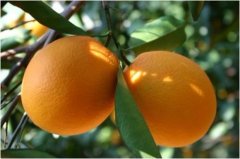
Origin of the orange tree and the characteristics and differences of bitter orange, sweet orange, navel orange and blood orange
The orange tree originally grew in China and was cultivated in Asia for more than 4000 years, and was later introduced by the Arabs to Persia, Egypt, Spain and North Africa. In fact, the word orange was transformed by the Arabs from the Sanskrit nagarunga narandj. Today the orange is already one of
-
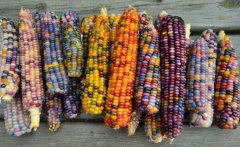
Can glass gem corn be eaten? Introduction to its origin and characteristics
Is millet just corn? In some places it is called that, and when growing corn, corn seed fertilizer is very important. Some say that gem millet is the most beautiful vegetable in human history, also known as glass gem corn; it is not only beautiful in appearance,
-
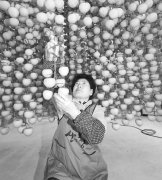
The Origin Story of Korean Dried Persimmons and the Flavor Characteristics of Fuping Dried Persimmons
Whether among the Hakka people or Koreans, the persimmon tree grows very easily, but the ripe fruit does not keep well, and so dried persimmons came into being. The fiery red persimmons hanging all over the branches are a common autumn sight in Korea, and persimmons are also a relatively cheap fruit in Korea. New
条件筛选